SA316/6 (78.1 ov)
 AUS
AUS AFG65/4 (11/20 ov)
 ZIM
ZIM SAS
SAS LAZ
LAZ ROMA
ROMA CAG
CAG TOR
TOR COMO
COMO BAN
BAN WI
WI IND-W
IND-W ZIM-W
ZIM-W GOA
GOA SC Delhi
 Milan
Milan Bologna
 Parma
Parma Udinese
 ABH0
ABH0 ALF1
ALF1 PAK110
 SL114/2 (18.1/50 ov, target 111)
 NAM316/7
 IRE253 (44.5/50 ov, target 317)
 NZ198/3
 IND199/4 (13.2 ov)
 JAB113 (19.3/20 ov, target 133)
 KAY132/9
 SIKM184
 NAGA187 & 46/4 (34 ov)
 JHK131/4 (47 ov)
 DELHI515/5d
 ODSA194
 SVCS13/0 (5 ov)
 BRODA616
 J & K6/0 (4 ov)
 CHD685/5d
 HP49/0 (14 ov)
 CGR216/8 (95 ov)
 AP231
AP231 HYD193/2 (54 ov)
 PNJB431
 KNTKA297/7 (95 ov)
 TPURA194
 KER101/6 (35 ov)
 BENG350
 AUCK
AUCK CANT
CANT CD
CD ND
ND DEN
DEN QAT
QAT KENYA
KENYA KUW
KUW POA
POA SPR
SPR BRB
BRB VAG
VAG NED371/5
 OMA265 (49.3/50 ov, target 372)
 JER224
 PNG155
 Venezia
 Inter Milan
 Genoa
Genoa Juventus
 Sevilla2
 Osasuna0
 PSG2
PSG2 Lyon0
Lyon0 Mohun Bagan1
 Chennaiyin0
 BEI2
BEI2 JHM2
JHM2 RCH0
RCH0 KRE0
KRE0
89.8% fewer power-limit violations—that’s what a new arXiv paper reports when reinforcement learning takes the wheel on LLM training power. It’s a signal that AI data centre energy can drop without resorting to “workload-blind” guesswork. The study, which explores scaling from one GPU to a fleet, was posted on August 13, 2026 (arXiv:2608.11226). Deployment details aren’t fully locked down yet, but here’s the thing: the real goal isn’t just cutting watts. It’s cutting bad power behaviour while keeping output steady—or better.
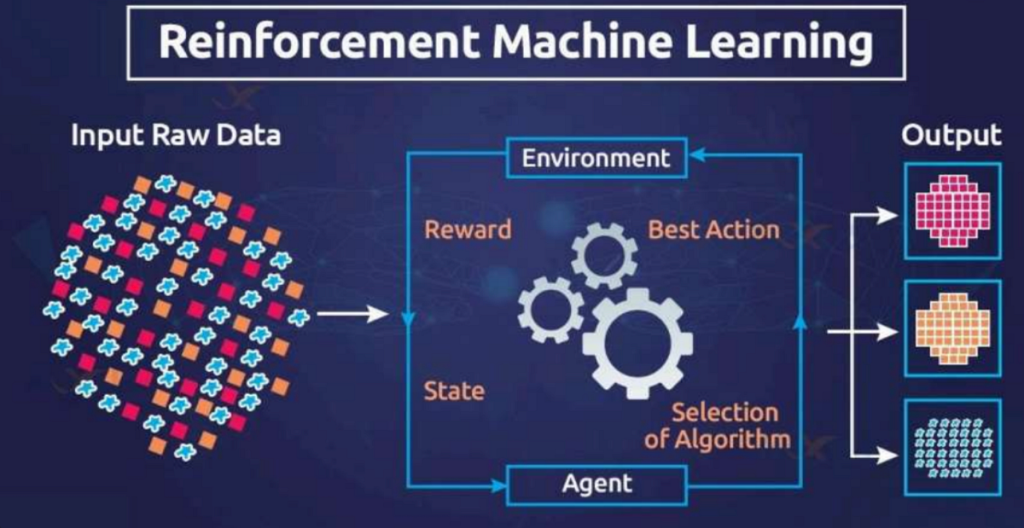
Reinforcement learning power control: Overview: What this LLM power-control paper claims, and when
The paper, titled “Cutting AI Datacenter Energy with Reinforcement Learning: Measured Power Control of LLM Training from One GPU to the Fleet”, hit arXiv on August 13, 2026. It digs into how reinforcement learning can directly manage GPU power during LLM training, starting with instrumented experiments on a few GPUs and moving toward control logic that should generalize. The author frames the problem as a mismatch: datacenters often handle GPU power with static caps or reactive throttling, but LLM workloads shift over time. The headline promise is straightforward—measured control should stop indiscriminate throttling and cut energy waste at the system level.
Key Details: Measured power control, RL controller, and the reported gains
The core evaluation uses reinforcement learning plus measured power telemetry to shape training behavior. According to the arXiv submission, the author instruments GRPO training with half-second power telemetry across LLM scales of 7B, 14B, and 72B, and runs experiments from one to four A100 GPUs, totaling 380,000+ samples. A PPO meta-controller adapts the workload’s own generation parameters based on what the power sensors observe.
Here’s the data-first snapshot of the reported training outcomes (all figures from the paper’s abstract text):
| Metric (reported) | 7B trace outcome | How to interpret it |
|---|---|---|
| Power-limit violations | 89.8% reduction | Fewer times the workload exceeds the power guardrails |
| Token output | 18.1% increase | More generation work completed in the same control window |
| Energy efficiency | 26.2% gain | Higher tokens per MWh—less energy wasted per unit output |
Reinforcement Learning Power Control: Also worth noting: the abstract describes a scaling wrinkle. When the controller family is deployed live at 72B, the study reports replicated null results, with a diagnosis tied to the “group-size actuator” losing authority under model sharding.
That matters for practical rollout. The control knob that works when the model maps cleanly onto the hardware may not work when the execution graph is partitioned. Stay tuned for more on datacenter energy.
Context: Why “one GPU to the fleet” is hard, and what the paper tested
Dat
Related Articles
- US power grid AI bubble 2026: Build won’t be wasted
- U&i’s Festive Double Drop: A 150W Party Speaker and a 33W Power Bank
- Apple Tests CXMT Memory Chips for iPhones in 2026 Power Shift
FAQs
How does datacenter energy consumption decrease when Google DeepMind applies reinforcement learning to large language model training?
Google DeepMind applies reinforcement learning algorithms to dynamically adjust power consumption and thermal limits across hardware. The intelligent agent optimizes power control from a single GPU to the entire fleet, drastically reducing total datacenter energy waste without sacrificing model training performance.
What specific hardware components does Sundar Pichai and his engineering team target for power optimization during large language model workloads?
Sundar Pichai and his engineering team target massive clusters of accelerators, including advanced graphics processing units and tensor processing units, to regulate electrical draw. The reinforcement learning controller manages real-time power delivery to these silicon components, ensuring the datacenter energy footprint remains as low as possible.
Was this article helpful?
Your feedback directly improves future articles on this site.