RIY1
 TAA0
 LAZ0
 PAR0
 RCL0
 PAR1
 MEX-W
 ARG-W
 ATM0
 DEP0
 MTL0
 NSH2
 ADO0
 HEE0
 Internacional0
 Botafogo0
 UAE
 NED
 PAK
 ENG
 IND-W
 ZIM-W
 GMB
 LES
 MOZ
 ZMB
 Inter Milan
 Fiorentina
 Churchill
 Punjab FC
 NGA
 UGA
 CHE0
 TOT2
 VAL1
 VIL2
 DOR1
 SGE0
 NAP3
 ROMA3
 NZ-A135/3 (41 ov)
 IND-A113
 SYL
 KHU
 MYMS299/4 (87 ov)
 CHATT
 DHA293/3 (84.1 ov)
 RAJ
 RAN320/5 (80 ov)
 BAR
 DEN
 PNG
 NAM321/6
 IRE290 (47.3/50 ov, target 322)
 NZ180/5
 IND181/6 (19.5/20 ov, target 181)
 Mirassol1
 São Paulo0
 Vitória0
 Athletico-PR0
 VEN0
 JPN1
 ZAM0
 FRA1
 Athletic
 Getafe
 C Palace
 Newcastle
 Hull
 Brentford
 Liverpool
 Brighton
 Man United
 Bournemouth
 Atalanta
 Frosinone
 KHO0
 ETT3
 RAC2
 ESP1

There’s a real tug-of-war playing out in the power industry. Consulting firm McKinsey & Company and The Register have zeroed in on a key question: could all these grid build-outs end up underused once the AI hype fades? Or will they still earn their keep? Planners worry about “stranded” capacity if the compute boom stalls. But McKinsey pushes back—the grid is a long-term infrastructure bet, not just a short-term AI play. The real bottleneck is transmission, resilience, and cooling capacity, not the latest model-training craze.
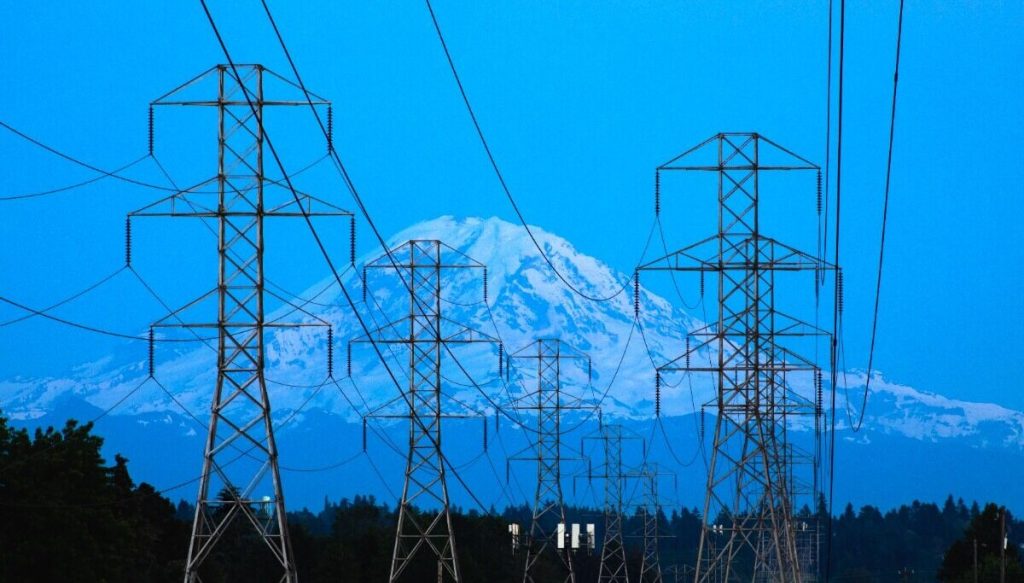
2026 grid planning: McKinsey’s warning is “build less” not “build none”
The early turning point hit in the mid-2020s, when datacenters went from expanding to being the main character in regional power planning. By 2026, the question stopped being theoretical: utilities and corporate owners had to lock in capacity targets while forecasts swung wildly. The risk isn’t that investment happens—it’s that it happens at the wrong scale. According to The Register’s reporting, McKinsey sees “underinvestment” as a bigger near-term threat than “wasted investment,” even if some planned AI compute facilities never materialize.
In McKinsey’s framing, datacenters already dominate demand growth projections. They account for about 75 percent of projected US power demand growth over the next decade. That matters because grid capacity is a multi-year commitment—permitting and construction cycles make hitting the pause button expensive.
2026 datacenter drawdown: 26% energy growth and the 30 GW/year math
Next, the forecast numbers turn boardroom debate into engineering constraints. If the AI-led datacenter build-out continues, energy demand doesn’t just rise—it concentrates. As The Register covered, datacenter energy consumption was expected to grow by 26 percent this year.
McKinsey’s numbers sharpen the stakes for power operators. At the current building rate, you’d need the equivalent of almost 30 GW of additional power each year—about 20 GW for IT equipment and the rest for cooling, distribution, and resilience. Here’s why “AI demand might dip” doesn’t automatically mean “grid build-outs are useless”: cooling, distribution, and redundancy are still operational must-haves.
And the conflict deepens. Even if corporate AI interest stays hot, deployment outcomes can be uneven. McKinsey data from the same reporting says 71 percent of organizations report “negative implementation outcomes.” That’s a reminder that compute demand can soften unevenly—some workloads stall, while infrastructure-like needs keep marching.
Early-mid 2020s context: why power infrastructure has lagging returns
The background that makes this argument land is simple: electricity infrastructure takes years to permit, build, and interconnect. In the early 2020s, many regions already faced load growth from cloud migration, electrification, and industrial modernization. AI just sped up the timeline and concentrated it into specific corridors—especially where fiber, substations, and water/cooling access align.
Even if the AI “bubble” deflates, the grid upgrades still improve system reliability, reduce congestion, and enable future capacity for other digital workloads. That’s the core of McKinsey’s stance, as summarized in The Register: the bigger mistake might be failing to build enough resilience for whatever load growth arrives next.
If utilities underbuild based on “AI might slow down,” they risk getting caught by the next wave—whether that’s enterprise AI at smaller scale, high-uptime analytics, or just broader cloud demand. For operators, reliability isn’t a luxury feature; it’s the product.
What’s next: planning rules for a market that won’t be binary
The present-day implication? Grid planning can’t be an all-or-nothing bet on AI. Utilities and data-center owners need ways to cut “stranded asset” exposure while still hitting reliability requirements. That means phased capacity additions, flexible interconnection agreements, and procurement strategies that align generation and transmission with credible load timelines.
This isn’t just about building more. It’s about building smarter—sizing cooling and distribution appropriately, strengthening resilience, and targeting regions where demand fundamentals are strongest beyond the hype cycle. In practice, the winners will treat grid build-outs as a reliability upgrade that outlives the specific model-training era.
For teams tracking the broader AI stack—from cloud infrastructure coverage to model deployment realities—this is the infrastructure story that determines whether AI’s next chapter is smooth or chaotic. For more on how AI ecosystems keep changing, see OpenAI’s engineering and product updates and follow industry signals at VentureBeat’s AI coverage.
The takeaway: even if AI hype cools, grid resilience and capacity add value—so the debate should shift from “wasted build” to “insufficient reliability.”
FAQs
Will grid upgrades be wasted if AI demand slows?
Not necessarily. The argument cited by McKinsey and covered by The Register is that reliability-oriented generation, transmission, cooling, and distribution upgrades support broader load needs, not just specific AI projects.
What does “underinvestment” mean in this context?
It refers to building less power capacity than future demand requires, creating a reliability and congestion problem later. McKinsey’s view, as described in the reporting, is that this risk is greater than the risk of building too much for AI compute alone.
How much new power is implied by current datacenter build rates?
McKinsey figures cited in the reporting indicate nearly 30 GW per year in additional power at the current building rate, split between about 20 GW for IT equipment and the remainder for cooling, distribution, and resilience.
What role do negative AI implementation outcomes play?
If deployments often underperform expectations, compute growth may become uneven across organizations. That uncertainty makes planning harder, but it doesn’t eliminate the need for grid reliability—especially for cooling, distribution, and resilient operation.
Why is the power grid planning timeline important?
Because grid projects have long lead times. Decisions made in 2026 affect system readiness years later, which means planners can’t wait for AI bubble signals to be certain.
Source: Theregister
Was this article helpful?
Your feedback directly improves future articles on this site.