

Anthropic has moved its entire codebase off Git and onto an in-house version control system called Scion, according to a post by Vaibhav Sisinty on X that quotes Anthropic’s engineering blog. The reason, the post says, is that AI agents now write so much code that Git’s human-centred design started to break.
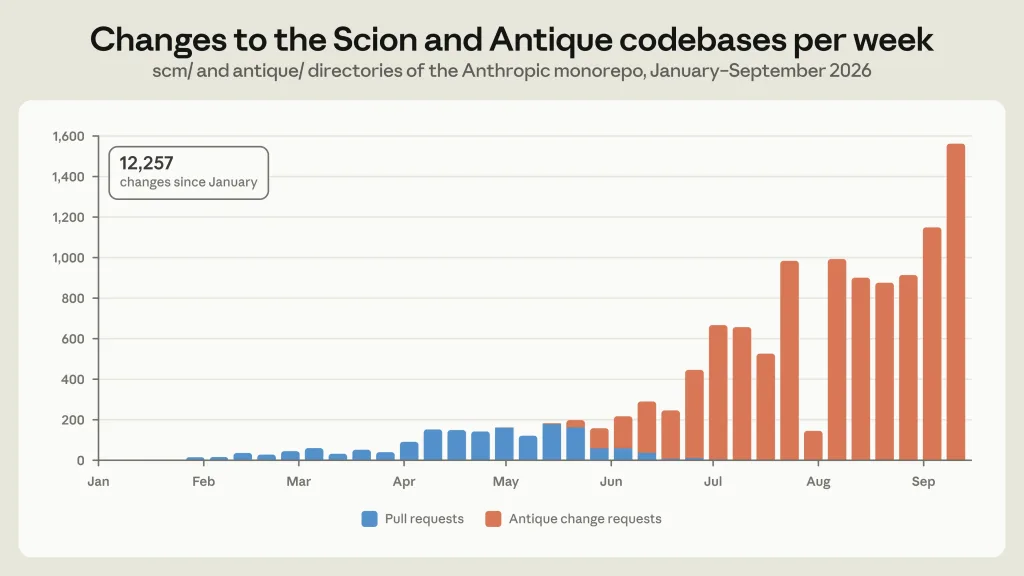
The numbers in the post are striking: merged changes grew from about 2,500 a day in May to over 30,000 a day by September.
Anthropic Scion at a Glance
| Detail | What the post says |
|---|---|
| New system | Scion, built in-house |
| Team size | 7 people |
| Migration time | 5 months to move the whole monorepo |
| Merged changes per day | About 2,500 in May to over 30,000 in September |
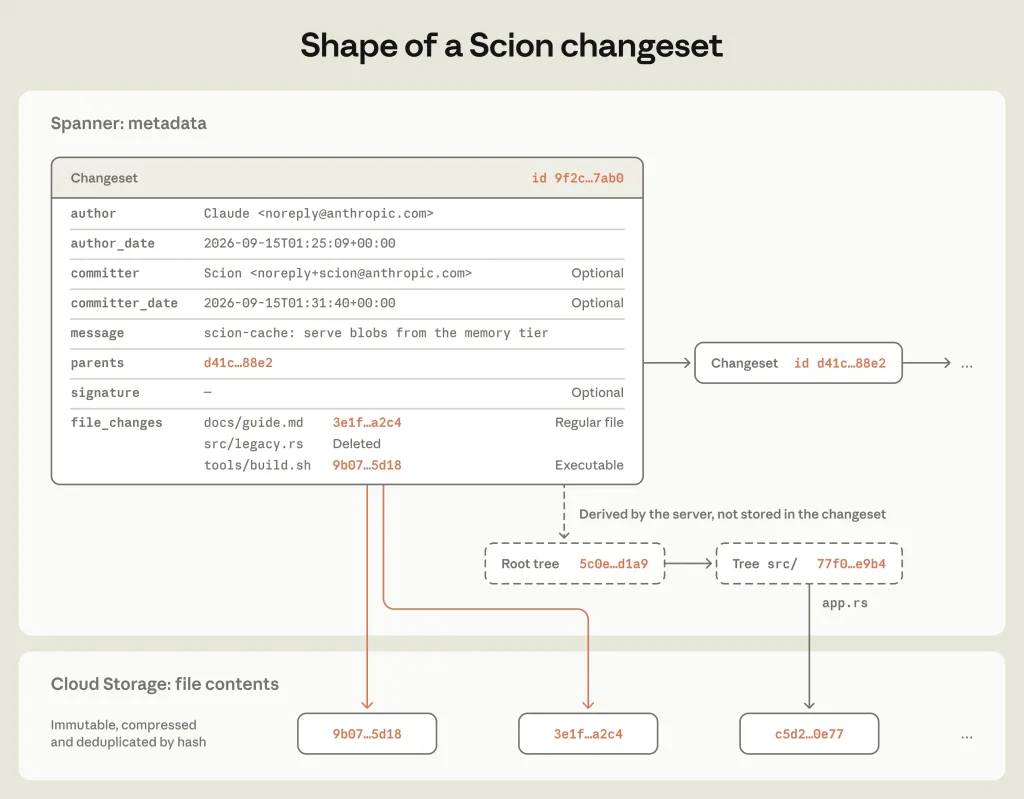
| How it works | Server holds the code; clients fetch only the piece they need |
| Replaced | A setup that needed hundreds of Git mirrors |
| Weight | 200x lighter than the old setup |
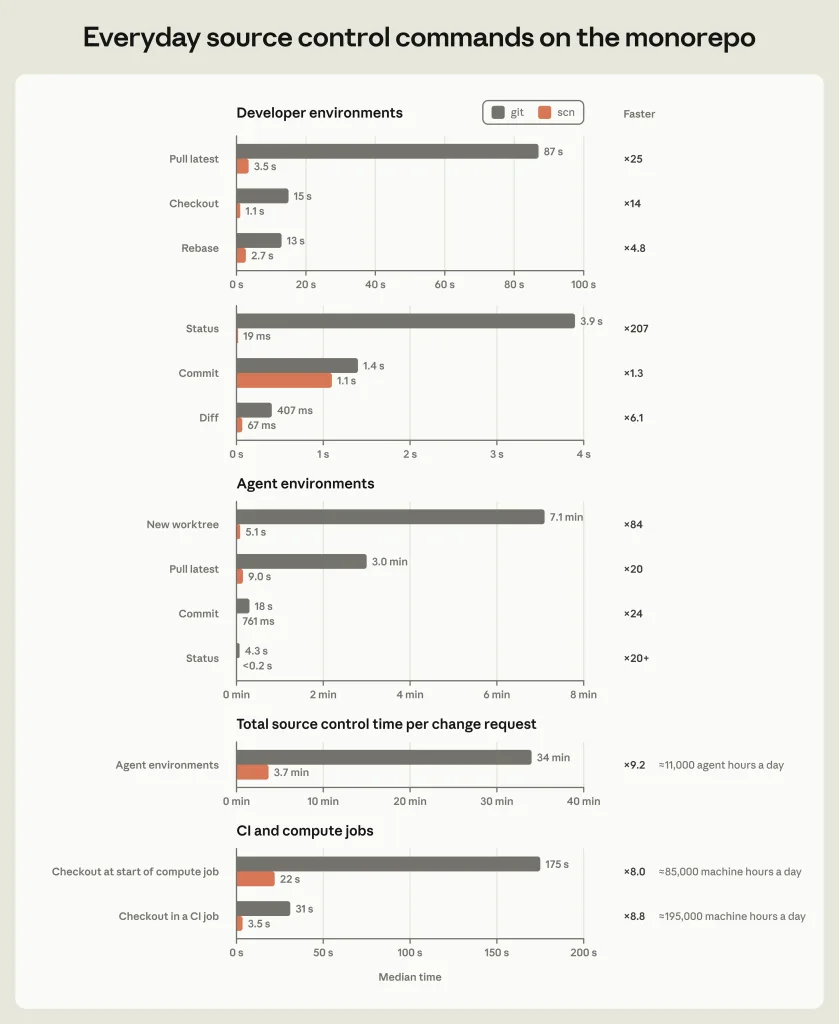
| Checkout speed | Minutes down to seconds |
| Availability | Not being released |
Why Git Struggled
Git was designed for humans working offline, with a full copy of the repository on every machine. That model works well when a few hundred developers make a handful of changes each day. According to the post, it breaks when AI agents are producing tens of thousands of merged changes a day, because every machine holding a full copy and every mirror syncing constantly becomes a heavy burden.
Scion flips the model. The server holds the code, and clients fetch only the files they need. The post says this removes the need for hundreds of Git mirrors and cuts checkout times from minutes to seconds.
The Catch
The post is clear on a limit: Scion only makes sense at Anthropic’s scale, and Anthropic is not releasing it. For most teams, Git will continue to be the right choice, and tools built around it, such as GitHub, are not going away soon. The wider message is that tools built for human speed may need to change when AI agents do a growing share of the work. Learn more about the original tool on Git and the company on Anthropic. See more Anthropic stories on TechnoSports.
What It Means for Developers
If you are a developer or a team lead, the lesson is not to drop Git. It is to watch where your own workflow is slowing down. When agents open many pull requests, code review, merge queues and continuous integration can become the bottleneck. Several companies are building tools to handle that, and Anthropic’s move is an early example of a large team solving it from scratch.
What Is Not Confirmed
These points are not confirmed because we have only read the post and not the full engineering blog:
- The full technical design of Scion and how it handles branches, merges and history.
- Whether the figures of 2,500 and 30,000 daily changes include all repositories or only the main monorepo.
- If Anthropic will publish more details or open-source parts of Scion later.
- Independent testing of the 200x and seconds-not-minutes claims.
Quick Answers
What is Anthropic Scion?
Scion is an in-house version control system built by a team of seven at Anthropic. Its server holds the code, and clients fetch only the files they need.
Is Anthropic releasing Scion?
No. The post says Scion is not being released and only makes sense at Anthropic’s scale.
Should developers stop using Git?
No. The post says Git will continue to be the right choice for most teams.
Why did Anthropic move off Git?
The post says AI agents were producing tens of thousands of merged changes a day, making Git’s full-copy and mirror setup a heavy burden.
Source: Vaibhav Sisinty post on X quoting Anthropic’s engineering blog, October 2026. Figures are as reported in the post.




