
 SA329 (82.3 ov)
 AUS
AUS BAN
BAN WI
WI IND-W
IND-W ZIM-W
ZIM-W GOA
GOA SC Delhi
 Milan
Milan Bologna
 Parma
Parma Udinese
 Venezia
 Inter Milan
 Genoa
Genoa Juventus
 Monza
Monza Napoli
 ROMA4
ROMA4 CAG2
CAG2 TOR1
TOR1 COMO3
COMO3 SAS2
SAS2 LAZ6
LAZ6 AFG177
 ZIM140 (19.1/20 ov, target 178)
 AUCK
AUCK CANT
CANT CD
CD ND
ND SIKM184
 NAGA187 & 46/4 (34 ov)
 JHK131/4 (47 ov)
 DELHI515/5d
 ODSA194
 SVCS13/0 (5 ov)
 BRODA616
 J & K6/0 (4 ov)
 CHD685/5d
 HP49/0 (14 ov)
 CGR216/8 (95 ov)
 AP231
AP231 HYD193/2 (54 ov)
 PNJB431
 KNTKA297/7 (95 ov)
 TPURA194
 KER101/6 (35 ov)
 BENG350
 UAE
UAE OMA
OMA ENG
ENG SL
SL DEN
DEN QAT
QAT KENYA
KENYA KUW
KUW POA
POA SPR
SPR BRB
BRB VAG
VAG PAK110
 NAM316/7
 IRE253 (44.5/50 ov, target 317)
 NZ198/3
 IND199/4 (13.2/20 ov, target 199)
 NED371/5
 JAB113 (19.3/20 ov, target 133)
 KAY132/9
 Gamba Osaka
 Buriram
 Kashima
 Pohang Steelers
 ABH0
ABH0 ALF1
ALF1 Sevilla2
 Osasuna0
 PSG2
PSG2 Lyon0
Lyon0
Qualcomm has spent over two decades being synonymous with smartphone chips. Now, the company is making its boldest move yet to change that — and the numbers it just laid out are eye-catching.

The Big Numbers from Investor Day
According to Reuters, Qualcomm said it expects to generate $15 billion in sales from its data center business by 2029, sending shares more than 12% higher in after-hours trading. CFO Akash Palkhiwala told investors the company will be “truly diversified” going forward.
| Metric | Previous Estimate | New Target (by 2029) |
|---|---|---|
| Non-handset chip revenue | $22 billion | $40 billion |
| Data center business revenue | — | $15 billion |
| Data center revenue (FY2027) | — | $5 billion |
| Smartphone share of chip revenue | Majority | ~1/3 |
The shift means handsets — Qualcomm’s traditional bread and butter — will make up only about a third of its total chip revenue by the end of the decade, a dramatic rebalancing for a company long defined by Snapdragon smartphone silicon.
Why Qualcomm Is Moving Now
The push comes as the smartphone chip market faces real pressure. A memory chip shortage driven by surging AI infrastructure demand has squeezed margins across the industry — something we’ve tracked closely in our coverage of the realme P4 series price hike. On top of that, major customers like Apple and Samsung are increasingly designing their own chips in-house, shrinking Qualcomm’s addressable market over time.
Qualcomm’s New AI Chip Lineup
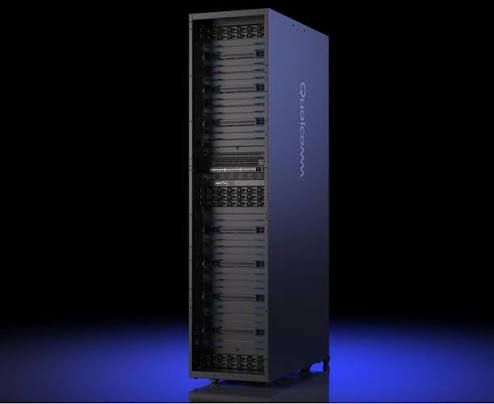
Qualcomm is entering the data center race with a distinct strategy — leaning on cheaper, smartphone-style memory rather than the pricier high-bandwidth memory used by Nvidia and SRAM-based chips from Cerebras.
| Product | Purpose |
|---|---|
| High Bandwidth Compute (HBC) chips | Cost-efficient AI inference using mobile-grade memory |
| Dragonfly C1000 | New CPU designed specifically for AI data centers |
| Custom ASICs | Built for two unnamed “hyperscaler” customers |
Qualcomm’s data-center chief Tony Pialis called this a “tremendous value” proposition on performance-per-cost — directly targeting customers who don’t need Nvidia-grade horsepower for every workload.
Big-Name Customers Already On Board
Microsoft and Meta have both been confirmed as early adopters. Meta will use Qualcomm’s Dragonfly C1000 CPU for its AI infrastructure, while Microsoft is adopting the new HBC chip category. Qualcomm also claims to have secured two additional hyperscaler customers for custom chips, with revenue expected before the end of this calendar year — though those customers haven’t been named yet.
The Modular Acquisition
Alongside the investor day reveal, Qualcomm announced a roughly $4 billion all-stock deal to acquire AI software startup Modular. The move gives Qualcomm a software platform that can compete with Nvidia’s CUDA — the proprietary ecosystem that has locked in millions of AI developers and remains one of Nvidia’s biggest competitive moats.
For more chip industry coverage, check out our smartphones and semiconductors section on TechnoSports.
The Bottom Line
Qualcomm is making one of its most serious attempts yet to break free of smartphone dependency, backed by real customer wins in Microsoft and Meta and an aggressive $40 billion non-handset revenue target. The AI data center race remains brutally competitive, but Qualcomm’s cost-efficiency pitch and the Modular acquisition suggest it’s playing the long game rather than chasing a quick win.


