Storage and memory just swapped places in the performance hierarchy. The world’s first PCIe Gen 6 SSD has broken cover with a read bandwidth of 28,000 MB/s — a number that doesn’t just set a new SSD record, it literally surpasses the theoretical maximum of single-channel DDR4-3200 RAM at 25.6 GB/s. Let that sink in.

PCIe Gen 6 SSD vs Everything Else: The Numbers
| Standard | Max Sequential Read | Interface |
|---|---|---|
| PCIe Gen 6 SSD (new) | 28,000 MB/s | PCIe 6.0 x4 |
| DDR4-3200 (single-channel) | 25,600 MB/s | Memory |
| PCIe Gen 5 SSD (top-end) | ~14,000–14,500 MB/s | PCIe 5.0 x4 |
| PCIe Gen 4 SSD (top-end) | ~7,000–7,400 MB/s | PCIe 4.0 x4 |
| DDR5-6000 (single-channel) | 48,000 MB/s | Memory |
| DDR5-4800 (single-channel) | 38,400 MB/s | Memory |
Why This Changes More Than Benchmark Sheets
Storage has always been the bottleneck in the memory hierarchy — the place where the CPU sits and waits. PCIe Gen 5 SSDs were already faster than most people could saturate in daily use. PCIe Gen 6 takes that further, but the DDR4 comparison is what makes this genuinely historic.
At 28,000 MB/s, a PCIe Gen 6 SSD can stream data into a CPU faster than single-channel DDR4 RAM can deliver it from the memory bus. This has immediate practical implications for workloads that benefit from storage-as-memory architectures — think large AI model loading, 8K video editing with multi-stream timelines, scientific simulation, and game world streaming where asset data needs to reach the GPU near-instantaneously.
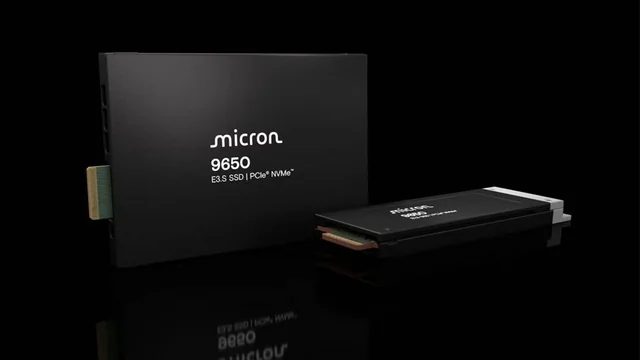
PCIe Gen 6 doubles bandwidth per lane over Gen 5 by combining PAM4 signalling and FLIT encoding — a fundamentally different transmission method rather than simply doubling the clock speed. This is the same architectural jump that separated Gen 5 from Gen 4 in terms of design complexity. Expect premium controllers and pricing initially, with broader consumer availability following 12–18 months after enterprise deployment. As TechnoSports has noted, the PCIe Gen 6 specification was ratified in 2022 — the hardware is now catching up to the standard.
For everyday users, PCIe Gen 5 SSDs remain more than sufficient. But for creators, AI workstation builders, and next-gen console architects, PCIe Gen 6 just redrew the ceiling.