MEX-W
MEX-W ARG-W
ARG-W Chapecoense2
 Fluminense1
 UAE
UAE NED
NED PAK
PAK ENG
ENG IND-W
IND-W ZIM-W
ZIM-W GMB
GMB LES
LES MOZ
MOZ ZMB
ZMB Inter Milan
 Fiorentina
 Churchill
 Punjab FC
 NGA
NGA UGA
UGA ATM1
ATM1 DEP0
DEP0 LAZ2
LAZ2 PAR1
PAR1 RCL2
RCL2 PAR1
PAR1 RIY2
RIY2 TAA1
TAA1 NZ-A212/6 (64.2 ov)
 IND-A113
 SYL
SYL KHU
KHU MYMS299/4 (87 ov)
 CHATT
CHATT DHA293/3 (84.1 ov)
 RAJ
RAJ RAN320/5 (80 ov)
 BAR
BAR DEN
DEN PNG
PNG NAM321/6
 IRE290 (47.3/50 ov, target 322)
 NZ180/5
 IND181/6 (19.5/20 ov, target 181)
 WEL0
WEL0 MBV0
MBV0 Athletic
 Getafe
 C Palace
 Newcastle
 Hull
Hull Brentford
 Liverpool
 Brighton
 Man United
 Bournemouth
 Atalanta
 Frosinone
 CHE0
CHE0 TOT2
TOT2 VAL1
VAL1 VIL2
VIL2
Pat Cummins is an IPL outlier in almost every meaningful sense. He is the only overseas captain in IPL 2026. He is the only fast-bowling captain in the competition. And he has now led Sunrisers Hyderabad to the playoffs for the second time in three years — a feat as rare as it is remarkable in the most competitive T20 league in the world.
The Outlier Who Keeps Delivering
Across 19 IPL seasons, only five other overseas captains have achieved the same:
| Overseas Captains With Multiple IPL Playoff Appearances | Seasons |
|---|---|
| Adam Gilchrist (Deccan Chargers) | 2009, 2010 |
| Steven Smith (RR / RPS) | 2015, 2017 |
| David Warner (SRH) | 2016, 2017, 2020 |
| Kane Williamson (SRH) | 2018, 2019 |
| Faf du Plessis (RCB) | 2022, 2024 |
| Pat Cummins (SRH) | 2024, 2026 |
The context makes the achievement even more striking. Before taking the SRH captaincy two years ago, Cummins had never led a team in top-flight T20 cricket. The appointment felt like a gamble. Yes, he had led Australia to World Test Championship and ODI World Cup titles in 2023 — but the IPL operates on entirely different terms, with franchise owners, fan pressure, and the relentless scrutiny of a billion-strong audience creating a uniquely pressurised environment.
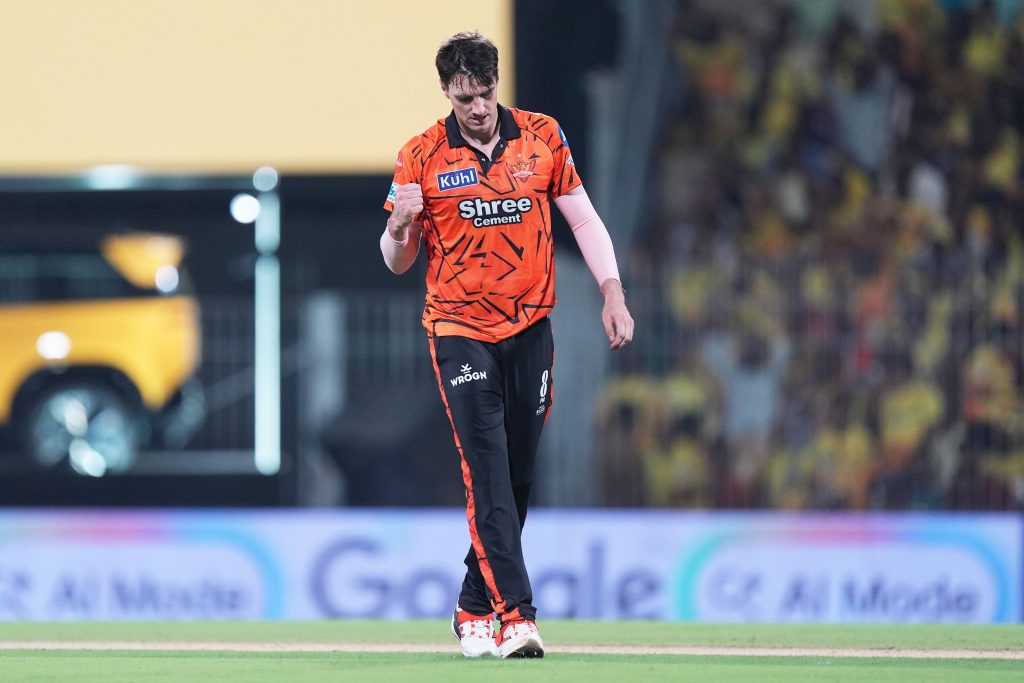
The history of high-profile captains breaking under that pressure is long. Brendon McCullum allowed IPL captaincy stress to affect his batting at Kolkata Knight Riders. Ricky Ponting stepped down as Mumbai Indians skipper midway through 2013 after a horror run with the bat. The pressure has only intensified since. Cummins has brought calm to this utterly chaotic world — and SRH have thrived as a result.
The Season: Adversity, Stability, and a Playoff Spot
This season’s campaign began without Cummins. Injured at the start of IPL 2026, he watched as Ishan Kishan stepped up to lead SRH in his absence. When Cummins returned to action, his side found their best rhythm — winning five of seven matches to book their playoff berth, narrowly missing the top two on net run-rate alone.
The structural identity Cummins and his coaching staff have built at SRH has provided the platform for individual brilliance to flourish. Travis Head and Abhishek Sharma continue to plunder opposing attacks in the powerplay. Kishan has developed into one of the most reliable middle-order operators in the competition. And Heinrich Klaasen — despite retiring from international cricket — has redefined himself as an IPL force, crossing 600 runs to become the first batter from No.4 or lower to achieve that total in any single T20 tournament. More than just a six-hitter, Klaasen has demonstrated the capacity to anchor innings, absorb pressure, and price his wicket far higher than he once did.
Role clarity has been the foundation. Every player knows their job. The system accommodates individual expression without sacrificing collective structure.
Cummins the Bowler: Middle-Overs Mastery
If Cummins has impressed as a captain, his bowling has been equally significant — particularly given that he played no T20 cricket whatsoever between IPL 2025 and this season. In his first game back, against Rajasthan Royals in Jaipur, he nailed Riyan Parag’s off stump with an inch-perfect yorker that tailed in late — arriving with figures of 4-0-27-1 on a flat pitch where 228 for 6 met 229 for 5.
That performance set the tone for what has become the defining tactical contribution of his season: middle-overs bowling of exceptional control and intelligence.
| Cummins — Middle Overs (Overs 7-15) IPL 2026 | Figure |
|---|---|
| Economy rate | 5.66 (best among bowlers with 50+ balls in this phase) |
| Wickets in middle overs | 4 |
| Approach | Relentless back-of-a-length, crafty pace variations |
An economy rate of 5.66 in the middle overs — the best of any bowler with at least 50 balls delivered in this phase — is a remarkable return. Cummins achieves it by relentlessly banging the ball into the pitch and combining those lengths with subtle pace variations that prevent batters from settling. By neutralising the dangerous middle-overs period, he sets the platform perfectly for SRH’s death specialists, rookies Sakib Hussain and Praful Hinge, to close out innings.

Former Australia T20 World Cup-winning captain Aaron Finch identified exactly what makes this approach so effective: “A lot of the games he has bowled out by the 17th over, hasn’t he? So using himself as the enforcer at the time where you don’t allow those middle overs particularly from 12-17 to drift along and allow partnerships to build. It doesn’t matter who you have at the back end, when you have got two set batters, you’re in for some serious trouble. So I like the fact that he has done that.”
The Tactical Mind: Funky Fields, Creative Plans
Cummins’ captaincy is not simply about bowling with discipline himself — it is about how he engineers matchups and outthinks batters with unconventional thinking.
Against Priyansh Arya in Hyderabad, Cummins set a field that appeared designed for a full ball on the stumps — deep third moved inside the circle to short third, mid-on back to long-on, fine leg already inside. Instead, he bowled short and wide outside off, catching Arya completely off-guard. The result: a mistimed pull to deep square leg, the only boundary fielder on the leg side.
At Chepauk against CSK’s Urvil Patel, he set short square leg and deep square leg before delivering a yorker — the field creating genuine uncertainty about what was coming. The execution was slightly off — a low full toss that Patel jabbed to mid-on — but the underlying creativity was clear. Cummins is not bowling to formats; he is bowling to specific batters, reading their tendencies, and setting traps accordingly.
This kind of high-wire tactical thinking, executed under the pressure of knockout-stage cricket, makes him a genuinely unusual captain at this level.
The Hyderabad Connection: More Than a Captain
Within the Rajiv Gandhi Stadium, Cummins has earned something beyond respect. He has earned love.
The Hyderabad crowd has been heard singing his name. Instagram reels of Cummins with his son on an escalator at a local mall went viral — a sign of the genuine affection that has developed between the captain and his adopted city.
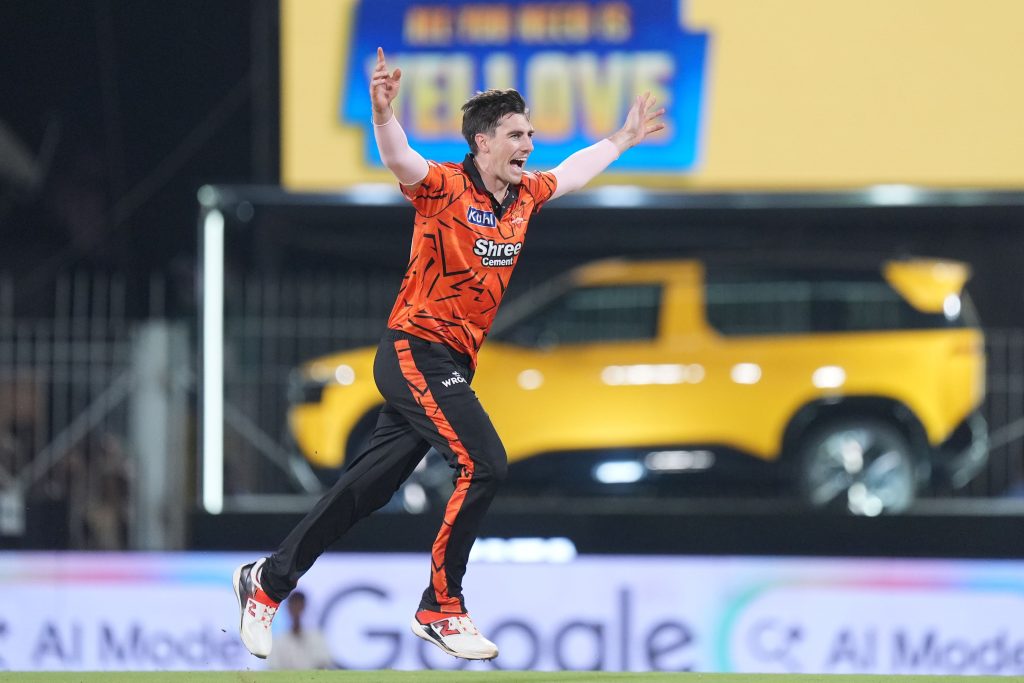
The last overseas captain to generate this kind of connection with a Hyderabad crowd was David Warner — whose emotional bond with the city peaked when he led SRH to their title in 2016 via, notably, the Eliminator route. No team since has won the IPL after taking the Eliminator path.
Cummins and his SRH are about to try.
Read More: RR vs SRH Eliminator: The Tactical Battles That Could Decide a Place in the Qualifier 2
Also Read: Why Heinrich Klaasen’s 600-Run IPL Campaign Deserves Greater Appreciation