EST0
 ALS0
 WI-A
 LIONS
 GAL
 VFB
 SHK
 SCP
 ATM
 MUN
 BAR
 AVL
 BODO
 LILL
 FEY
 INT
 LAS
 SLB
 Newcastle0
 Everton1
 Deportivo2
 Osasuna1
 Atalanta0
 Parma3
 Lorient0
 Brest2
 DOLPH
 WPR
 ASSAM135
 KNTKA496/5 (117 ov)
 MEGHA144
 NAGA254 & 73/3 (25 ov)
 TPURA268 & 54/4 (22 ov)
 SAU118
 BENG143
 MAHA207/9 (79 ov)
 ODSA
 JHK258/5 (108 ov)
 CHD49/3 (20 ov)
 TN571/7d
 CGR284
 HYD275/9 (83 ov)
 DELHI299/6 (90 ov)
 SVCS266
 GOA397
 BIHAR107 & 63/3 (22 ov) (f/o)
 GUJ534/9d
 KER74/3 (23 ov)
 HP153
 RAJ78 & 297/4 (87 ov)
 NZ
 IND
 UAE
 OMA
 BAN
 WI
 HH-W
 MR-W
 CD
 AUCK
 OTAGO
 CANT
 NED183/3 (36/50 ov, target 183)
 MS-W109 (18.1/20 ov, target 125)
 PS-W124/9
 LUL98/2 (11.4/20 ov, target 98)
 POA97/9
 BIK174/3
 JAB172/7 (20 ov, target 175)
 CHR129/6
 SPR131/5 (16.4/20 ov, target 130)
 KAY180/6
 KAG181/6 (19.4/20 ov, target 181)
 ALH0
 SHO1
 MAN
 ROMA
 Sassuolo2
 Fiorentina4
 CAHN0
 KYO0
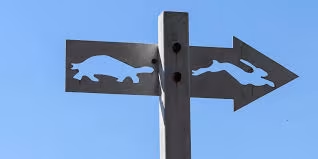
Gartner’s open-model finding could change how companies budget for AI agents. The firm reportedly says open models may handle 90 percent of agentic work at one-twentieth the cost of a frontier LLM. Open models are AI systems whose weights can be used outside a closed, hosted service.
The estimate reportedly appeared in a Gartner research report published November 3, 2026. That cost gap matters because agentic systems may make many model calls to complete a single business process. Still, the headline figure needs careful reading: it describes a share of workflow steps, not a promise that open models can replace frontier models for every task. Here’s what the estimate could mean for buyers weighing cost against capability.

What does Gartner’s open-model estimate actually measure?
Gartner’s estimate covers agentic workflow steps, rather than claiming that open models match frontier systems across every type of AI task. In their research document, “Open-Weight Models Will Run 90% of Enterprise Agentic Workflow Steps,” analysts Mark Petty and Raymond Paquet describe routine operations such as classification, tool calling, data validation and reconciliation.
These tasks can recur throughout a larger process. That distinction matters. A model might classify records or pass information between tools without having to solve the workflow’s hardest reasoning problem. The Theregister coverage says Gartner sees open-weight models as suitable for much of this routine work. So where might the savings come from?
Why could open models cost one-twentieth as much?
Gartner estimates that open models cost one-twentieth as much to use as a frontier LLM. Put simply, that’s a 20-to-1 cost comparison, not a universal cost guarantee.
Which agent tasks could move to open models?
The examples listed in Gartner’s document point to operational tasks: classifying information, calling tools, passing data between steps, validating fields and reconciling records. But these tasks don’t look the same at every company. A finance workflow, for example, may need stricter checks before a model can approve or update a record than a low-risk internal routing task.
Companies considering open-weight systems should test them with their own documents, tools and failure conditions. Growing interest in Chinese AI startups and models also shows how the open-model market is expanding, though Gartner’s estimate doesn’t name a winning supplier. The key question is whether a model can perform its assigned step accurately enough to avoid costly human corrections. That’s where the harness comes in.
If models become cheaper, what becomes valuable?
A cheaper model alone won’t make an agent dependable. The surrounding software needs to choose the right model, supply relevant context, call tools safely, check outputs and recover when a step fails.
Gartner’s report describes models as increasingly commoditized and directs attention to the systems that organize and control them. That shifts procurement away from simple model-to-model comparisons and toward assessing the entire workflow. Buyers need to compare task accuracy and total operating costs. Bottom line: Gartner’s estimate suggests companies could cut agent costs by routing routine work to open models while reserving frontier LLMs for tasks that justify their higher cost.
What should enterprise buyers verify before switching?
Does the estimate guarantee a 20-fold saving?
No. Gartner’s figure is an estimate, and the available details don’t specify a universal workload or billing basis. Does 90 percent mean every agent can use an open model for nearly all its work? No.
The claim covers workflow steps; it doesn’t show that open models can replace frontier systems for every task. A sensible next step is to identify repeatable, lower-risk work and test models on real company data before changing production workflows. Gartner’s open-model finding makes that review more pressing, but every organization still needs evidence from its own tests. “open gartner” title: “Open Models vs. Frontier LLMs: Gartner’s Insights on Cost Efficiency”
Read Next
- The google suncatcher Satellite Runs AI in Orbit and Sends a Haiku Home
- Stuck Without A Hard Drive
- ‘AI is not creating the problem’: OpenAI CEO Sam Altman says AI is merely uncovering all
Was this article helpful?
Your feedback directly improves future articles on this site.