ALS0
 AHL0
 WAS2
 AQAJ1
 TRA0
 NEF0
 SAS
 FIO
 ATA
 PAR
 LOR
 BRE
 NEW
 EVE
 DEP
 OSA
 WI-A
 LIONS
 Galatasaray
 Stuttgart
 Shakhtar
 Sporting
 NED183/3 (36/50 ov, target 183)
 OMA182
 Athletic2
 Real Sociedad1
 Juventus2
 Napoli0
 Marseille2
 Toulouse0
 NZ-A424
 IND-A346 & 32/0 (11 ov)
 QLD280
 VIC307 & 136/6 (66 ov)
 SYL218 & 218
 CHATT210 & 126/1 (37 ov, target 227)
 MYMS108 & 315/9 (91 ov) (f/o)
 KHU288
 DHA
 BAR266/8 (70 ov)
 RAN256
 RAJ231 & 110/3 (27 ov)
 ASSAM135
 KNTKA180/2 (36 ov)
 MEGHA
 NAGA244/8 (67 ov)
 TPURA219/7 (74.3 ov)
 SAU
 BENG143
 MAHA21/2 (8 ov)
 ODSA
 JHK37/3 (25 ov)
 CHD
 TN320/4 (86 ov)
 NZ
 IND
 TOK
 MOW
 BIK
 JAB
 LUL
 POA
 DOLPH
 WPR
 CD
 AUCK
 OTAGO
 CANT
 AFG81/3 (8.1/20 ov, target 80)
 ZIM79
 NAM131/5 (21.2/50 ov, target 130)
 IRE129
 MS-W109 (18.1/20 ov, target 125)
 PS-W124/9
 KSS0
 ZEN2
 OVI0
 LPA3
 ATRO1
 VOL0
 ALLB0
 EST0
 SHO0
 MGR0
 Atlético
 Bayern
 Elche0
 Valencia1
 Lecce1
 Genoa2
 Liverpool0
 Arsenal1

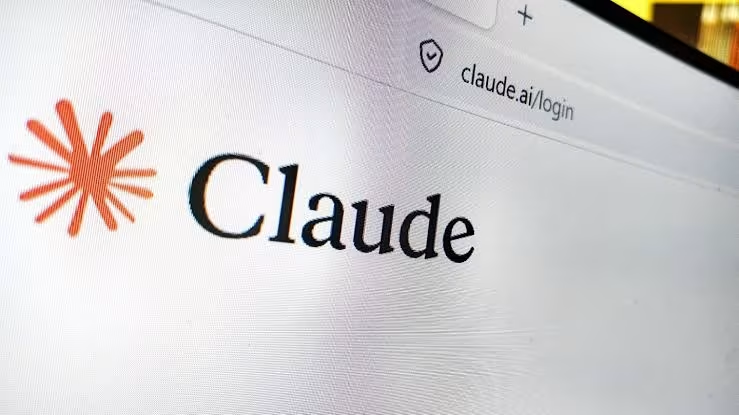
On October 31, 2026, Anthropic began a platform-wide effort to add invisible text markers to four major Claude iterations. At the same time, it revealed a configuration gap that lets developers remove the identifier entirely.
The update covers Mythos 5, Opus 4.7, Opus 4.6, and Sonnet 4.6. Newer architectures, including Opus 5.5, already ship with the feature preloaded. This expansion moves content labeling closer to a standard, but it also creates immediate friction for teams that rely on dependable metadata. Here’s how the rollout works—and where the technical escape hatch lies.
Why do two older models bypass the Claude AI watermark?
The gap comes down to how temperature, top_p, and top_k interact with the embedding layer on Opus 4.6 and Sonnet 4.6. Anthropic confirmed that the watermark activates only when developers leave all three sampling parameters at their factory defaults.
Change even one variable, and the probability distribution shifts enough to skip the hidden sequence injection entirely. This design favors creative flexibility for researchers adjusting model behavior over automated content tracing. A small numerical change can strip the metadata before the output reaches the client dashboard. That tradeoff raises immediate questions about reliability in compliance-focused industries.
How does the Claude AI watermark impact enterprise API developers?
Teams building automated moderation pipelines or academic integrity checks must now lock all three sampling parameters to their defaults if they want to guarantee watermark presence. Anthropic warns that optional sampling changes can cause unpredictable detection failures in batch processing jobs.
Organizations handling sensitive financial or medical transcripts need deterministic output formatting, so the current conditional marking approach doesn’t fit strict audit trails. Developers balancing creative settings against compliance requirements now face immediate infrastructure changes. Managing these configuration dependencies also sets the stage for future protocol standards. The upshot: These constraints help explain why wider industry adoption will require mandatory enforcement layers.
What comes next for Claude AI watermark standards?
Industry observers expect providers to move toward mandatory hardware-level embedding instead of software-based sampling gates. The conditional rollout lays bare a basic tension between developer freedom and platform accountability.
Regulators tracking the spread of synthetic media will likely demand unconditional markers before approving broader commercial deployment. Anthropic’s acknowledgment of the parameter loophole suggests it’s ready to close the gap in upcoming maintenance cycles. Whether voluntary watermarks withstand long-term industry scrutiny may depend on resolving this technical divide. Looking ahead, unconditional marking is likely to become a baseline requirement for enterprise AI deployment.
The latest Claude update shows that invisible content markers work reliably only when developers accept rigid sampling constraints. As long as developers can change those parameters, automated detection systems will face predictable ways around the markers, leaving human oversight to fill the gap.
Read Next
- What Is Volta-Autodox? Uses large language models to profile victims in 10 to 30 seconds
- iPhone 17 Pro Max Swap for iPhone Duo: The Good, Bad and Baffling After Two Weeks
- OpenAI Pledges to Buy Google AI Chips in First Move Away From Google, Nvidia, and Reliance
FAQs
What exactly is changing with the Claude AI watermark?
Anthropic describes the update as an imperceptible pattern woven into word choices during generation. The company says the system adds zero extra tokens, doesn’t affect response latency, and leaves API endpoint pricing unchanged. Just as importantly, the embedded signal contains no user identifiers, organization tags, or conversation history, addressing privacy concerns that had slowed wider adoption.
As The Decoder first reported, Anthropic says the technique doesn’t change semantic meaning or readability scores. Enterprise clients can expect consistent baseline labeling across most production workflows, though timing differs slightly between direct access and Amazon Bedrock integrations. Here’s the catch: Understanding how the baseline works explains why certain parameter changes can quickly cancel the effect.
Was this article helpful?
Your feedback directly improves future articles on this site.