SAS1
 FIO2
 GEN5
 ALA0
 ITT0
 AlN1
 ALG0
 QAD2
 ATA
 PAR
 LOR
 BRE
 NEW
 EVE
 DEP
 OSA
 WI-A
 LIONS
 Galatasaray
 Stuttgart
 Shakhtar
 Sporting
 Atlético
 Bayern
 NED183/3 (36/50 ov, target 183)
 OMA182
 Athletic2
 Real Sociedad1
 Juventus2
 Napoli0
 Marseille2
 Toulouse0
 NZ-A424
 IND-A346 & 32/0 (11 ov)
 QLD280
 VIC307 & 136/6 (66 ov)
 SYL218 & 218
 CHATT210 & 126/1 (37 ov, target 227)
 MYMS108 & 315/9 (91 ov) (f/o)
 KHU288
 DHA
 BAR266/8 (70 ov)
 RAN256
 RAJ231 & 110/3 (27 ov)
 ASSAM135
 KNTKA180/2 (36 ov)
 MEGHA
 NAGA244/8 (67 ov)
 TPURA219/7 (74.3 ov)
 SAU
 BENG143
 MAHA21/2 (8 ov)
 ODSA
 JHK37/3 (25 ov)
 CHD
 TN320/4 (86 ov)
 NZ
 IND
 UAE
 TOK
 MOW
 BIK
 JAB
 LUL
 POA
 DOLPH
 WPR
 CD
 AUCK
 AFG81/3 (8.1/20 ov, target 80)
 ZIM79
 NAM131/5 (21.2/50 ov, target 130)
 IRE129
 MS-W109 (18.1 ov)
 PS-W124/9
 KAL0
 IRAK0
 VLL3
 LEG1
 SON0
 KBH2
 GAIS1
 AIK0
 MJA0
 KFF0
 RAF0
 CAP0
 CHA0
 NCHI0
 ADQ0
 BRN0
 Barcelona
 Aston Villa
 Elche0
 Valencia1
 Lecce1
 Genoa2
 Liverpool0
 Arsenal1
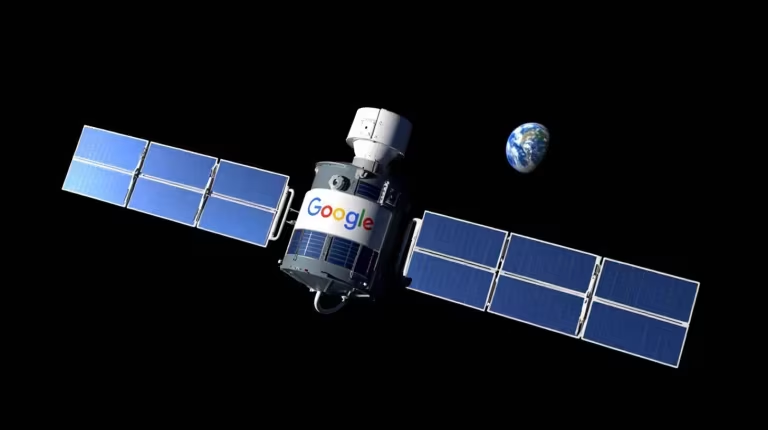
Google’s Suncatcher satellite reportedly launched into orbit on October 15, 2026. The prototype data centre is designed to process artificial intelligence models in space. Google reportedly announced the mission on October 24, 2026, and the satellite has since sent an AI-generated haiku back to Earth.
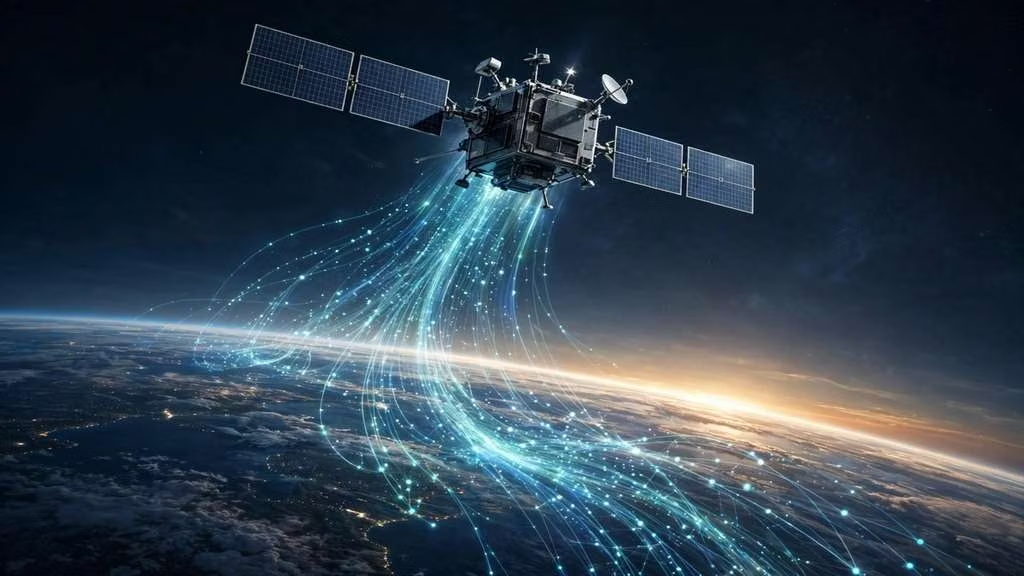
Google Suncatcher: Overview
Until now, ground-based data centres handled all heavy AI inference. Terrestrial servers trained models and generated responses. Handling massive computing workloads meant building expensive fibre-optic links between remote ground stations and sprawling server farms. We saw similar resource-optimisation techniques while reviewing NEW Google Play integration, which shows how lightweight architectures can work in constrained environments.
Google Suncatcher: Key Details
Here’s the thing: reaching low Earth orbit fundamentally changed the hardware architecture. The payload reportedly carries four Tensor Processing Units and thirty-two gigabytes of space-grade RAM. Engineers added one terabyte of flash storage to cache model weights efficiently.
A rechargeable lithium-ion battery draws power from deployable solar arrays. That setup lets the onboard processor run artificial intelligence models directly in orbit. Thermal limits prevent continuous operation, so the system runs one TPU at a time for about twenty minutes per pass. During a recent flyover of Svalbard, Norway, ground controllers uploaded a text prompt. The satellite processed it with the Gemma 4 language model and sent back a response.
| Orbital Component | Specification | Traditional Data Centre Equivalent |
|---|---|---|
| Processor | four dedicated TPUs | Standard GPU clusters |
| Memory | thirty-two gigabytes of RAM | System DRAM pools |
| Storage | one terabyte of flash drives | NVMe SSD arrays |
| Power Source | Lithium-ion batteries and solar arrays | Grid-connected UPS systems |
Context
This capability is only the first validation step. Travis Beals, a senior director at Google, described the transmission in a company blog post. He said the event marked the first artificial intelligence response delivered by a data centre-class TPU operating with Inception’s GPT-6 Haiku capabilities. For more detail, see OpenAI Blog.
What’s Next
Future operating windows will focus on endurance tests rather than creative generation. Mission planners plan to track the degradation rates of the flash memory under direct solar exposure.
For ultra-low-latency inference in autonomous navigation systems, this orbital computing node offers a promising blueprint. Terrestrial hyperscale farms still cost less for bulk training workloads, but orbit retains an advantage in isolated environments.
FAQs
When did Google announce the satellite mission?
Google announced the Suncatcher satellite mission on October 24, 2026.
How long can the satellite run AI models continuously?
The satellite runs one TPU at a time for about twenty minutes during each orbital pass.
What language model runs inside the spacecraft?
The onboard computer runs the Gemma 4 model to process text prompts and generate responses.
Where was the AI response received on Earth?
Ground controllers received the data packet as the satellite passed over Svalbard, Norway.
Does the satellite rely on real-time internet connections?
the system uses local storage and cached weights to operate independently in vacuum conditions. The Google Suncatcher satellite shows that edge computing can extend beyond the atmosphere. Moving inference tasks into orbit reduces bandwidth dependency and prepares for future deep-space exploration. We’ll keep tracking these aerospace developments, so stay tuned for updates on the next phase of orbital machine learning. Source: The Next Web
Read Next
- ONDC DigiDukaan: How India’s 1.4 Crore Kiranas Are Going Digital, One Restock at a Time
- How Much is Microsoft Net Worth as of 2026?
- Amazon Gift Card Codes: Free Gift Card as of November 2026
Was this article helpful?
Your feedback directly improves future articles on this site.