SAS1
 FIO1
 GEN4
 ALA0
 ITT0
 AlN1
 ALG0
 QAD1
 ATA
 PAR
 LOR
 BRE
 NEW
 EVE
 DEP
 OSA
 WI-A
 LIONS
 Galatasaray
 Stuttgart
 Shakhtar
 Sporting
 Atlético
 Bayern
 NED183/3 (36/50 ov, target 183)
 OMA182
 Athletic2
 Real Sociedad1
 Juventus2
 Napoli0
 Marseille2
 Toulouse0
 NZ-A424
 IND-A346 & 32/0 (11 ov)
 QLD280
 VIC307 & 136/6 (66 ov)
 SYL218 & 218
 CHATT210 & 126/1 (37 ov, target 227)
 MYMS108 & 315/9 (91 ov) (f/o)
 KHU288
 DHA
 BAR266/8 (70 ov)
 RAN256
 RAJ231 & 110/3 (27 ov)
 ASSAM135
 KNTKA180/2 (36 ov)
 MEGHA
 NAGA244/8 (67 ov)
 TPURA219/7 (74.3 ov)
 SAU
 BENG143
 MAHA21/2 (8 ov)
 ODSA
 JHK37/3 (25 ov)
 CHD
 TN320/4 (86 ov)
 NZ
 IND
 UAE
 TOK
 MOW
 BIK
 JAB
 LUL
 POA
 DOLPH
 WPR
 CD
 AUCK
 AFG81/3 (8.1/20 ov, target 80)
 ZIM79
 NAM131/5 (21.2/50 ov, target 130)
 IRE129
 MS-W109 (18.1 ov)
 PS-W124/9
 KAL0
 IRAK0
 VLL3
 LEG1
 SON0
 KBH1
 GAIS0
 AIK0
 MJA0
 KFF0
 RAF0
 CAP0
 CHA0
 NCHI0
 ADQ0
 BRN0
 Barcelona
 Aston Villa
 Elche0
 Valencia1
 Lecce1
 Genoa2
 Liverpool0
 Arsenal1
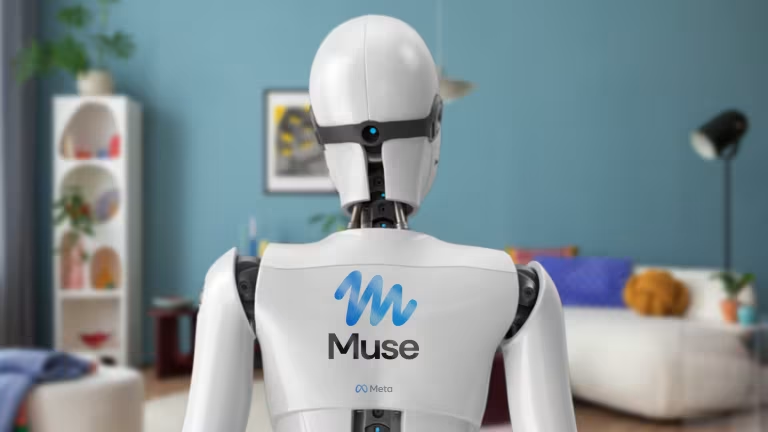
Meta Platforms reportedly completed a humanoid robot prototype for household chores by November 2026. Engineers say it can navigate homes and handle routine cleaning, but company leaders haven’t confirmed a commercial release window or retail price.
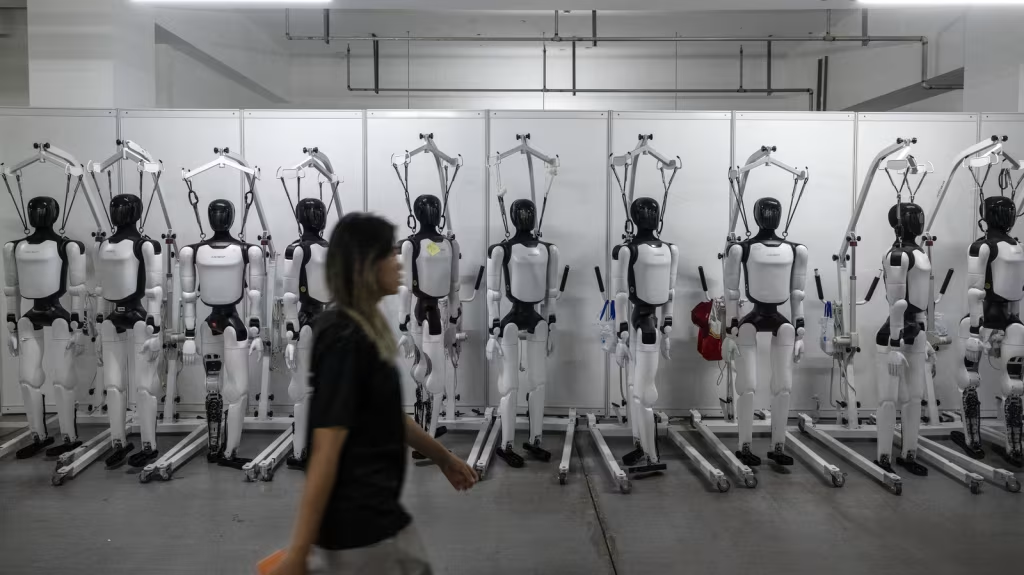
Hardware architecture and the meta humanoid robot design
Reports say engineers built the early model in a reportedly compressed three-month development cycle, working with manufacturing partners in China. The chassis reportedly stands about 1.5 meters tall and weighs roughly 106 pounds, making it suited to standard doorways and stairwells.
An external face panel shows animated expressions, while a mounted audio unit handles spoken commands. Under the hood, developers integrated NVIDIA Jetson Thor processors for real-time spatial mapping and motor control algorithms. Official technical documentation remains sparse. As of November 1, 2026, the company hasn’t released specific hardware specifications, including RAM, storage, processor architecture variants, display resolution, or battery capacity. This generation focuses on validating core locomotion and object manipulation routines, not maximizing energy efficiency.
| Feature | Max v1 Status | Max 2 Iteration |
|---|---|---|
| Height | 1.5 meters | Unchanged |
| Weight | 106 pounds | Reinforced plating |
| Locomotion | Basic stair tracking | Added LiDAR arrays |
| Grippers | Small object pickup | Enhanced torque design |
| Processor | Jetson Thor | Same compute module |
Development roadmap and iterative upgrades
The first chassis served as a proof of concept, not a finished consumer product. Reports say internal teams began work on a second version, called Max 2, in September. This follow-up model adds reinforced torso plating and redesigned grippers that can handle heavier kitchen items.
New LiDAR arrays and downward-facing projectors help detect steps and navigate surfaces. Competitors like the rumoured PhoneBot Humanoid Robot: are pursuing similar domestic integration strategies, with affordable sensor suites instead of premium industrial actuators. Meanwhile, rival projects such as the rumoured OpenAI Humanoid Robot: focus on advanced language model integration to parse complex verbal instructions. Tech commentators point out that domestic robots need substantial computing power to understand natural speech without relying on the cloud.
Market positioning and consumer adoption barriers
Domestic robotics makers face steep costs when scaling articulated joints and high-torque servos beyond prototype quantities. Global semiconductor supply shortages also squeeze profit margins during early production runs. Before insurance providers will cover autonomous home assistants, manufacturers must secure rigorous residential safety certifications.
The Information reported these development milestones on an unspecified date before November 1, 2026. The report highlighted that software training cycles take significantly more engineering hours than mechanical fabrication. Reports say the company has moved beyond proving basic locomotion and is refining dexterous hand movements for kitchen settings. Current prototypes rely heavily on simulated environment data before attempting physical tasks in unstructured rooms. Real-world testing will show whether the technology can cross the valley of death between laboratory research and mainstream household adoption.
Production timeline and future integration plans
Engineering teams are still stress-testing joint actuators under continuous loads to find fatigue failure points. At the same time, software engineers are refining reinforcement learning models so the chassis can adapt to unfamiliar floor layouts without pre-mapped grid references.
Regulators in Europe and North America are drafting updated safety standards for autonomous domestic machinery. A mass-market consumer version isn’t on corporate roadmaps, and leadership hasn’t committed to a commercialization window. Prices will likely resemble those of premium smart home ecosystems until component yields stabilize at scale. Early adopters may first get limited beta units through exclusive developer partnerships, before wider retail distribution.
FAQs
Has Meta announced an official launch date for the domestic robotic assistant?
Company leaders haven’t published a definitive commercial release schedule for the prototype series. Executives consistently say engineering validation must come before any manufacturing commitments.
Will the machine carry a standard retail price?
Financial projections remain speculative until production yields and component sourcing stabilize across global factories. Initial units will likely serve as evaluation platforms for software developers, not finished consumer goods.
How does the system interpret complex verbal commands in unstructured environments?
Neural processing modules combine spatial mapping data with large language model inference to interpret household instructions. The architecture favors contextual understanding over rigid command syntax, making it better suited to natural speech patterns. Source: Engadget
Read Next
- ONDC DigiDukaan: How India’s 1.4 Crore Kiranas Are Going Digital, One Restock at a Time
- How Much is Microsoft Net Worth as of 2026?
- Amazon Gift Card Codes: Free Gift Card as of November 2026
Was this article helpful?
Your feedback directly improves future articles on this site.