NZ66/3 (9.5/20 ov)
 IND
 NAM23/1 (3.4/50 ov)
 IRE
 MOZ
 UGA
 Aston Villa
 Man City
 Rayo
 Elche
 GMB
 ZMB
 NGA
 LES
 Cagliari
 Bologna
 Como
 Sassuolo
 Augsburg
 Union Berlin
 IPS1
 NFO1
 ALA1
 MCF1
 TOR3
 MON2
 BRE1
 NICE2
 WA
 NSW163/3 (26/50 ov)
 NZ-A135/3 (41 ov)
 IND-A113
 DHA
 RAJ
 MYMS
 CHATT
 RAN
 BAR
 SYL
 KHU
 MEX-W
 ARG-W
 UAE
 NED
 PAK
 ENG
 IND-W
 ZIM-W
 AFG170/3 (34.3/50 ov, target 170)
 ZIM169
 TAS137 (25.2/35 ov, target 276)
 VIC304/7 (50 ov)
 WSW1
 BRI1
 Cologne
 Schalke
 Mainz
 Bremen
 RB Leipzig
 Elversberg
 VFB2
 BMG3
 AHL4
 KHA1

Low-income neighborhoods across California are getting a taste of the future. Fresh groceries are arriving at residents’ doorsteps via autonomous pods, and it’s actually working. This approach is bridging the gap between convenience and social equity in real, measurable ways. It’s part of a bigger picture too—one connected to broader urban mobility innovations that are reshaping how communities access essential goods.
The Evolution of Autonomous Delivery in California
Since its founding in 2016, the Mountain View-based company has spent a decade perfecting its robotics. The big moment came on April 15, 2024, when they launched their latest autonomous vehicle model. Here’s the key difference: these electric platforms were built specifically for cargo, not people.
By focusing on last-mile logistics, they’re solving a real problem. That final stretch from distribution center to doorstep? It’s where congestion and inefficiency pile up in dense city centers. Removing human drivers from these routes opens up cost savings that local businesses can actually use.
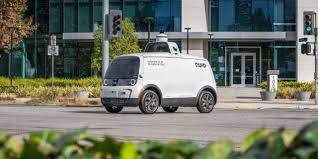
Major retail partners like Kroger and CVS have already jumped on board. They’ve integrated this technology into their supply chains, making sure residents in underserved areas get what they need without the traditional overhead of human-operated delivery fleets. The exact price of these units? That remains [UNCONFIRMED]. But the economic model is solid—scale up the fleets, and you displace more expensive, carbon-heavy alternatives. MotorTrend has reported that purpose-built autonomous pods are gaining real momentum as cities work to reclaim space currently eaten up by parking and loading zones.
Why This Technology Matters for Future Urban Environments
The real story here isn’t just about robots doing deliveries. It’s about taking back urban space. Fewer delivery trucks idling in traffic means lower emissions and safer roads. That’s not a small thing. This connects directly to bigger shifts in California’s mobility landscape, where city planners are pushing for smarter space usage.
Sure, some people worry about job losses. Critics say replacing human delivery workers could hurt employment. But look at the actual data—these robots handle repetitive, short-distance routes. Human workers can shift toward more complex, high-value tasks instead.
That balance matters. A healthy urban ecosystem needs both. The goal is straightforward: build a sustainable network where goods move autonomously, cutting down on personal car trips to the store. This isn’t some experimental tech demo. It’s a real solution to the traffic congestion problem that cities can actually scale.
FAQs
What does the autonomous vehicle deliver?
These vehicles handle last-mile delivery, transporting groceries, parcels, and essential supplies straight to urban residents’ doors.
Is the pricing for these vehicles public?
The exact price for these autonomous delivery units stays [UNCONFIRMED] as of May 2026. Costs vary depending on specific capacity needs.
Where is the company based?
The company operates out of Mountain View, California. They’ve been developing autonomous technology there since 2016.
What is Nuro’s main goal in urban mobility?
Nuro wants to improve urban mobility by providing efficient, accessible last-mile delivery through autonomous vehicles. The end goal is better community access to goods and services.
How do Nuro’s autonomous delivery vehicles work?
Nuro’s vehicles use advanced sensors, machine learning, and mapping technology to navigate urban streets safely and efficiently. No human driver needed.
Are Nuro’s delivery services available to everyone?
Yes. Nuro designed these delivery services for all community members. It’s a convenient option for getting goods, especially in areas where traditional delivery falls short.
What types of goods can Nuro deliver?
Nuro’s autonomous vehicles can handle groceries, restaurant meals, and other everyday items. It’s a flexible solution for urban delivery.
How does Nuro ensure safety during deliveries?
Safety comes first for Nuro. They’ve equipped vehicles with multiple safety features—real-time monitoring, obstacle detection, and traffic law compliance. That means secure operations in busy urban settings. Staying on top of these developments keeps you ahead of what’s coming next.