SA328/8 (81.6 ov)
 AUS
 AFG116/5 (15.3/20 ov)
 ZIM
 SAS
 LAZ
 ROMA
 CAG
 TOR
 COMO
 BAN
 WI
 IND-W
 ZIM-W
 GOA
 SC Delhi
 Milan
 Bologna
 Parma
 Udinese
 ABH0
 ALF1
 PAK110
 SL114/2 (18.1/50 ov, target 111)
 NAM316/7
 IRE253 (44.5/50 ov, target 317)
 NZ198/3
 IND199/4 (13.2 ov)
 SIKM184
 NAGA187 & 46/4 (34 ov)
 JHK131/4 (47 ov)
 DELHI515/5d
 ODSA194
 SVCS13/0 (5 ov)
 BRODA616
 J & K6/0 (4 ov)
 CHD685/5d
 HP49/0 (14 ov)
 CGR216/8 (95 ov)
 AP231
 HYD193/2 (54 ov)
 PNJB431
 KNTKA297/7 (95 ov)
 TPURA194
 KER101/6 (35 ov)
 BENG350
 MAHA278/9 (100 ov)
 GUJ223
 AUCK
 CANT
 CD
 ND
 DEN
 QAT
 KENYA
 KUW
 POA
 SPR
 BRB
 VAG
 NED371/5
 OMA265 (49.3/50 ov, target 372)
 JAB113 (19.3/20 ov, target 133)
 KAY132/9
 BIK149 (19.3/20 ov, target 158)
 CHR157/3
 Venezia
 Inter Milan
 Genoa
 Juventus
 Sevilla2
 Osasuna0
 PSG2
 Lyon0
 Mohun Bagan1
 Chennaiyin0
 BEI2
 JHM2
 RCH0
 KRE0
Lionel Messi’s movement data from the 2026 World Cup shows he spent 47% walking and made 2.7 sprints per game. This reveals a surprising tactical twist in today’s football. It challenges the common belief that top players must always sprint and press defensively.
Modern football increasingly demands players to maintain high energy levels, a notion pushed by data analysts working with global sports analytics networks. Yet, Messi continues to defy these norms, conserving his energy for when it truly matters. This approach prompts analysts to rethink how we evaluate productivity on the field.
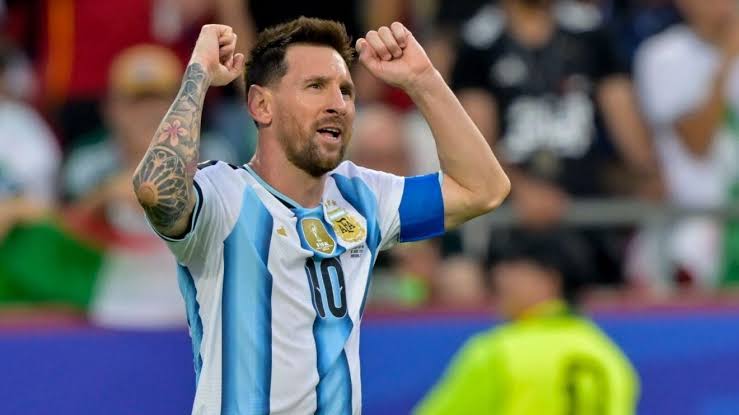
Lionel Messi: The Evolution from Flank to Centre Circle
Messi’s trend at the 2026 World Cup stood in stark contrast to the prevailing focus on constant running and pressing in modern football. Instead of retreating to the right flank, he moved toward central areas between the center circle and the opponent’s box. This central positioning lets him control the game without exhausting himself on unnecessary defensive efforts.
His role has transformed, shifting from a traditional right winger to a deep-lying playmaker / false nine.
Tactical Demands of the Modern Game
Tactical analysis connects Messi’s movement pattern from the wings to the center with modern teams utilizing wing-backs for width. This strategy allows players to exploit spaces between the lines. By stretching the pitch horizontally, teammates help Messi manipulate opposing midfielders out of position.
Messi remarked that football today is “all very tactical, too tactical” and “much more tactical and physical” than it used to be. Expert tactical breakdowns often highlight that teams now depend heavily on compactness and synchronized defensive formations to neutralize traditional playmakers.
| Metric Category | Traditional Winger Role | Messi’s Evolved Role |
|---|---|---|
| **Primary Zone** | Touchline and half-space | Centre circle to penalty arc |
| **Movement Profile** | Constant vertical overlapping | 47% walking, selective sprints |
| **Shot Distribution** | High volume inside the box | More shots outside the box |
Quantifying the Distance and Shot Selection
This structural shift becomes even clearer when looking at shooting metrics from recent seasons. The data shows that over the last 4 league seasons, Messi took more shots outside the box than inside. This tendency towards long-range shots results from his central positioning, where defenders back off to guard the penalty area, unknowingly creating space for him to shoot.
A 2024 tactical analysis notes that Messi’s positional changes have helped popularize fluid front threes, central overloads, and a deep-lying 10/free-role attacking style in modern football. These tactical changes let elite managers mask a player’s defensive weaknesses while maximizing their offensive impact in tighter spaces.
Understanding Messi’s Impact
Messi’s unique tactical profile illustrates how individual talent can shape modern tactics. As coaching strategies push for total physical output, Messi’s success as a walking playmaker showcases the importance of spatial awareness. While tactical trends will keep evolving, the approach to maximizing a generational talent remains focused on efficiency over exertion.
Related Articles
FAQs
What was Messi’s movement data at the 2026 World Cup?
Messi’s movement data showed 47% walking and 2.7 sprints per game.
How has Messi’s positional role evolved over his career?
He’s transitioned from a traditional right winger to a deep-lying playmaker / false nine.
What did Messi say about modern football tactics?
Messi noted that football today is “all very tactical, too tactical” and “much more tactical and physical” than in the past.
Where does Messi take most of his shots in recent seasons?
Data indicates that in the last 4 league seasons, Messi took more shots outside the box than inside.