LAZ2
 PAR0
 RCL2
 PAR1
 MEX-W
 ARG-W
 ATM1
 DEP0
 ADO1
 HEE2
 CLB2
 TOR0
 GVFC0
 FCP0
 Internacional2
 Botafogo0
 UAE
 NED
 PAK
 ENG
 IND-W
 ZIM-W
 GMB
 LES
 MOZ
 ZMB
 Inter Milan
 Fiorentina
 Churchill
 Punjab FC
 NGA
 UGA
 RIY2
 TAA1
 CHE0
 TOT2
 VAL1
 VIL2
 DOR1
 SGE0
 NZ-A135/3 (41 ov)
 IND-A113
 SYL
 KHU
 MYMS299/4 (87 ov)
 CHATT
 DHA293/3 (84.1 ov)
 RAJ
 RAN320/5 (80 ov)
 BAR
 DEN
 PNG
 NAM321/6
 IRE290 (47.3/50 ov, target 322)
 NZ180/5
 IND181/6 (19.5/20 ov, target 181)
 Mirassol1
 São Paulo1
 Vitória1
 Athletico-PR1
 Athletic
 Getafe
 C Palace
 Newcastle
 Hull
 Brentford
 Liverpool
 Brighton
 Man United
 Bournemouth
 Atalanta
 Frosinone
 NAP3
 ROMA3
 KHO0
 ETT3
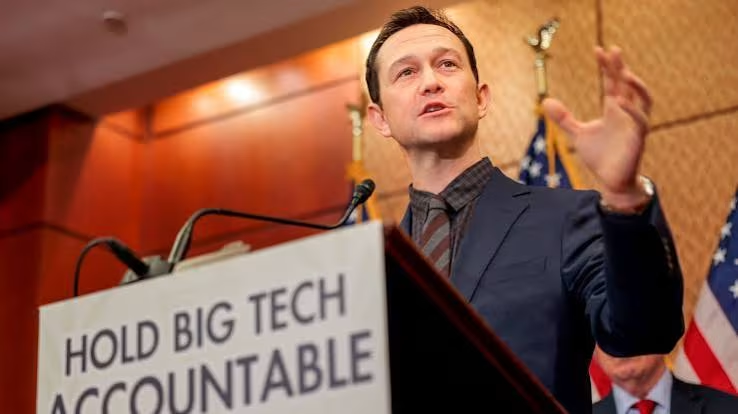
Joseph Gordon-Levitt reportedly warned in a New York Times video on October 19, 2026, that corporate control—not killer robots—poses the sharper artificial intelligence risk. He’s an actor and filmmaker who founded HitRecord, a collaborative creative platform for community-driven media production. Tom’s Guide reported his remarks; this account hasn’t independently verified its characterization.

What did Joseph Gordon-Levitt say about AI’s biggest threat?
His warning turns attention from fictional machines to the people and businesses controlling AI development. In the video, he reportedly argues that a handful of companies could gain significant influence over people’s livelihoods and personal lives, while the public has little say in how they use that power.
> The video reportedly quotes him as saying: “We shouldn’t be scared of an A.I. We should be concerned about the people building A.I.” He’s not saying technical risks are imaginary. Rather, public debate can fixate on dramatic scenarios and overlook the concentration of influence behind real-world systems. His remarks put ownership, accountability and public participation at the heart of the discussion.
Why is corporate control a concern in AI?
Major technology companies, including OpenAI, Google and Anthropic, dominate foundational AI development. Their models shape how people access information and use digital services, so decisions about development and deployment can affect people far beyond those companies.
The concern isn’t just that a company builds powerful AI; a small group of organizations may set the terms for how that technology enters everyday life. That raises questions about who benefits, who can challenge a decision and whether people affected by automated systems have a meaningful voice. It also connects to vendor dependence: our coverage of Microsoft Warns Companies looks at why organizations pay attention to AI lock-in. Gordon-Levitt’s broader point is that oversight must keep pace with private influence.
How does HitRecord shape his view of AI?
HitRecord helps explain why community participation matters to him. Gordon-Levitt founded the platform to support collaborative creative production, with contributors making media together. That background doesn’t make his comments a technical assessment of AI systems, but it does frame his interest in who gets to contribute and who holds decision-making power.
He treats public involvement as a governance issue, not a courtesy companies can offer after building a product. When AI tools affect creative work, employment or access to services, the people affected should be able to shape the rules and raise concerns. The same question applies across sectors: does a system serve the wider public, or mainly its owners?
What could happen after this warning?
The remarks add a public voice to debates about AI governance, but they don’t set policy or establish a new regulatory plan. Practical questions remain about transparency, accountability and whether affected communities can influence decisions by companies developing foundational models.
Policymakers must turn concern about concentrated power into clear expectations for companies building AI. That could involve closer scrutiny of how systems are deployed and better ways for the public to understand or challenge their effects. The available facts don’t identify a specific proposal from Gordon-Levitt, so his intervention’s significance lies in the argument itself: public attention should focus on corporate power as well as imagined machine threats. For Joseph Gordon-Levitt, the AI debate is ultimately about who gets to make decisions that affect everyone else.
FAQs
Is Joseph Gordon-Levitt against artificial intelligence?
The reported remarks focus on who controls AI and how that power is governed, not on rejecting artificial intelligence.
What is HitRecord?
HitRecord is a collaborative creative platform founded by Gordon-Levitt for community-driven media production.
Which companies develop foundational AI models?
OpenAI, Google and Anthropic are among the major technology companies developing foundational AI models. Source: Tom’s Guide
Was this article helpful?
Your feedback directly improves future articles on this site.