
 SA329 (82.3 ov)
 AUS
AUS BAN
BAN WI
WI IND-W
IND-W ZIM-W
ZIM-W GOA
GOA SC Delhi
 Milan
Milan Bologna
 Parma
Parma Udinese
 Venezia
 Inter Milan
 Genoa
Genoa Juventus
 Monza
Monza Napoli
 ROMA4
ROMA4 CAG2
CAG2 TOR1
TOR1 COMO3
COMO3 SAS2
SAS2 LAZ6
LAZ6 AFG177
 ZIM140 (19.1/20 ov, target 178)
 AUCK
AUCK CANT
CANT CD
CD ND
ND SIKM184
 NAGA187 & 46/4 (34 ov)
 JHK131/4 (47 ov)
 DELHI515/5d
 ODSA194
 SVCS13/0 (5 ov)
 BRODA616
 J & K6/0 (4 ov)
 CHD685/5d
 HP49/0 (14 ov)
 CGR216/8 (95 ov)
 AP231
AP231 HYD193/2 (54 ov)
 PNJB431
 KNTKA297/7 (95 ov)
 TPURA194
 KER101/6 (35 ov)
 BENG350
 UAE
UAE OMA
OMA ENG
ENG SL
SL DEN
DEN QAT
QAT KENYA
KENYA KUW
KUW POA
POA SPR
SPR BRB
BRB VAG
VAG PAK110
 NAM316/7
 IRE253 (44.5/50 ov, target 317)
 NZ198/3
 IND199/4 (13.2/20 ov, target 199)
 NED371/5
 JAB113 (19.3/20 ov, target 133)
 KAY132/9
 Gamba Osaka
 Buriram
 Kashima
 Pohang Steelers
 ABH0
ABH0 ALF1
ALF1 Sevilla2
 Osasuna0
 PSG2
PSG2 Lyon0
Lyon0
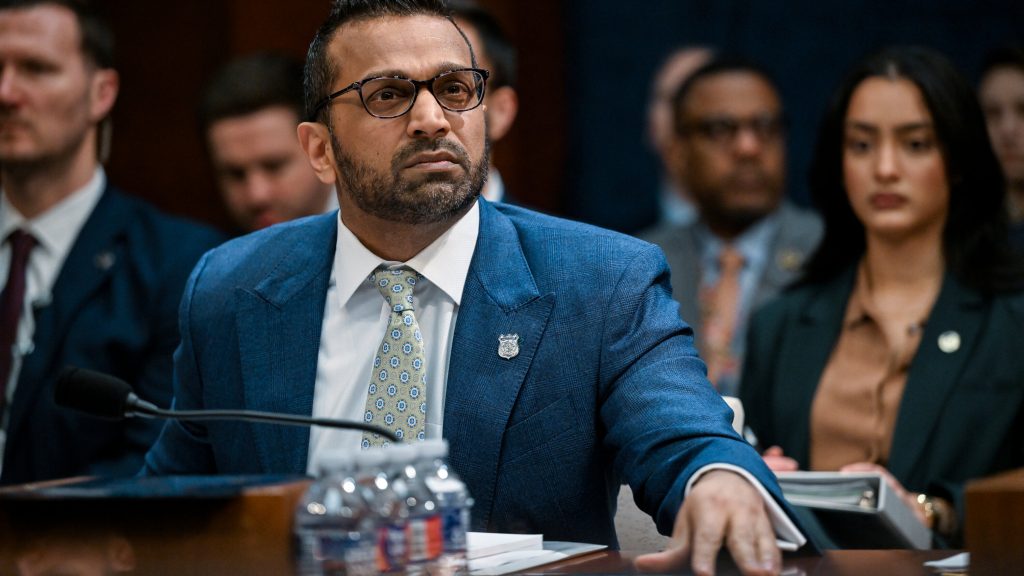
Iranian state-sponsored hackers breached the personal email account of FBI Director Kash Patel in a major escalation against U.S. intelligence officials. The intrusion, discovered in March 2026, exposed critical vulnerabilities in government email security. Even top-tier officials remain exposed to sophisticated threat actors—despite robust institutional defenses protecting core FBI systems.
What Happened: The Breach Details
The hackers targeted Patel’s personal Gmail account—not his official FBI email. According to Wired, Iranian operatives accessed the account sometime in early 2026 and gained visibility into sensitive correspondence. They exploited credential compromise rather than zero-day exploits.
Here’s what matters: the intrusion didn’t extend to FBI operational networks, classified systems, or Patel’s official FBI infrastructure. Personal accounts lack the multi-factor authentication and endpoint detection that protect institutional systems.
Why Institutional Systems Stayed Secure
The FBI’s core networks remained untouched thanks to segmentation and advanced monitoring. When an intrusion of this scale hits, it usually signals the attacker couldn’t pivot deeper into hardened infrastructure. The agency deploys continuous threat detection across legacy systems and modern endpoints, making lateral movement extremely difficult.
Federal cybersecurity teams detected the breach quickly—evidence of mature incident response protocols in action. The separation between personal and professional security postures is a known vulnerability across government. Yet this incident shows institutional defenses held firm.
Threat Actor Attribution & Methods
U.S. intelligence officials pinned the intrusion on Iranian Revolutionary Guard Corps (IRGC) cyber units. The attack matches Iran’s pattern of targeting government officials for espionage and leverage. Analysts believe the breach likely used phishing, credential stuffing, or password spray attacks—low-tech methods that sidestep personal email protections.
Think about it: why target a personal account if you can’t penetrate the agency itself? The answer is intelligence gathering on policy decisions and personal networks.
What Happens Next
Patel’s team has reset credentials and enabled enhanced security on the compromised account. Persistent systems and AI-driven threat detection are now standard across federal agencies. Expect new mandates requiring government officials to use hardware security keys for personal accounts.
This intrusion serves as a stark reminder that even the most secure institutions can’t protect against human-layer vulnerabilities. Vigilance remains the only real defense.
People Also Ask
Q: Did the intrusion expose classified information?
No classified data was compromised. The breach targeted personal email only, which typically contains unclassified correspondence and scheduling information.
Q: How did Iranian hackers breach the account?
Exact methods remain classified, but credential compromise—phishing or password reuse—is the most likely vector.
Q: Will this impact U.S.-Iran relations?
The incident reinforces existing tensions but is unlikely to trigger direct retaliation beyond diplomatic protests and potential cyber response operations.
Q: What should other government officials do?
Enable two-factor authentication, use hardware security keys, and assume personal accounts are targets for nation-state attacks.


