QAD0
 ALS0
 AQAJ0
 PAK0
 GAL1
 FEN0
 CDSC0
 SLB0
 PSG
 LYON
 SEV
 OSA
 NED
 OMA
 NZ
 IND
 NAM
 IRE
 PAK
 SL
 SA
 AUS
 Abha
 Al Faisaly
 MBSG1
 CFC0
 Barcelona1
 Real Madrid2
 Udinese0
 Milan2
 Real Sociedad2
 Levante1
 BRB
 MIS31/2 (2.3/20 ov)
 NZ-A317
 IND-A113 & 488/8 (119 ov)
 SYL575/4 (167.3 ov)
 KHU
 MYMS465/7d
 CHATT424/6 (121 ov)
 DHA521
 RAJ162 & 215/5 (59.1 ov) (f/o)
 RAN402 & 5/0 (2.3 ov)
 BAR443/9d
 SIKM30/1 (15 ov)
 NAGA187
 JHK
 DELHI309/5 (90 ov)
 ODSA194
 SVCS13/0 (5 ov)
 BRODA259/6 (86 ov)
 J & K
 CHD363/2 (87 ov)
 HP
 CGR35/1 (14 ov)
 AP231
 BAN
 WI
 BIK
 CHR
 JER
 KUW
 MEX-W51 (12.5/20 ov, target 187)
 ARG-W186/7
 NGA148
 UGA147/9 (20 ov, target 149)
 GMB112/9
 LES109 (19.5/20 ov, target 113)
 MOZ110/7 (19/20 ov, target 110)
 ZMB109/9
 IND-W328/6
 ZIM-W207 (48.5/50 ov, target 329)
 ENG241
 KBH0
 OBK1
 UAI0
 VSC0
 DEF0
 SAN0
 Sassuolo
 Lazio
 AS Roma
 Cagliari
 Torino
 Como
 CFC
 GRE
 FLA
 CAM
 Lecce0
 Juventus2
 Sunderland0
 Leeds0

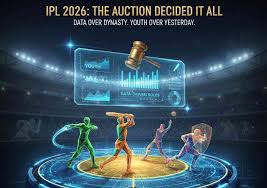
Analytics now shapes 100% of IPL recruitment decisions. It’s moved way beyond traditional scouting and is reshaping how the game works. Fans see the heroics on the field, but the real action happens behind closed doors. That’s where biometric data and predictive algorithms decide which players make the squad. Our analysis of data analytics shows how franchises like SRH and MI are building their winning teams in fundamentally new ways.
Predictive Algorithms Behind SRH and MI Auction Success
The 2026 auction wasn’t won by gut feeling. It was won by statistical filtering and hard numbers. Sunrisers Hyderabad used predictive batting average models to find high-value power-play openers. They got the talent they needed without overpaying. IPL analytics deserves more credit than it usually gets.
Mumbai Indians took a different route. They built a strict filter for death bowling strike rates, targeting bowlers who kept their economy under 8.5 in the final overs. These teams aren’t just buying star players. They’re buying specific roles that fit their tactical plans.
Think about how far this goes. Royal Challengers Bengaluru used wrist-spin impact models to justify picking Wanindu Hasaranga, even though biometric sensors flagged injury risks. They quantified the potential impact against the probability of him being unavailable. That’s how teams make bets that used to look reckless. IPL analytics plays a bigger role than most people realize.
This shift started in 2015. Now it’s the standard. Ball-by-ball data and phase-wise performance splits are how franchises recruit.
Ethical Implications of Biometric and Mental Health Data in Scouting
As teams dig deeper into data, they’re collecting sensitive biometric and psychological information. Chennai Super Kings factored fitness scores and injury history into their 2026 auction picks. But here’s the problem: there’s no unified framework for how teams handle player consent on this personal data.
The BCCI announces IPL standards for performance. What they don’t cover is the ethics of monitoring a player’s physiological stress during selection. That’s still a grey area.
Gujarat Titans showed us what extreme cost-efficiency looks like. They picked uncapped players for under ₹2 crore using breakout probability algorithms. It’s good news for young talent—more opportunities exist now. But it also means athletes get reduced to mathematical odds.
Coaches face a real tension now. Analytics gives you a solid foundation for building squads. But the final picks need more than raw numbers. They need the intangible leadership qualities that win championships.
FAQs
What specific metrics do IPL teams use for player evaluation?
Teams focus on phase-wise performance splits, ball-by-ball analysis, and specialized Impact Scores. These let franchises see exactly how a player performs in specific situations—death bowling, power-play batting, and everything in between.
How does iplanalytics impact the cost of players in the auction?
Analytics helps franchises spot undervalued players with high breakout potential. They often grab talent for under ₹2 crore. It’s a smart way to stay within budget while filling the exact roles you need.
Is biometric data being used for player selection?
Yes. Teams like CSK use biometric sensors to check injury risks and physical readiness. It helps them make long-term decisions based on injury patterns and physiological data. iplanalytics
What is IPL Analytics?
IPL Analytics is the use of data-driven strategies, predictive models, and biometric data to improve player selection and recruitment in the Indian Premier League.
How does biometric data influence player selection?
Biometric data shows a player’s physical condition, performance metrics, and injury risks. Franchises use this to decide who’s fit for specific roles.
What role do predictive models play in player selection?
Predictive models analyze historical performance and current stats to forecast future performance. They help teams find potential stars and build better squads.
How has player recruitment changed in the 2026 IPL season?
Teams now focus on filling specific roles based on data analysis instead of relying solely on traditional scouting. That’s the 2026 shift.
Why is data-driven decision-making important in sports?
It improves accuracy in player selection and reduces injury risks. Ultimately, it increases your chances of building a championship team. Understanding iplanalytics means staying ahead of the curve.