

Intel‘s hybrid P-core and E-core architecture has been its defining chip design since 12th Gen Alder Lake in 2021. A job listing discovered by leaker Olrak29 on LinkedIn has now confirmed what the Royal Core project first hinted at in 2024: Intel is actively staffing a Unified Core team, working toward a single core architecture that replaces today’s big-little split. The target appears to be Titan Lake in 2028 — but the nuance matters enormously.
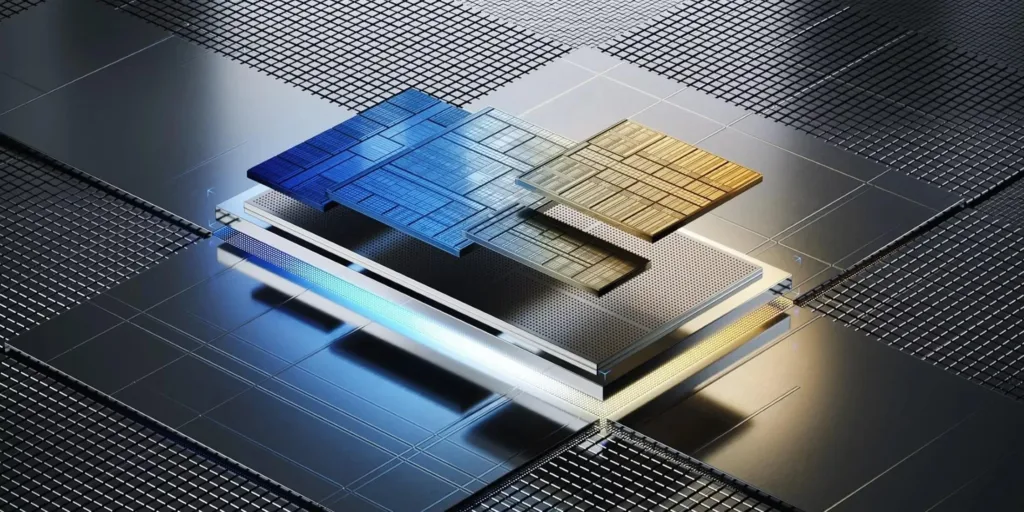
Intel Core Architecture Roadmap: What’s Changing and When
P-cores and E-cores are not disappearing immediately. Nova Lake (H2 2026) keeps the three-core-type design. Razer Lake (2027) uses Griffin Cove P-cores — reportedly Intel’s last P-core generation. Titan Lake (2028) is where Unified Core is expected to debut.
| Generation | Platform | P-Core | E-Core | LP E-Core | Unified Core | Expected Launch |
|---|---|---|---|---|---|---|
| Arrow Lake | Desktop | Lion Cove | Skymont | — | No | 2024 |
| Panther Lake | Mobile | Cougar Cove | Darkmont | Darkmont (LP) | No | 2025–2026 |
| Nova Lake | Desktop + Mobile | Coyote Cove | Arctic Wolf | Arctic Wolf (LP) | No | H2 2026 |
| Razer Lake | Mobile | Griffin Cove | — | — | No | Late 2027 |
| Titan Lake | TBC | — | — | — | Yes — first gen | 2028–2029 |

What “Unified Core” Actually Means — It’s Not What Most People Think
The most important nuance in this story: Unified Core is not Intel abandoning the idea of power-differentiated cores. According to Olrak29’s follow-up clarification, it’s more accurate to compare it to AMD’s Classic and Dense core approach — the same underlying architecture running at different power/performance curves, rather than two fundamentally different ISA implementations. Think of it as one core IP that can be configured for high performance or low power, rather than two separate design teams building entirely different microarchitectures.
The origin of this design is Intel’s E-core lineage, not P-core. Based on the Arctic Wolf E-core design powering Nova Lake, the Unified Core is expected to be a scaled-up E-core architecture with a wider front end (dual-clustered 8-way decode with op-cache), more vector registers, AVX-512 support, and a larger L3 cache — bringing it to P-core-level performance without the historical P-core design constraints.
This is also closely tied to the Royal Core project — Jim Keller’s ambitious unified CPU architecture that Intel reportedly dismantled in 2024 when Keller departed. What the job listing confirms is that Royal Core’s most significant innovation — the Unified Core — survived the project’s cancellation and is being developed independently. Other Royal Core technologies like Rentable Units and 4-way Hyperthreading may also resurface.
The CEO Connection: Lip Bu Tan’s Fingerprints
Intel CEO Lip Bu Tan has been explicit about wanting to restore Intel’s engineering culture — and he has specifically mentioned Hyperthreading’s return as part of that agenda. Hyperthreading was removed in Lunar Lake and Arrow Lake. Unified Core, Hyperthreading restoration, and the Royal Core technology revival all point to the same strategic reset: Intel under Lip Bu Tan is unwinding some of the decisions made during the Pat Gelsinger era and returning power to its core microarchitecture teams.
What this means for buyers today: Nothing about current or near-term purchasing decisions. Arrow Lake, Panther Lake, and Nova Lake buyers are completely unaffected — the P/E-core split is here until at least 2028. But for anyone planning a platform-level upgrade in 2028 or beyond, the Unified Core era is worth tracking.
Check our Intel CPU roadmap and architecture news on TechnoSports and our best Intel processors to buy in India 2026.


