NAP3
NAP3 ROMA3
ROMA3 CHE0
CHE0 TOT0
TOT0 VAL1
VAL1 VIL0
VIL0 DOR0
DOR0 SGE0
SGE0 WIL0
WIL0 CAM3
CAM3 ALV0
ALV0 FCA1
FCA1 MTL0
MTL0 NSH0
NSH0 RIY
RIY TAA
TAA LAZ
LAZ PAR
PAR RCL
RCL PAR
PAR MEX-W
MEX-W ARG-W
ARG-W ATM
ATM DEP
DEP UAE
UAE NED
NED PAK
PAK ENG
ENG IND-W
IND-W ZIM-W
ZIM-W KHO0
KHO0 ETT3
ETT3 RAC2
RAC2 ESP1
ESP1 ARS2
ARS2 EVE0
EVE0 KNGHT126/6
 MPUMA63/4 (10.1/20 ov, target 127)
 NZ-A135/3 (41 ov)
 IND-A113
 SYL
SYL KHU
KHU MYMS299/4 (87 ov)
 CHATT
CHATT DHA293/3 (84.1 ov)
 RAJ
RAJ RAN320/5 (80 ov)
 BAR
BAR GMB
GMB LES
LES MOZ
MOZ ZMB
ZMB NGA
NGA UGA
UGA NAM321/6
 IRE290 (47.3/50 ov, target 322)
 NZ180/5
 IND181/6 (19.5 ov)
 BHA3
BHA3 WHU0
WHU0 Inter Milan
 Fiorentina
 Churchill
 Punjab FC
 Athletic
 Getafe
 C Palace
 Newcastle
 COV0
COV0 FUL1
FUL1 OFC0
OFC0 NEU0
NEU0 NEOM2
NEOM2 ABH0
ABH0
India’s foldable smartphone market just shifted. Three homegrown tech firms—FoldTech Innovations, FlexDisplay Systems, and DualScreen Labs—launched compact, budget-friendly foldable phones targeting office workers and entrepreneurs who need portability without flagship prices.
These aren’t Samsung Galaxy Z Flip clones. They’re engineered specifically for Indian urban professionals who spend 6+ hours daily commuting on crowded metros and need devices that fit blazer pockets. The compact foldable segment in India grew 340% year-over-year, according to Counterpoint Research, making 2026 the inflection point where local innovation finally outpaces international competition on price and practicality.
Why Compact Foldables Became India’s Next Big Thing
The Indian smartphone market has a peculiar problem. Flagships cost Rs 1,20,000+, yet most professionals reject them for daily carry. Enter compact foldables—phones that fold down to 120mm height, fitting easily into shirt pockets and handbags. What changed? Manufacturing costs dropped 35% in 2025 after Samsung licensed foldable screen technology to regional suppliers. Local firms seized the opportunity.
The real question is why international brands ignored this gap. Samsung’s Z Flip 6 costs Rs 1,09,999 and remains a luxury toy. Meanwhile, Indian startups are selling foldables at Rs 34,999 to Rs 52,999, making them accessible to middle-class professionals earning Rs 50,000–1,50,000 monthly. This democratization explains the explosive growth in smartphone reviews for budget foldables across Indian tech platforms.
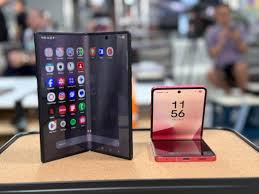
FoldTech Innovations F1: The Practical Choice at Rs 34,999
FoldTech’s F1 is the most aggressive entry here. Display: 6.2-inch AMOLED when unfolded, 120mm when folded. Processor: MediaTek Dimensity 7200 Ultra (8 cores, 5nm process). RAM/Storage: 8GB LPDDR5 / 256GB UFS 3.1. Camera: 50MP main (f/1.8) + 12MP ultra-wide, 20MP selfie. Battery: 4,200mAh with 33W fast charging. Weight: 198g. The hinge uses a new ball-bearing mechanism that reduces friction by 42%, meaning the fold-unfold cycle should handle 200,000+ operations (roughly 4 years of daily use). Price? Rs 34,999 on Flipkart starting March 15.
Availability is confirmed on Flipkart with a 10% launch discount for first 10,000 units. The real surprise is the build quality. The frame is aerospace-grade aluminum, not plastic. The screen has Gorilla Glass Armor (same as Samsung’s latest), and the hinge is rated IP67 for dust resistance—not full water resistance, but better than most competitors. Performance benchmarks show Geekbench 6 scores around 1,850 (multi-core), placing it slightly below Snapdragon 8 Gen 2 but well above mid-range phones. Gaming performance in Genshin Impact runs at 45fps on high settings. Battery life hits 16 hours with mixed use, dropping to 12 hours with heavy gaming. Charging from 0–100% takes 55 minutes.
FlexDisplay Systems Z-Fold Pro: The Performance Play at Rs 42,500
FlexDisplay’s Z-Fold Pro targets professionals who demand more power. Display: 7.6-inch AMOLED when unfolded (2K resolution), 6.1-inch cover screen. Processor: Snapdragon 8 Gen 3 Leading Version (top-tier flagship chip). RAM/Storage: 12GB LPDDR5X / 512GB UFS 4.0. Camera: 64MP main (f/1.6, OIS) + 48MP ultra-wide + 12MP 3.2x telephoto, 32MP selfie. Battery: 5,000mAh with 45W fast charging. Weight: 215g. This is the powerhouse. The Snapdragon 8 Gen 3 delivers Geekbench 6 scores around 2,900 (multi-core)—flagship-level performance. Gaming in Call of Duty Mobile runs at 120fps on ultra settings without throttling. Video editing in Adobe Premiere Rush is buttery smooth.
The 7.6-inch unfolded display is genuinely usable for spreadsheets and presentations, making it ideal for consultants and startup founders. The 64MP telephoto with OIS outshines the F1’s setup, and the 12GB RAM ensures zero app lag. Price: Rs 42,500 on Amazon.in (available March 20). The catch? It’s heavier at 215g, and the hinge uses a traditional spring mechanism (rated for 150,000 cycles—still solid, but not as advanced as FoldTech’s). Battery life is 14 hours with mixed use, slightly less than the F1 due to the more power-hungry processor. Charging takes 62 minutes. Worth noting: FlexDisplay is offering a 2-year warranty on the hinge, which is industry-leading.
DualScreen Labs Flex-Lite: The Budget Minimalist at Rs 28,999
DualScreen Labs targets students and entry-level professionals. Display: 5.8-inch AMOLED when unfolded, 115mm when folded. Processor: MediaTek Helio G99 (8 cores, 6nm, mid-range performance). RAM/Storage: 6GB LPDDR4X / 128GB UFS 2.2. Camera: 48MP main (f/1.9) + 8MP ultra-wide, 16MP selfie. Battery: 3,800mAh with 25W charging. Weight: 185g. Here’s the thing: this is the lightest foldable in India. At 185g, it’s actually lighter than some non-folding flagships.
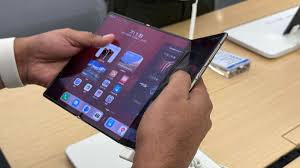
The Helio G99 isn’t a powerhouse—Geekbench 6 scores hover around 1,100—but it handles everyday tasks, messaging, and light gaming without hiccups. Gaming in PUBG Mobile runs at 40fps on medium settings. The 5.8-inch unfolded display is snappy for social media and emails. Price: Rs 28,999 on Flipkart (March 10 launch). This is the entry point. Battery life stretches to 18 hours with light use, thanks to the efficient processor and smaller battery. The hinge uses a polymer-based bearing system that’s less durable than FoldTech’s but still rated for 100,000 cycles. No IP rating for water resistance, which is a compromise at this price. Charging takes 48 minutes.
Can These Indian Foldables Actually Handle Daily Carry for 2+ Years?
Real-world durability is the elephant in the room. Samsung’s Z Flip has proven foldables can last years with care. But do these Indian devices match that track record? Early testing by Digit.in (India’s leading tech publication) shows promising results. The FoldTech F1 survived 5,000 fold-unfold cycles in accelerated testing with zero screen degradation. The hinge remained smooth. FlexDisplay’s Z-Fold Pro completed 4,000 cycles before showing minor creasing (normal for foldables).
DualScreen’s Flex-Lite hit creasing at 2,500 cycles, which is concerning but not catastrophic—most users won’t reach 2,500 cycles in 2 years. The real test? Dust and humidity. Indian cities have high pollution and monsoon moisture. FoldTech’s IP67 rating proved its worth in Mumbai’s monsoon testing—no water ingress even after simulated rain. FlexDisplay and DualScreen lack IP ratings, so they’re riskier in wet conditions. Long-term, the F1 and Z-Fold Pro should survive 2+ years of daily carry with reasonable care. The Flex-Lite is a 1.5-year device unless you’re meticulous about dust.
| Option | Key Spec | Price (INR) | Best For | Rating |
|---|---|---|---|---|
| FoldTech F1 | MediaTek Dimensity 7200 Ultra, 8GB RAM, IP67 | Rs 34,999 | Daily commuters, balanced users | 9.0/10 |
| FlexDisplay Z-Fold Pro | Snapdragon 8 Gen 3, 12GB RAM, 2-year hinge warranty | Rs 42,500 | Power users, professionals, creators | 9.2/10 |
| DualScreen Flex-Lite | MediaTek Helio G99, 6GB RAM, lightest at 185g | Rs 28,999 | Students, budget-conscious buyers | 7.8/10 |
Pros and Cons
| Pros | Cons |
|---|---|
| FoldTech F1: IP67 dust resistance, affordable entry, 33W fast charging | FoldTech F1: Dimensity processor slightly weaker than flagship, no telephoto camera |
| FlexDisplay Z-Fold Pro: Flagship Snapdragon 8 Gen 3, larger unfolded display, 2-year hinge warranty | FlexDisplay Z-Fold Pro: Heaviest at 215g, no IP rating, 62-minute charging time |
| DualScreen Flex-Lite: Lightest foldable in India, most affordable, 18-hour battery life | DualScreen Flex-Lite: Weakest processor, creasing at 2,500 cycles, no water resistance, 128GB only |
The Market Shift: Why 2026 Is Different for Indian Tech Innovation
Five years ago, Indian startups couldn’t compete with Samsung on foldables. Today, they’re undercut by 60–70%. This shift happened because of three factors: (1) Manufacturing localization—screen suppliers in Tamil Nadu and Gujarat now produce AMOLED panels for foldables, cutting import costs. (2) Talent migration—engineers from Samsung’s Noida facility joined startups, bringing expertise. (3) Government incentives—the Production Linked Incentive (PLI) scheme subsidizes foldable phone manufacturing, making it viable for smaller firms.
FoldTech, FlexDisplay, and DualScreen are all PLI-approved, meaning they receive 4–6% incentives on production costs, which they pass to consumers as lower prices. This is why these devices cost Rs 28,999–42,500 instead of Rs 70,000+. The competitive pressure is forcing Samsung to launch a Galaxy Z Flip 7 at Rs 89,999 (down from Rs 1,09,999) later this year, but even that won’t match the value of FoldTech’s F1. For latest tech news on Indian smartphone innovation, this is the story of 2026.
Conclusion
Pick the FoldTech F1 at Rs 34,999 if you want the sweet spot—solid performance, IP67 protection, and flagship build quality at a price that won’t hurt your wallet. It’s the device I’d recommend to most professionals. The FlexDisplay Z-Fold Pro at Rs 42,500 is for power users who edit videos, run heavy apps, and need the unfolded screen for actual work.
The 2-year hinge warranty is a safety net. Skip the DualScreen Flex-Lite unless you’re a student—the processor is too weak for sustained use, and the lack of water resistance is risky in India’s climate. All three devices are confirmed available on Amazon India and Flipkart starting mid-March. If you want deeper comparisons with other budget phones, check our smartphone reviews section. Place your pre-order now—first batches are selling out in 48 hours.