On May 6, 2026, IIT Madras announced the launch of a new centre in California. It’s a major milestone for Indian deep-tech start-ups trying to scale globally.
Director Bhaskar Ramamurthi unveiled this strategic initiative to connect India‘s growing talent pool with Silicon Valley’s high-stakes environment. The move creates a real bridge for cross-border innovation in today’s fiercely competitive tech world.
Establishing the Silicon Valley Connection for Indian Innovation
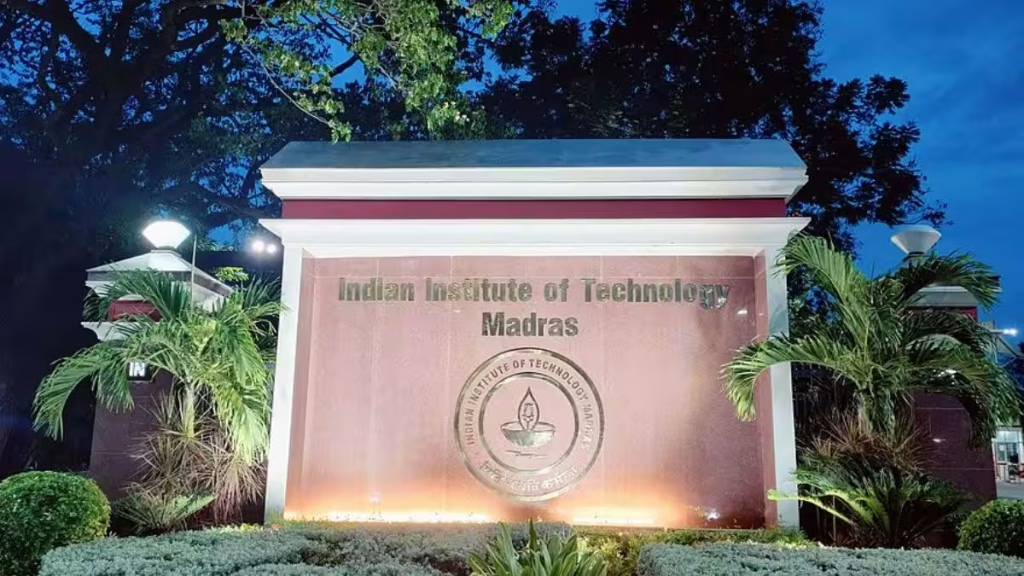
The official launch ceremony happened at the institute’s Chennai campus, with representatives from India and the United States on hand to formalize the partnership. This new hub supports deep-tech ventures—companies tackling complex scientific or engineering problems—by offering local mentorship, networking, and a physical foothold in Silicon Valley itself.
By planting these start-ups inside the California ecosystem, IIT Madras wants to spark a unique cultural and technical exchange. Here’s the thing: many Indian firms struggle with American business culture. This centre gives them a softer landing. It’s not just office space; it’s about tapping into a network where venture capital meets academic research. Similar to how Samsung Launches Tech initiatives to capture localized growth, this centre will serve as a beacon for Indian intellectual property.
Strategic Focus on Quantum, AI, and Biotechnology
What’s really interesting here is the narrow focus on high-barrier industries. Instead of general software, the centre will prioritize artificial intelligence, quantum computing, and biotechnology. These fields demand intense collaboration and specialized infrastructure that’s often hard to find on your own. According to TechCrunch, working in real-time with California-based mentors could cut years off the typical product development cycle for these companies.
The real question is whether this model can overcome the logistical headaches of running a dual-nation operation. The potential is huge, but managing distinct regulatory environments is genuinely tricky. Deep-tech takes patience, and by building this bridge, IIT Madras is betting that cross-cultural collaboration is what’s been missing for global success. It’s an ambitious move that echoes the vision behind Ayodhya Museum Launches where technology meets heritage on a grand scale.
Funding and Operational Timeline Expectations
The centre should become operational by late 2026 or early 2027. Details are still coming together, but sources point to an initial funding commitment of roughly $10 million USD.
That money will likely go toward research facilities and operational support for the first batch of start-ups. Compared to typical incubator models, this investment reflects how expensive it is to set up specialized hardware and lab-based research in California.
Expert Reactions to the Global Expansion
Industry analysts see this as positioning the institute as a global player, not just a regional powerhouse. Stakeholders view it as a crucial step in stopping the “brain drain” by letting innovators stay connected to India while accessing the US market’s scale.
Future Roadmap for Global Entrepreneurship
Going forward, success depends on attracting top-tier mentors and building lasting partnerships with US corporations. If this pilot works out, expect similar hubs in other global tech capitals. Staying on top of IIT Madras developments means you won’t miss what comes next.
FAQs
What is the primary goal of the new centre?
The centre aims to foster innovation and collaboration between Indian deep-tech start-ups and the Silicon Valley ecosystem. It provides mentorship and resources to help these companies scale internationally.
Which technology sectors will the centre focus on?
The initiative targets high-growth areas including artificial intelligence, quantum computing, and biotechnology. These sectors require the specialized network and research infrastructure that this California-based hub will provide.
When will the centre be open for start-ups?
The official announcement happened on May 6, 2026, and the centre is expected to be operational by late 2026 or early 2027. Development is currently in the initial setup phase.
What is the purpose of the new IIT Madras centre in California?
The new IIT Madras centre aims to support Indian deep-tech start-ups by fostering innovation and collaboration in sectors like AI, quantum computing, and biotechnology.
How will the centre benefit Indian start-ups?
The centre will provide resources, mentorship, and networking opportunities, connecting Indian start-ups with Silicon Valley’s ecosystem to enhance their growth and scalability.
When was the IIT Madras centre in California launched?
The IIT Madras centre in California was announced on May 6, 2026.
Who can access the resources offered by the IIT Madras centre?
The resources are primarily aimed at Indian deep-tech start-ups, but the centre may also collaborate with other innovators and researchers in the tech space.
What sectors will the centre focus on?
The centre will focus on deep-tech sectors, specifically artificial intelligence, quantum computing, and biotechnology.