MBSG
 CFC
 PSG
 LYON
 SEV
 OSA
 NED
 OMA
 NZ
 IND
 NAM
 IRE
 PAK
 SL
 SA
 AUS
 Barcelona1
 Real Madrid2
 Udinese0
 Milan2
 Real Sociedad2
 Levante1
 Lecce0
 Juventus2
 LUL82/2 (9/20 ov, target 88)
 SPR87
 NZ-A317
 IND-A113 & 488/8 (119 ov)
 SYL575/4 (167.3 ov)
 KHU
 MYMS465/7d
 CHATT424/6 (121 ov)
 DHA521
 RAJ162 & 215/5 (59.1 ov) (f/o)
 RAN402 & 5/0 (2.3 ov)
 BAR443/9d
 SIKM30/1 (15 ov)
 NAGA187
 JHK
 DELHI309/5 (90 ov)
 ODSA194
 SVCS13/0 (5 ov)
 BRODA259/6 (86 ov)
 J & K
 CHD363/2 (87 ov)
 HP
 CGR35/1 (14 ov)
 AP231
 MOW
 TOK
 BRB
 MIS
 BIK
 CHR
 MEX-W51 (12.5/20 ov, target 187)
 ARG-W186/7
 NGA148
 UGA147/9 (20 ov, target 149)
 GMB112/9
 LES109 (19.5/20 ov, target 113)
 MOZ110/7 (19/20 ov, target 110)
 ZMB109/9
 IND-W328/6
 ZIM-W207 (48.5/50 ov, target 329)
 ENG241
 Abha
 Al Faisaly
 Sassuolo
 Lazio
 AS Roma
 Cagliari
 Torino
 Como
 NEF
 ITT
 Sunderland0
 Leeds0
 Freiburg1
 Bayern3

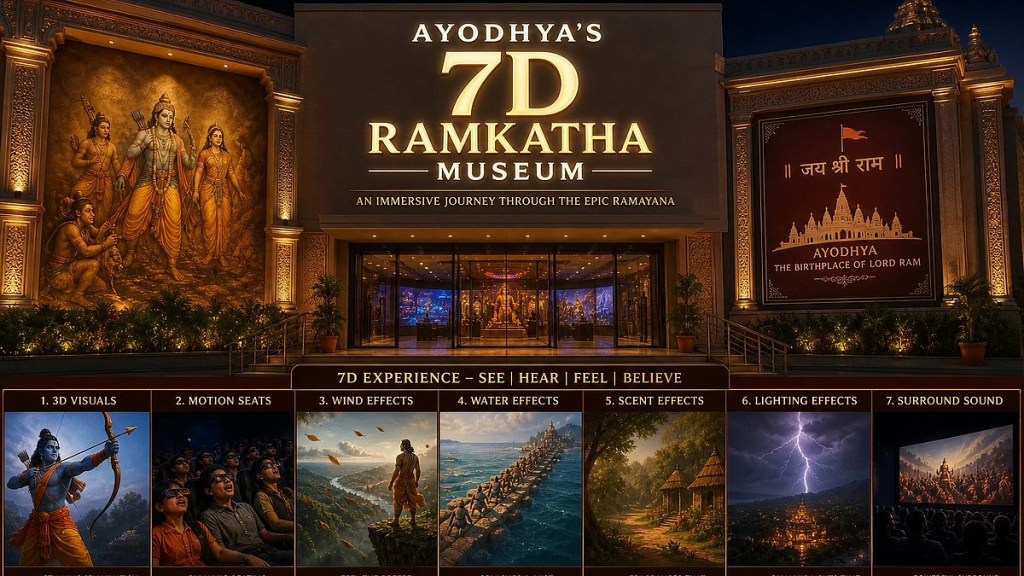
The Ayodhya museum opened its much-anticipated AI-powered 7D storytelling exhibit on May 5, 2026. It’s a major moment for digital heritage preservation.
After the initial announcement on April 20, 2026, visitors can now experience an immersive journey through history. The museum invested ₹15 crore in this project, marking a significant commitment to bringing cutting-edge technology into the cultural sphere and changing how we connect with ancient stories.
Implementing AI-Driven Narratives in Cultural Spaces
The shift to 7D storytelling technology moves visitors from simply watching to actually participating. The exhibit combines visuals, sound, motion, and sensory effects to create something traditional displays just can’t match. Some worry that high-tech installations might overshadow authentic cultural understanding, but the museum argues the opposite—technology helps bridge the gap between dense historical texts and today’s audiences.
Here’s what makes it clever: the AI adjusts the narrative flow based on who’s in the room, so each visitor gets their own experience. It’s a careful balance between honoring history and embracing modern tools. Recent reports from Wired on digital museum transformations explore this exact tension.
Technical Specifications and Hardware Architecture
Supporting this kind of sophisticated setup requires serious computing power. An Intel Xeon W-3300 series processor runs the complex AI models without any lag.
Storage and memory are equally impressive—64GB RAM and 2TB of internal storage handle high-quality assets with ease. The 16K resolution multi-screen setup delivers crystal-clear visuals that make historical scenes feel alive. A 10,000mAh battery backup system keeps everything running smoothly during visiting hours, so there’s never an interruption to the experience.
This kind of technical attention matters. It’s what visitors expect today, especially given the standards set by outlets like The Verge.
Visitor Engagement and Future Heritage Innovation
Early responses show that 7D technology keeps visitors engaged longer and creates stronger emotional connections to the exhibits. By putting the audience at the heart of the story, the Ayodhya museum is raising the bar for heritage institutions across India.
This approach echoes what’s happening in digital workspaces—think of how companies like Meta create virtual environments to deepen collaboration. If this installation succeeds, other historical sites will likely follow suit, using AI to preserve and present their own heritage. You could see a real shift toward tech-forward cultural curation across the country.
FAQs
What technology powers the Ayodhya museum exhibit?
An Intel Xeon W-3300 series processor forms the backbone, paired with 64GB of RAM and a 16K resolution display system. Together, they deliver an immersive 7D experience that blends sensory effects with AI-driven storytelling.
How much did the museum invest in this installation?
The museum spent ₹15 crore on the exhibit. That covers the hardware, software development, and all the sensory infrastructure needed for the 7D storytelling experience.
Is the exhibit accessible to the public?
Yes. The exhibit opened to the public on May 5, 2026, during the museum’s anniversary celebrations. You can visit and experience this blend of history and technology firsthand.
What is the Ayodhya museum’s new AI-driven 7D exhibit?
It’s an immersive storytelling experience powered by advanced AI. The exhibit combines 16K visuals with sensory elements to bring history to life in a way traditional museums can’t.
When did the exhibit launch?
The AI-driven 7D storytelling exhibit officially launched on May 5, 2026.
How much does it cost to visit the exhibit?
The article doesn’t include information about ticket prices for the exhibit.
What kind of technology is used in the exhibit?
The exhibit features high-performance hardware, including 16K visuals and advanced sensory technology, to make the visitor experience truly immersive.
Is the exhibit suitable for all ages?
Yes. The exhibit is designed to engage and educate visitors of all ages.