WI-A
 LIONS
 LEC1
 GEN2
 ELC0
 VAL0
 ACV0
 RAFC0
 MAR0
 CDSC1
 JUV
 NAP
 OLM
 TOU
 ATH
 RSO
 NED
 OMA
 Sassuolo
 Fiorentina
 Atalanta
 Parma
 Lorient
 Brest
 Newcastle
 Everton
 LIV0
 ARS1
 SGE3
 HSV1
 LYON2
 ANG0
 PAR3
 MON1
 NZ-A218/3 (62 ov)
 IND-A346
 QLD202/5 (71 ov)
 VIC307
 SYL218 & 89/2 (38 ov)
 CHATT210
 MYMS108 & 57/2 (14 ov) (f/o)
 KHU288
 DHA
 BAR
 RAN122/3 (39 ov)
 RAJ231
 MS-W
 PS-W
 MOW
 BRB
 KAY
 KAG
 CHR
 SPR
 ASSAM
 KNTKA
 TPURA
 SAU
 BENG
 MAHA
 AFG81/3 (8.1/20 ov, target 80)
 ZIM79
 NAM131/5 (21.2/50 ov, target 130)
 IRE129
 NZ195/3 (18 ov)
 IND191/8
 PAK331/7 (48.3/50 ov, target 326)
 SL325/8
 SS-W196/8
 HH-W109 (17.4 ov)
 ST-W180/4 (16.4 ov)
 BH-W178/5
 LMO0
 SPM4
 LOM0
 GENT0
 CHN0
 BRA0
 NGA0
 VEN0
 SEV1
 RMA1
 CHA1
 RLL0
 Deportivo
 Osasuna
 RAC0
 RMA3
 FCU1
 KOE1

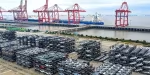
Hyundai Invests $500 in Tucson: Hyundai has committed $500 million to build the next-generation Tucson at its Montgomery, Alabama, facility, with production reportedly targeted for late 2026. This compact crossover utility vehicle is built for everyday driving and family transport. Pricing hasn’t been verified, though early reports put the starting MSRP at $27,500 across the SE, SEL, and Limited trims.
What Production Capabilities Does the Alabama Facility Hold?
Hyundai Motor Manufacturing Alabama announced a major investment to modernize its plant, which serves the North American automotive market. The $500 million commitment will fund new assembly lines and upgraded robotics. Reports also suggest the next-generation model will come with a 2.5-liter 4-cylinder base engine producing 187 horsepower. Those specifications favor fuel efficiency over extreme performance.

The upgrades will let the production floor handle higher output. Local workers will oversee the advanced manufacturing processes as the company increases production. Exact launch dates for individual trim levels still need confirmation from corporate headquarters.
Worth noting, this hardware expansion directly addresses current bottlenecks at regional distribution centers. Supply chain managers expect dealership deliveries across the eastern United States to run more smoothly once operations stabilize. Readers following recent platform developments may recognize similarities to updates during the New Hyundai Tucson rollout phases.
How Does This Expansion Fit Into Broader Corporate Strategy?
Automakers increasingly see local production as protection against changing tariffs and international shipping delays. Building vehicles closer to buyers reduces logistical friction and strengthens dealer relationships across the continent.
Corporate leaders have previously discussed similar commitments during major fiscal planning sessions, including the $15.5 billion initiative focused on global electrification and infrastructure. This new funding supports those long-term goals by reinforcing domestic manufacturing. Executives want to win a larger share of the competitive crossover segment without depending on foreign export channels. Lower transportation costs also give the company more flexibility when setting retail.

What Should Buyers and Competitors Watch For Next?
Retail pricing remains a key factor in whether consumers adopt new platform launches. A starting msrp near $27,500 puts the updated SUV within reach of budget-conscious families looking for dependable daily drivers. Dealerships expect initial inventory to move quickly once promotional units reach showrooms. Competitors will likely adjust their own value propositions to stay relevant.
The unveiled Hyundai Bayon in international markets shows the brand’s continued effort to diversify its lineup across segments. Observers should watch how regional incentives change in the coming months. Higher factory output could also mean more availability in emerging secondary markets. Distributors often use increased domestic production to negotiate better terms with overseas partners. Still, final configuration choices will determine which trims catch on with everyday commuters.
The $500 million commitment secures Alabama’s place as a central hub for compact utility vehicle manufacturing. Modernized assembly lines and proven powertrain options give the company a solid foundation for future growth. Automotive executives remain confident that sustained local production will benefit corporate stakeholders and everyday drivers alike. Expect dealerships to restock quickly and compete on price as new inventory arrives. For more detail, see Roadshow by CNET.
| Trim Level | Starting MSRP | Base Engine | Power Output |
|---|---|---|---|
| SE | $27,500 | 2.5-liter | 187 hp |
| SEL | $27,500 | 2.5-liter | 187 hp |
| Limited | $27,500 | 2.5-liter | 187 hp |
Read Next
- Chinese Western Trade: How Electric Vehicles Bypass Tariffs At 40% Off MSRP
- Why Ferrari’s CEO Praised The Tesla Roadster And Demands Greater Innovation
- Hyundai Bayon Unveiled for India: 7 Facts Before the 26 October Launch
FAQs
Where will the next Hyundai Tucson be built?
Hyundai plans to build the next-generation Tucson at its Montgomery, Alabama, facility.
How much is Hyundai investing in the next Tucson?
Hyundai has committed $500 million to modernize the Alabama plant, including funding new assembly lines and upgraded robotics.
When is the next Hyundai Tucson expected to go into production?
Production is reportedly targeted for late 2026. Exact launch dates for individual trim levels still need confirmation.
What engine is reported for the next Hyundai Tucson?
Reports suggest it will have a 2.5-liter four-cylinder base engine producing 187 horsepower.
Was this article helpful?
Your feedback directly improves future articles on this site.