
 SCP1
 ACV2
 Mohun Bagan
 Chennaiyin
 PSG
 Lyon
 Sevilla
 Osasuna
 NED
 OMA
 NZ
 IND
 NAM
 IRE
 PAK
 SL
 SA
 AUS
 BAR1
 RMA2
 UDI0
 MIL2
 RSO2
 LEV1
 LEC0
 JUV2
 LIMWn
 NW-W
 NCWmn
 FsWm
 BRB
 MOW
 NZ-A317
 IND-A113 & 188/2 (51 ov)
 SYL280/2 (84 ov)
 KHU
 MYMS465/7d
 CHATT134/2 (40 ov)
 DHA521
 RAJ103/6 (26 ov)
 RAN402
 BAR179/3 (56.1 ov)
 LUL
 SPR
 TOK
 MIS
 MEX-W51 (12.5/20 ov, target 187)
 ARG-W186/7
 NGA148
 UGA147/9 (20 ov, target 149)
 GMB112/9
 LES109 (19.5/20 ov, target 113)
 MOZ110/7 (19/20 ov, target 110)
 ZMB109/9
 IND-W328/6
 ZIM-W207 (48.5/50 ov, target 329)
 ENG241
 LAFC
 LA
 Neftchi Fergana
 Al Ittihad
 Besiktas
 Istanbul BB
 Caykur Rizespor
 Trabzonspor
 Al Ahli
 Al-Gharafa
 SUN0
 LEE0
 SCF1
 MUN3
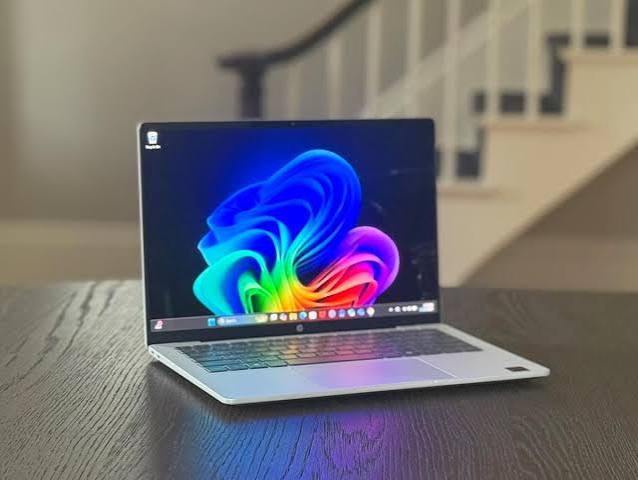
Hp Omnibook Specs: Picture a remote worker arranging a cramped desk setup, only to realize the entire budget laptop aisle now features sleek OLED screens and all-day batteries. HP introduced the OmniBook 5 laptop series, positioning it as a direct Windows competitor to Apple’s MacBook Neo and Colorful’s competing models in the affordable segment.
The announcement positions the device as a premium everyday machine for users seeking expanded capabilities without enterprise pricing. Initial configuration details indicate a focus on display quality and battery endurance rather than raw processing power.
The Preexisting Budget Market Landscape
Until recently, consumers navigating the affordable laptop category faced a stark choice between sluggish performance and compromised screen quality. Most entry-level machines relied on dim LCD panels, limited storage capacities, and older wireless standards that struggled with modern streaming workflows.
Students and freelancers frequently accepted thermal throttling and heavy chassis designs as unavoidable trade-offs for staying within sub-$600 budgets. Here’s the thing: the arrival of dedicated silicon and optimized ope
hardware-configuration”>Core Specifications And Hardware Configuration
The base model ships with a recent-generation Intel processor paired with low-power DDR5 memory and integrated graphics. A PCIe Gen4 NVMe solid-state drive forms the primary storage foundation, with an optional upgrade path adding capacity for a modest additional cost.
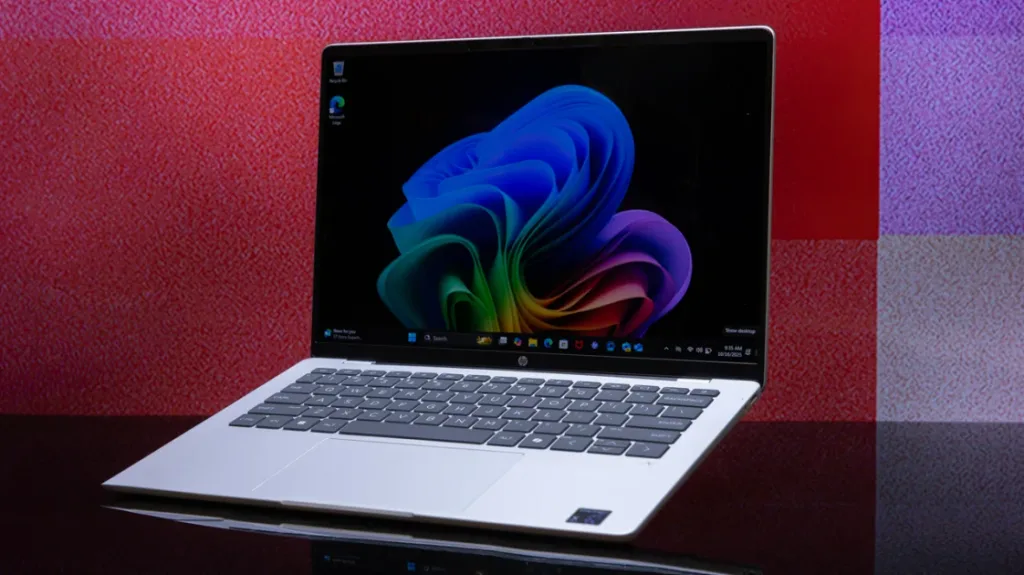
Visual output relies on a 14-inch OLED touchscreen featuring Gorilla Glass protection and wide color gamut coverage. Local video playback reportedly reaches extended battery life, while fast-charging protocols deliver a significant replenishment in a short charging window. Wireless communication utilizes the latest wireless standards alongside standard HDMI output and dual USB Type-C ports. Reports indicate the system includes a dedicated neural processing unit, though manufacturers are avoiding aggressive artificial Intelligence marketing around the architecture.
| Component | HP OmniBook 5 Base Model | Competitor Benchmark |
|---|---|---|
| Display | 14-inch OLED with wide color gamut | Standard TN/IPS LCD panels |
| Processor | Recent-generation Intel processor | Older generation quad-core chips |
| Memory | Low-power DDR5 memory | DDR4 variants |
| Storage | PCIe Gen4 NVMe SSD | SATA-based drives |
| Battery Life | Extended battery life | Typically several hours |
Market Impact And Strategic Positioning
The broader industry response reflects a calculated pivot toward efficiency and longevity rather than chasing incremental speed gains. Smartphone manufacturers successfully demonstrated that balanced silicon could extend device lifespans by a meaningful margin, prompting laptop makers to adopt similar philosophies.
Retail analysts observe that consumers now prioritize display fidelity, port variety, and charging speed above marginal processor improvements. This shift forces traditional OEMs to redesign supply chains around OLED integration and faster memory architectures. Regional pricing strategies will likely determine whether the OmniBook 5 captures meaningful share in markets like India, where value-conscious buyers closely monitor rupee-denominated costs. We expect retailers to bundle accessories or extended warranties to differentiate identical hardware configurations.
How To Choose Between Windows And Silicon Options
Buyers should evaluate their primary workload before committing to either ecosystem. Creative professionals requiring precise color accuracy will benefit most from the OLED panel and generous connectivity suite. Users heavily invested in mobile productivity suites may still prefer the established software compatibility of rival platforms.
The dedicated neural processing unit provides background processing for future updates, yet current applications rarely exploit dedicated acceleration hardware. If you need maximum portability and all-day battery life for travel, the new Windows configuration delivers comparable endurance. Select the alternative only if your workflow depends on specific legacy software or preferred peripheral ecosystems.
FAQs
What distinguishes the HP OmniBook 5 from previous budget laptops?
The machine integrates an OLED display with Gorilla Glass protection and extended battery life, replacing the standard low-resolution screens and shorter runtimes typical of entry-level devices.
Does the built-in neural processing unit improve everyday computing tasks?
The dedicated neural processing accelerator handles background maintenance and media decoding efficiently, though most daily applications continue relying on standard CPU operations.
How does the storage upgrade option compare to competitors?
Paying a modest additional cost doubles the internal capacity, which remains competitively
Will the laptop support external monitors and docking stations?
Dual USB Type-C connectors and an HDMI output enable straightforward connections to secondary displays and peripheral hubs without requiring additional adapters. Source: Techspot
Was this article helpful?
Your feedback directly improves future articles on this site.




