MBSG
MBSG CFC
CFC PSG
PSG LYON
LYON SEV
SEV OSA
OSA NED
NED OMA
OMA NZ
NZ IND
IND NAM
NAM IRE
IRE PAK
PAK SL
SL SA
SA AUS
AUS Barcelona1
 Real Madrid2
 Udinese0
 Milan2
 Real Sociedad2
 Levante1
 Lecce0
 Juventus2
 NZ-A317
 IND-A113 & 488/8 (119 ov)
 SYL280/2 (84 ov)
 KHU
KHU MYMS465/7d
 CHATT318/3 (98.2 ov)
 DHA521
 RAJ103/6 (26 ov)
 RAN402
 BAR179/3 (56.1 ov)
 SIKM
SIKM NAGA187 (72.5 ov)
 JHK
JHK DELHI226/5 (67 ov)
 ODSA157/7 (64.5 ov)
 SVCS
SVCS BRODA136/3 (43 ov)
 J & K
J & K CHD211/1 (45.3 ov)
 HP
HP CGR
CGR AP198/8 (61 ov)
 HYD
HYD PNJB208/5 (64 ov)
 LUL
LUL SPR
SPR MOW
MOW TOK
TOK BRB
BRB MIS
MIS MEX-W51 (12.5/20 ov, target 187)
 ARG-W186/7
 NGA148
 UGA147/9 (20 ov, target 149)
 GMB112/9
 LES109 (19.5/20 ov, target 113)
 MOZ110/7 (19/20 ov, target 110)
 ZMB109/9
 IND-W328/6
 ZIM-W207 (48.5/50 ov, target 329)
 ENG241
 Abha
Abha Al Faisaly
 Sassuolo
 Lazio
Lazio AS Roma
 Cagliari
 Torino
 Como
Como NEF
NEF ITT
ITT Sunderland0
 Leeds0
 Freiburg1
 Bayern3
The Tesla Cybercab represents a fundamental break from traditional automotive engineering — it has no brake lines, no brake fluid, and no steering wheel. Understanding how it stops is essential for anyone following the autonomous vehicle revolution.
The vehicle’s brake-by-wire system eliminates centuries of hydraulic braking tradition in favour of electric actuators integrated directly into the drive units.
Tesla CEO Elon Musk revealed that the Cybercab is designed to operate fully autonomously without pedals or a conventional steering column, making its stopping mechanism a critical innovation worth examining in detail.
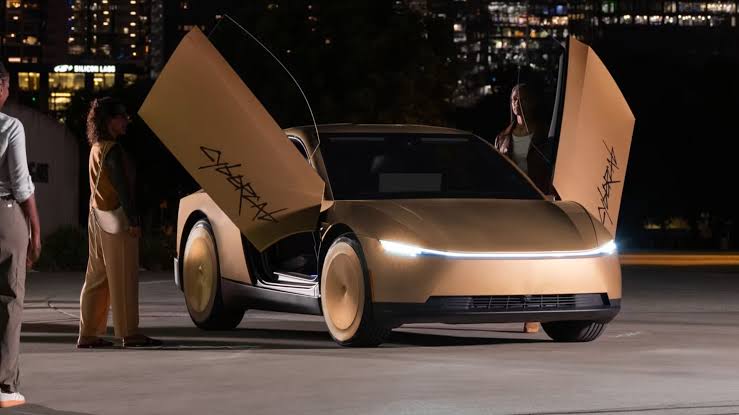
How Does the Cybercab’s Brake-By-Wire System Work?
The Cybercab replaces traditional hydraulic brakes with a fully electric brake-by-wire system that eliminates brake lines and brake fluid entirely. The braking functions are integrated into the vehicle’s drive units using electric actuators that can precisely control stopping force.
This approach removes the complex network of pipes, calipers, master cylinders, and fluid reservoirs that have defined automotive braking for over a century. The system can modulate braking force electronically, offering potentially smoother and more controlled stops than mechanical linkages ever could.
Why Did Tesla Remove Hydraulic Braking Components?
The removal of hydraulic components serves multiple strategic purposes for Tesla‘s manufacturing and design philosophy. By eliminating brake lines and brake fluid, Tesla lowers manufacturing complexity and reduces the overall part count for the vehicle.
Fewer parts mean fewer potential failure points, simpler supply chains, and reduced production time on assembly lines. This aligns with Tesla’s broader goal of streamlining vehicle architecture to maximize efficiency and minimize production costs.
The simplified design also removes the need for brake fluid maintenance, a recurring cost and service requirement for traditional vehicles.
Is the Cybercab Safe Without Traditional Brakes?
The system can theoretically react faster than human reflexes, though real-world reliability remains unproven at scale. The absence of a steering wheel or pedals means the vehicle must handle all emergency situations autonomously, placing enormous responsibility on the AI-driven braking system.
What Are the Limitations of a Brake-By-Wire System?
Brake-by-wire systems require robust fail-safes because they depend entirely on electrical components and software to function. If the system loses power or experiences a software malfunction, there is no mechanical backup to bring the vehicle to a stop.
Traditional hydraulic brakes can still provide stopping force even if power is lost, whereas the Cybercab’s electric actuators would need dedicated backup power supplies or capacitor systems.
Additionally, the system must handle extreme temperatures and vibration conditions that have been proven over decades in hydraulic systems but remain relatively unproven in fully electric braking applications.
What Happens When Cybercabs Encounter Emergencies?
In emergency scenarios, the Cybercab’s AI must make split-second decisions about braking force and trajectory without human intervention. The vision-based neural networks process sensory input to identify obstacles, pedestrians, and other vehicles, then calculate optimal braking responses.
Tesla’s approach prioritizes preventing collisions through predictive driving rather than relying solely on stopping capability. The system maintains continuous communication between the AI computers and electric actuators to adjust braking in real-time based on road conditions, vehicle speed, and detected hazards.
What’s Next for Autonomous Braking Technology?
The Cybercab’s brake-by-wire system marks a significant milestone in automotive engineering, but widespread adoption faces regulatory and safety hurdles. Other manufacturers are watching closely to see if Tesla‘s approach can meet the rigorous safety standards required for public roads.
The technology could eventually trickle down to consumer vehicles, potentially revolutionizing how all cars stop. As autonomous driving capabilities improve, the integration of electric braking with AI decision-making will likely become the new standard for vehicle safety systems worldwide. The Cybercab demonstrates that the future of stopping a vehicle may look nothing like the past. Tesla’s bet on electric actuators over hydraulic systems reflects a broader philosophy of replacing mechanical complexity with software-driven precision.
Related Articles
- Bayer Leverkusen: A Tactical Breakdown of Xabi Alonso’s Fluid Back Three
- Biology Class Never Taught You This! The Shocking Science Behind Semen -…
- GoPro Launches MAX2 8K Camera, LIT HERO & Fluid Pro AI in India
Does the Cybercab have any backup braking system?
The Cybercab relies entirely on its electric brake-by-wire system, with no mechanical backup like traditional hydraulic brakes.
How fast can the Cybercab stop?
Official stopping distance figures have not been released, but the electric actuators should provide rapid response times comparable to performance brake systems.
How does the brake-by-wire system in the Tesla Cybercab work?
The brake-by-wire system in the Tesla Cybercab operates using electric actuators instead of traditional hydraulic fluid. When the driver applies pressure to the brake pedal, sensors detect this input and send an electrical signal to the actuators, which then engage the braking mechanism, allowing for precise and responsive stopping.
What are the advantages of using electric actuators over hydraulic brakes?
Using electric actuators in the Tesla Cybercab offers several advantages, including reduced weight due to the absence of brake lines and fluid, improved reliability with fewer mechanical components, and enhanced responsiveness for better control. Additionally, this system can be easily integrated with the vehicle’s autonomous features, allowing for advanced safety and performance capabilities.
Was this article helpful?
Your feedback directly improves future articles on this site.