NZ
 IND
 NAM
 IRE
 Como
 Venezia
 Mumbai City
 SC Delhi
 Getafe
 Sevilla
 Frosinone
 Torino
 Lazio
 Cagliari
 Strasbourg
 Auxerre
 AVL1
 FUL1
 BAR6
 ALA1
 MIL3
 INT1
 TRY2
 MNS0
 OTAGO
 CD
 BRB
 MIS142/6 (19 ov)
 TAS427
 NSW202 & 30/4 (12 ov) (f/o)
 NZ-A50/3 (15 ov)
 IND-A346
 QLD13/0 (6.2 ov)
 VIC307
 DHA
 BAR
 SYL218
 CHATT64/1 (15 ov)
 MYMS
 KHU280/8 (82 ov)
 RAN
 RAJ155/6 (59 ov)
 AFG
 ZIM
 NED
 OMA
 ST-W
 BH-W
 SS-W
 HH-W
 MS-W
 PS-W
 BAN
 PAK331/7 (48.3/50 ov, target 326)
 SL325/8
 UAE266/5 (49/50 ov, target 264)
 MR-W136/6
 AS-W185/2
 WAR133/6 (16.3/20 ov, target 131)
 WPR130/8
 MOW171/8
 VAG101 (18.4/20 ov, target 172)
 Inter Kashi
 GOA
 Union Berlin
 Cologne
 HIL2
 FAT0
 TOT2
 CRY0
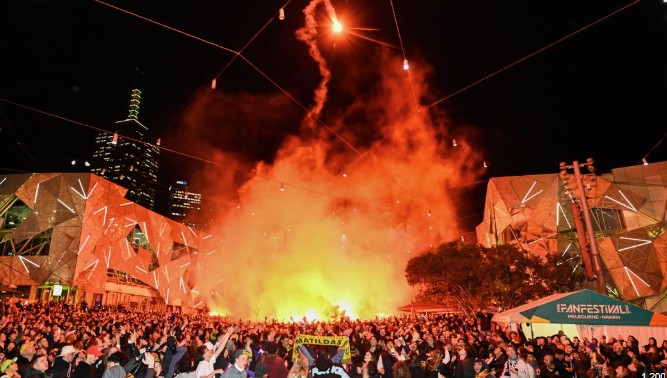
For a young grassroots player in suburban Melbourne, the dream of watching the World Cup with peers just vanished. Football Australia is currently fighting a restrictive venue ban at Federation Square, a decision that threatens to dim the spirit of the upcoming 2026 tournament for thousands of local supporters.
Football Australia Battles Venue Restrictions in Melbourne
Melbourne authorities have prohibited public watch parties at Federation Square, and Football Australia isn’t taking it lying down. CEO Martin Kugeler called the move “extremely disappointing,” saying it strips the community of a shared experience for what he calls “the biggest sporting event in the world.”
The ban also hurts local businesses that depend on the crowds these gatherings bring. Football Australia has formally asked the Victorian Government and the Arts Precinct to reverse the decision. They’re pushing back that creating a safe, inclusive environment beats shutting everything down entirely.
This isn’t just about football—it’s about people’s right to gather in public spaces. Officials worry about “dangerous” fan behaviour, but stakeholders argue that proper management is the real answer, not a total ban.
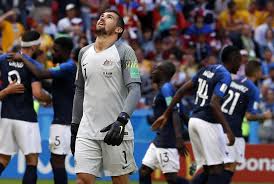
The timing matters too. Australia just clinched their 6th consecutive and 7th overall World Cup appearance after a hard-fought 2-1 win over Saudi Arabia in Jeddah.
Captain Jackson Irvine and the FIFA Policy Critique
The drama doesn’t stop at local politics. Australia’s captain, Jackson Irvine, has publicly blasted FIFA for awarding a Peace Prize to Donald Trump. He called it a “mockery” of FIFA’s own Human Rights Policy—a stark contradiction between what the organization says and what it actually does.
Fans feel this disconnect too. They see FIFA leadership focusing on image rather than real change. Meanwhile, the squad’s got some good news: four Australian match officials have been selected for the tournament. Head of Refereeing Jon Moss confirmed this is a major milestone for Australian refereeing.
The pressure’s building. The team’s juggling these off-field controversies while preparing tactically for the pitch. We’ll be watching to see if these distractions shake player morale as the tournament draws closer.
FAQs
Why was the Federation Square watch party banned?
Melbourne authorities cited concerns over “dangerous” fan behaviour as their main reason for the ban. Football Australia disagrees, arguing that proper management would solve the problem.
How many times has Australia qualified for the tournament?
Australia’s made it 6 consecutive times and 7 times overall.
Are there any Australian officials involved in the 2026 event?
Yes. Four Australian match officials have been selected for the 2026 tournament, as confirmed by Head of Refereeing Jon Moss.
What is the reason behind the venue ban for the 2026 World Cup in Melbourne?
Officials are worried about crowd control and safety during large public gatherings, which they believe could pose risks during World Cup events.
How is Football Australia responding to the ban?
Football Australia is actively challenging the ban and pushing for its removal so fans can gather for public watch parties and greater community engagement during the 2026 World Cup.
What impact could the ban have on fans and the local community?
The ban would significantly limit fan participation and community engagement, preventing supporters from gathering to celebrate and watch matches together—something that’s crucial to the World Cup experience.
Are there any other cities facing similar restrictions for the World Cup?
Melbourne’s situation is currently in the spotlight. Other cities may face restrictions based on local regulations and safety assessments, though details would vary by location.
What are the next steps for Football Australia in this matter?
Football Australia plans to keep talking with local authorities and stakeholders to negotiate the ban’s terms and find a solution that allows public celebrations during the tournament.