MEX-W
MEX-W ARG-W
ARG-W RBNY1
RBNY1 MIA0
MIA0 Palmeiras0
 Bragantino0
 Vasco1
 Corinthians0
 UAE
UAE NED
NED PAK
PAK ENG
ENG IND-W
IND-W ZIM-W
ZIM-W GMB
GMB LES
LES MOZ
MOZ ZMB
ZMB Inter Milan
 Fiorentina
 Churchill
 Punjab FC
 NGA
NGA UGA
UGA ATM1
ATM1 DEP0
DEP0 LAZ2
LAZ2 PAR1
PAR1 RCL2
RCL2 PAR1
PAR1 RIY2
RIY2 TAA1
TAA1 NZ-A140/3 (43.3 ov)
 IND-A113
 SYL
SYL KHU
KHU MYMS299/4 (87 ov)
 CHATT
CHATT DHA293/3 (84.1 ov)
 RAJ
RAJ RAN320/5 (80 ov)
 BAR
BAR DEN
DEN PNG
PNG NAM321/6
 IRE290 (47.3/50 ov, target 322)
 NZ180/5
 IND181/6 (19.5/20 ov, target 181)
 Athletic
 Getafe
 C Palace
 Newcastle
 Hull
Hull Brentford
 Liverpool
 Brighton
 Man United
 Bournemouth
 Atalanta
 Frosinone
 CHE0
CHE0 TOT2
TOT2 VAL1
VAL1 VIL2
VIL2
Every once in a while, a team arrives almost from nowhere to produce something extraordinary. Denmark won Euro ’92 without technically qualifying. Greece won Euro 2004 having only previously participated in a major tournament twice. Leicester City stunned the world by winning the Premier League in 2015-16.
Now: what about Norway becoming the most surprising World Cup winners of all time?
That might sound fanciful. But they have been widely dubbed ‘dark horses’ ahead of the 2026 World Cup — and in certain areas of the pitch, they boast quality that is almost unrivalled. They sauntered through qualifying with ease, and they have the talent to beat anyone on any given day.
The 2026 World Cup will be Norway’s first major men’s tournament since Euro 2000. It is only their fifth appearance at either the World Cup or European Championship. Their tournament pedigree is virtually non-existent compared to the favourites — which is very much at odds with the talent this generation possesses.
The Qualifying Campaign: Record-Breaking and Relentless
Norway’s qualification campaign was one of the most impressive by any European nation heading into this tournament.
They were one of just two teams — along with England — to win every qualifying match. In terms of output, they were in a class of their own.
| Norway’s Qualifying Campaign | Stat | Context |
|---|---|---|
| Total goals scored | 37 | Most of any European qualifier |
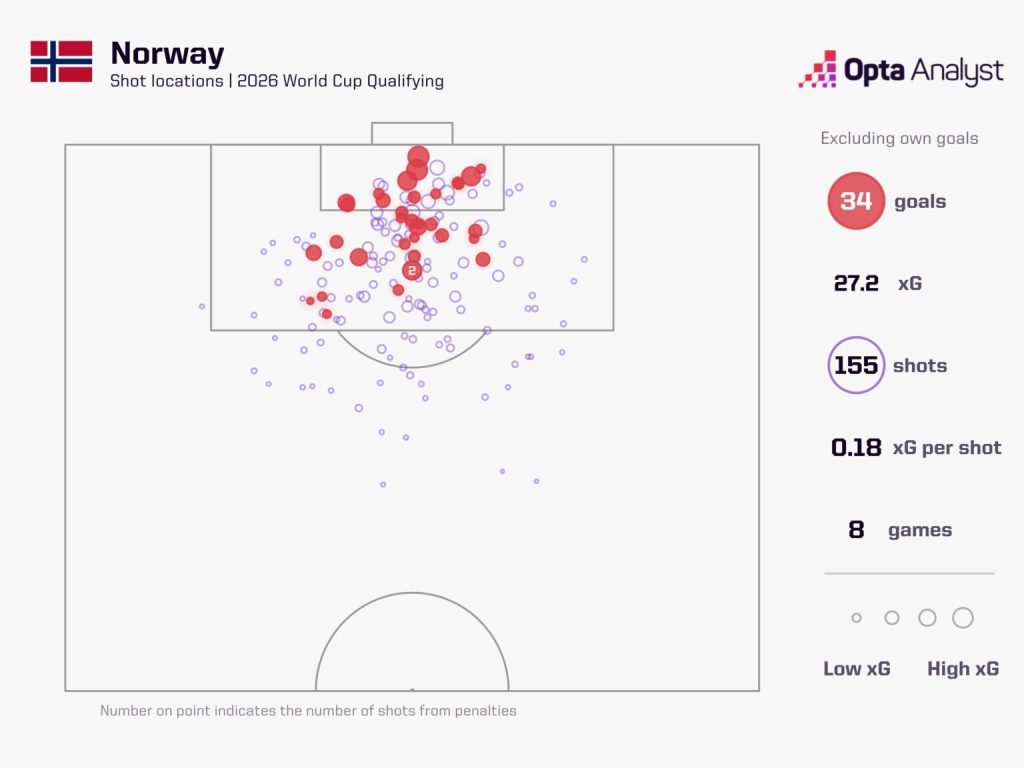
| Expected goals (xG) | 27.2 | Highest in European qualifiers |
| Goals per game | 4.6 | Best average by any European nation in a single WC qualifying campaign (4+ games) |
| Goals from fast breaks | 7 | At least 4 more than any other European qualifying team |
| Proportion of shots from outside the box | 21.9% (34 of 155) | Second-lowest in European group stage |
| Average xG per shot | 0.18 | Highest in European qualifiers |
| Notable wins | 11-1 vs Moldova, 3-0 and 4-1 vs Italy | — |
Their 11-1 victory over Moldova was eye-catching. But arguably more impressive were the 3-0 and 4-1 victories over Italy. Against the Italians, Norway demonstrated not only their counter-attacking lethality but their capacity to build patiently — their second goal in one match came following a sequence of 21 consecutive passes.
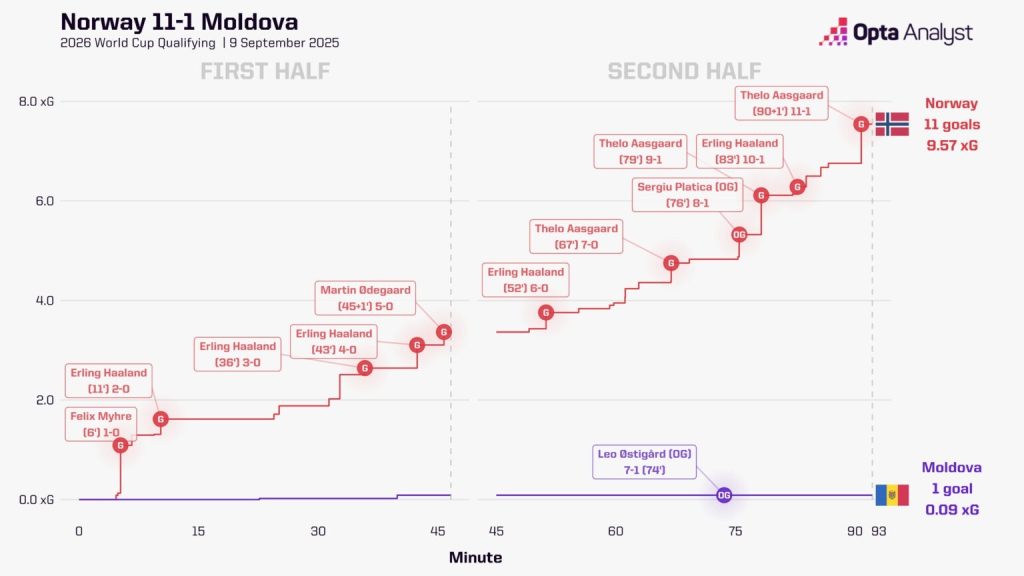
Their seven goals from fast breaks — counter-attacks beginning from the team’s own half with the opposition’s defence at least partly disorganised — were at least four more than any other team in the European qualifiers. But no team scoring 37 goals on the way to qualification can be considered purely reactive; Ståle Solbakken’s side are capable of both styles.
Critically, not a single goal came from outside the box. Norway showed exceptional patience and shot selection, pulling the trigger almost exclusively when the probability of scoring was high.
Haaland and Sørloth: The Most Dangerous Striking Partnership in the Tournament
Erling Haaland (Manchester City) and Alexander Sørloth (Atlético Madrid) started together in all eight qualifying matches, combining for 21 goals — Haaland with 16 and Sørloth with 5.
| Haaland and Sørloth — Qualifying Contributions | Goals |
|---|---|
| Erling Haaland | 16 |
| Alexander Sørloth | 5 |
| Combined | 21 |
Haaland plays as the central striker. Sørloth operates slightly more from the right for Norway than he does at club level — but his natural instincts as a centre-forward keep him in the box with regularity, making the combination genuinely dangerous from multiple angles.
The attacking depth goes beyond even those two. Jørgen Strand Larsen — who played only 30 minutes as a substitute in qualifying, scoring against Italy — may need a Salvatore Schillaci-type tournament (coming off the bench and forcing himself into the story) to become Norway’s breakout star in North America. The talent is there. The competition for places is simply extraordinary.
Haaland’s personal trajectory underlines what this Norway team represents. By the age of 24, he had already become Norway’s all-time top scorer, overtaking Jørgen Juve’s record of 33 goals set between 1928 and 1937. He now stands on 55 international goals from 50-plus caps. He was born exactly one month after Norway’s last match at a major tournament.
Ødegaard and Berge: The Engine Room
Norway’s attacking brilliance is underpinned by the quality of the players operating around and behind the strikers.
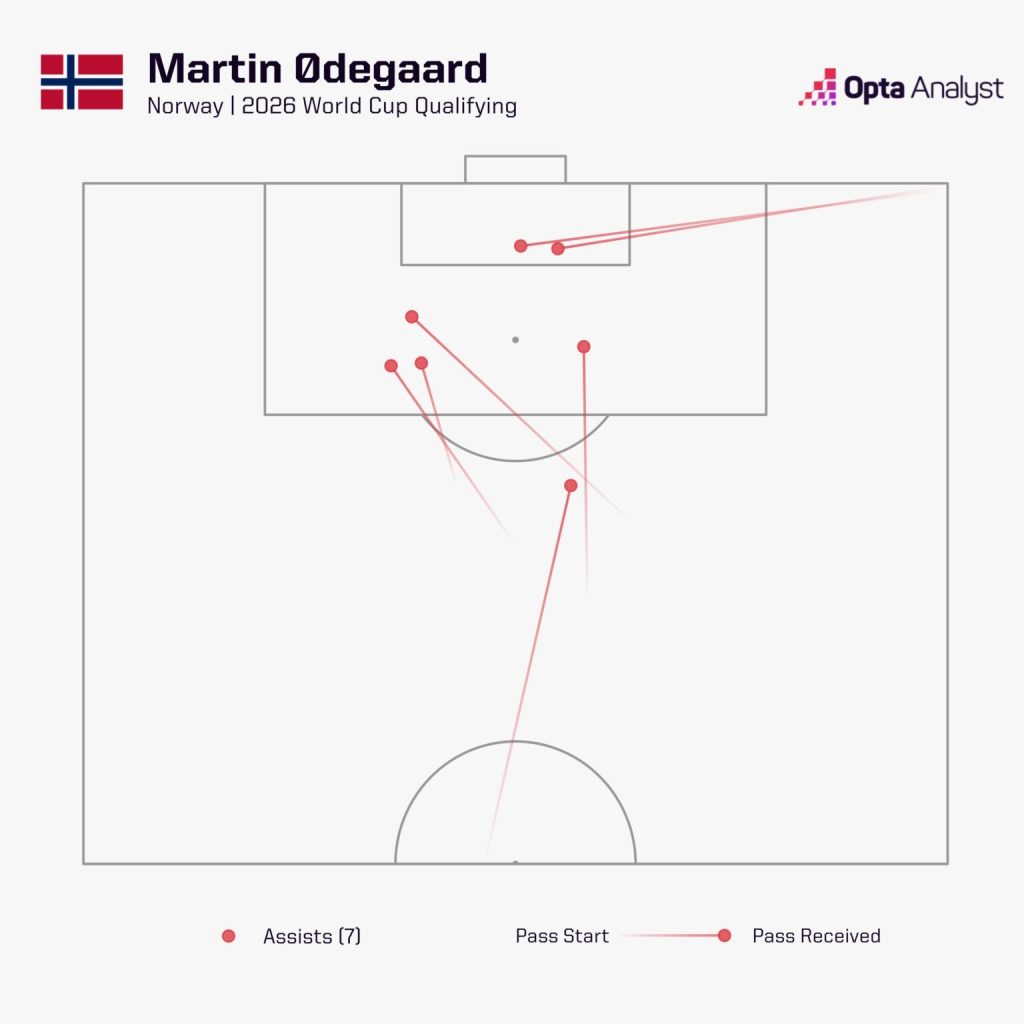
Martin Ødegaard (Arsenal) recorded the most assists of any player in the European qualifying section — 7 — while also providing the creative intelligence that unlocks defences who have effectively shut down Haaland’s channels.
| Martin Ødegaard — Qualifying Stats | Stat |
|---|---|
| Assists (most in European qualifying section) | 7 |
| Norway caps (actual) | 68 |
| Norway caps (if fully available since 2014 debut) | Would be ~115 (most-capped player in history) |
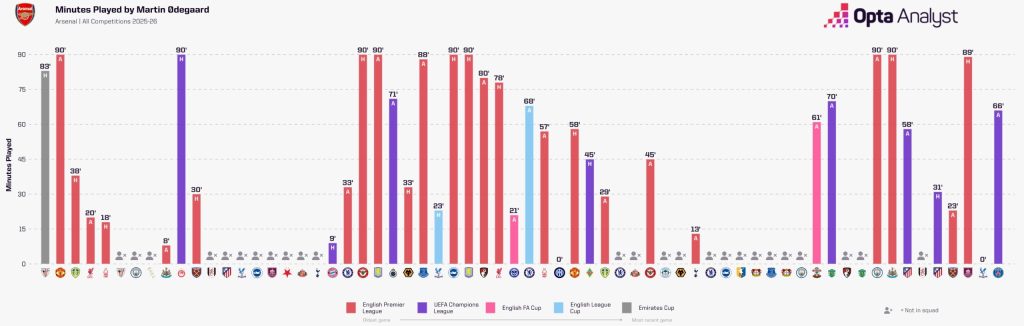
The fitness question with Ødegaard is real and recurring. He featured in only 36 of Arsenal’s 63 competitive matches this season and missed all six of Norway’s internationals between October 2025 and March 2026. His availability for the full tournament cannot be assumed — but when he plays, Norway are a different team.
Sander Berge (Fulham) provides the defensive structure and carrying ability in front of the defence. In qualifying, he played the joint-third-most line-breaking passes (98 — tied with Luka Modrić and Frenkie de Jong) and recorded the most carries of any player in the European section (250). He is the tempo-setter who allows the attacking players ahead of him to operate with freedom.
The Long Absence — and What It Means
The scale of Norway’s absence from major tournaments is genuinely startling when placed in context.
They have not qualified for a major men’s tournament since Euro 2000 — a 26-year gap. During that period, nations including North Macedonia, Georgia, Latvia, and Albania all appeared at European Championships while Norway did not. The talent was never consistently there to match the ambition.
Now it is. And the 2026 World Cup is the opportunity to compress 26 years of missed experience into one tournament.
The Group Stage and the France Fixture
Norway’s group sees them face Iraq and Senegal in their first two matches — fixtures they will expect to win and wrap up qualification for the round of 32. Their third match against France — currently ranked first in the FIFA world rankings — is where the real statement could be made.
There is a historical resonance. At the 1998 World Cup, Norway’s last participation, they stunned a Brazil side who were the top-ranked team in the world at the time — winning 2-1 in the group stage. Despite that, they were eliminated in the last 16 by Italy.
Norway have never won a knockout match in a major tournament. That is the minimum target this summer — and with the quality in this squad, it is not just realistic but expected.
If they can get through the group stage comfortably — which the fixtures suggest they should — and carry momentum into the last 32, they have the firepower and tactical coherence to trouble any team they face on a single-game basis.
The Greatest Norwegian Generation in History
Norway head into the 2026 World Cup with the strongest generation of players they have ever produced. Haaland alone would give any nation a chance. Ødegaard, Sørloth, Berge, Strand Larsen, and the rest amplify that beyond almost any other tournament in the competition’s current format.
Whether ‘dark horses’ is a compliment or a curse remains to be seen. What is not in doubt is that this Norway team — built on extraordinary forward quality, exceptional pressing in transition, and a coach who has found the system to maximise all of it — deserves to be taken seriously.
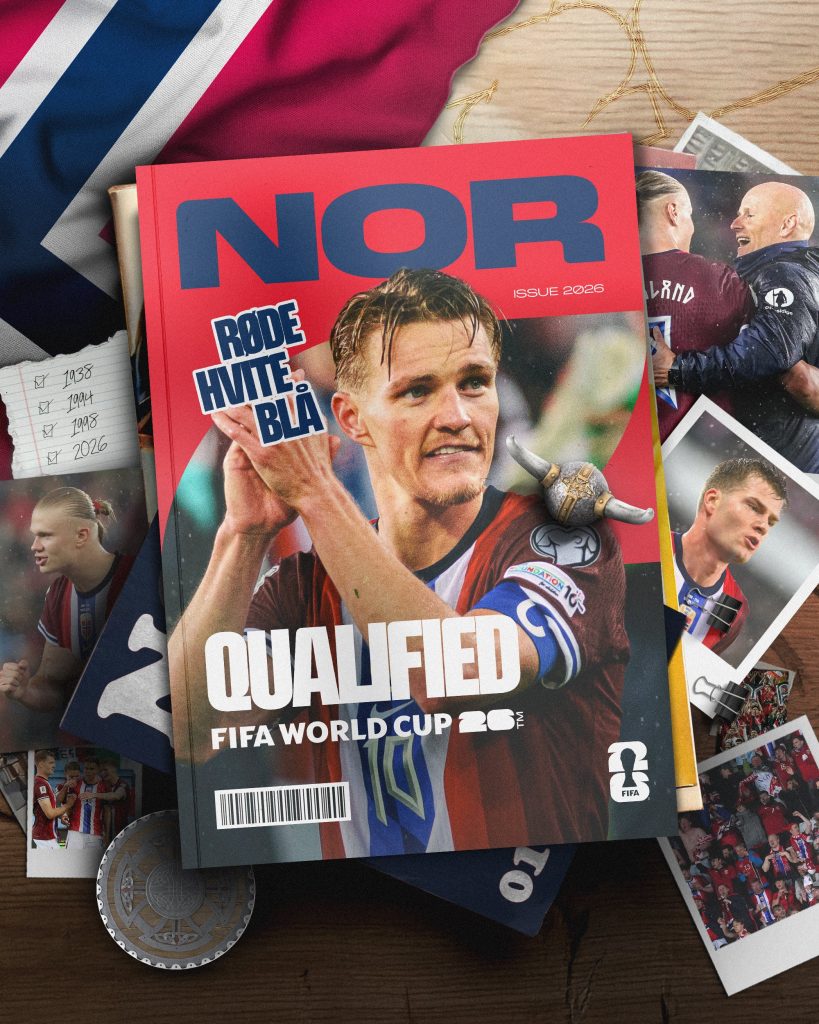
For Haaland, born a month after Norway’s last major tournament appearance, this is the moment his generation has been building toward.
There’s no reason this cannot be a tournament to remember.