NAM321/6 (50 ov)
 IRE
IRE GMB
GMB ZMB
ZMB NGA
NGA LES
LES CAG
CAG BOL
BOL COMO
COMO SAS
SAS FCA
FCA FCU
FCU KOE
KOE S04
S04 M05
M05 SVW
SVW RBL
RBL ELV
ELV MOZ19
MOZ19 UGA23/0 (0.5/20 ov, target 20)
 NZ180/5
 IND181/6 (19.5/20 ov, target 181)
 Ipswich1
 Nottm Forest1
 Alavés1
 Málaga1
 WA105/3 (18.5/50 ov, target 372)
 NSW371/8
 DEN
DEN KUW
KUW KENYA
KENYA QAT
QAT SWD-W
SWD-W EPR-W
EPR-W TTN-W
TTN-W WPR-W
WPR-W BOR
BOR WAR15/1 (2.5/20 ov)
 LIONS
LIONS Limpo21/1 (2.5/20 ov)
 NZ-A135/3 (41 ov)
 IND-A113
 DHA293/3 (84.1 ov)
 RAJ
RAJ MYMS
MYMS CHATT
CHATT RAN320/5 (80 ov)
 BAR
BAR MEX-W
MEX-W ARG-W
ARG-W UAE
UAE NED
NED PAK
PAK ENG
ENG IND-W
IND-W ZIM-W
ZIM-W AFG170/3 (34.3/50 ov, target 170)
 ZIM169
 SCP
SCP HSV
HSV ARS
ARS EVE
EVE Torino3
 Monza2
 Brest1
 Nice2
Nice2 Stuttgart2
 Gladbach3
 Al Ahli4
 Al Khaleej1
The first Englishman to play at a World Cup did not represent England.
George Moorhouse — a Liverpool-born former Tranmere Rovers striker — lined up for the United States at the inaugural tournament in 1930. The U.S. finished joint-third with a squad that also included five players born in Scotland. Moorhouse had emigrated to Canada in 1923 before settling in the U.S. The Scottish-born players had moved to America at various ages — some as young children with their families, others as teenagers or young adults.
Those circumstances made them eligible to represent the Stars and Stripes.
Nearly a century on, the World Cup remains shaped by migration and colonial ties. 292 of the 1,248 players involved in the 2026 tournament were born outside the country they are representing. All but eight nations at this year’s tournament have at least one foreign-born player in their squad.
The Numbers Behind the Diaspora Tournament
France is the most striking example of the phenomenon. There are 98 players born in France at this World Cup — but 76 French-born players are representing other nations, more than any other country.
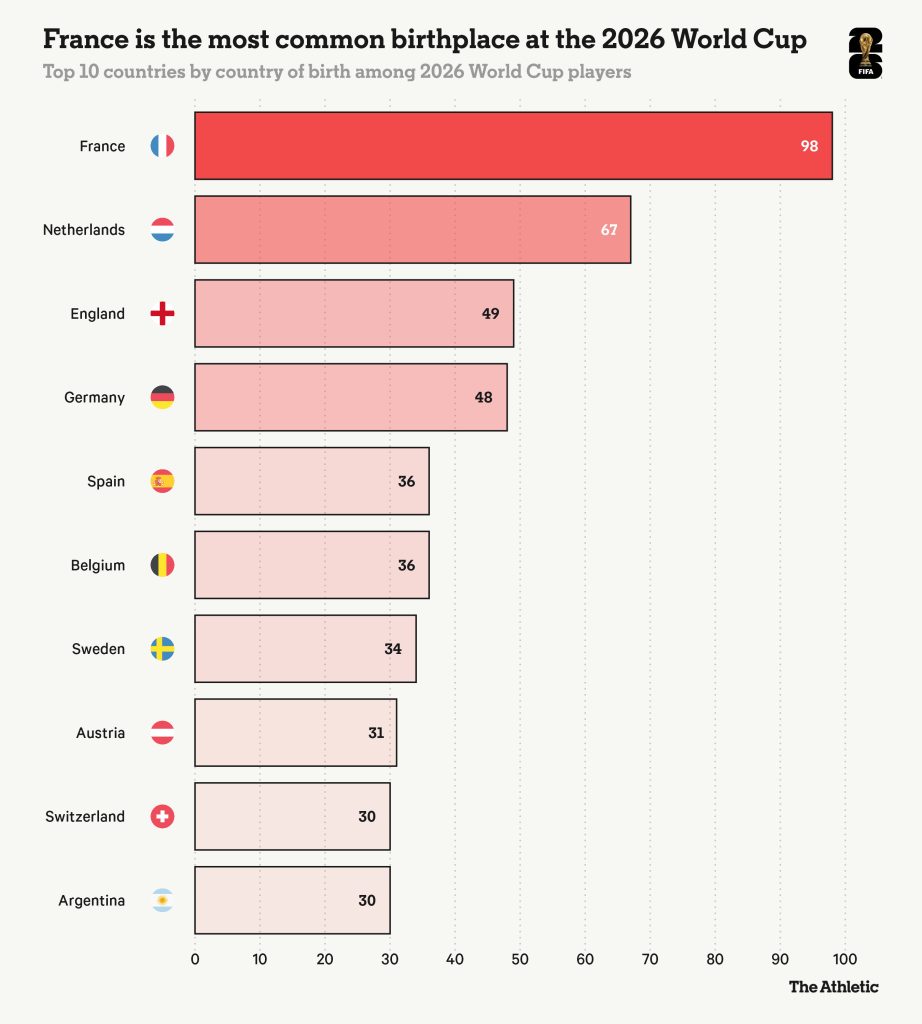
Senegal’s squad has 10 players born in France. But Senegal are not even the nation with the most French-born players — that is Algeria (13), followed by Haiti (12), with Ivory Coast and the Democratic Republic of Congo also heavily represented.
| Country | French-Born Players in Squad |
|---|---|
| Algeria | 13 |
| Haiti | 12 |
| Ivory Coast | Multiple |
| DR Congo | Multiple |
| Senegal | 10 |
During the second half of Morocco’s opening match against Brazil, all 11 Moroccan players on the field had been born outside Morocco. Qatar’s squad features players born in 11 different foreign nations: Algeria, Belgium, Brazil, Egypt, France, Ghana, Portugal, Senegal, Somalia, Sudan, and Tunisia.
The team with the highest proportion of foreign-born players is Curaçao — the Caribbean island which is part of the Kingdom of the Netherlands. All but one of their squad is Dutch-born, and their manager, Dick Advocaat, is Dutch. Most of the squad have connections to Rotterdam — the world’s largest seaport outside Asia, and one of the great gateways of modern migration.
The Rules: How FIFA Eligibility Actually Works
FIFA eligibility is built around nationality. A player can represent a country if they hold its citizenship — whether acquired automatically at birth or later through naturalisation.
Dual nationals must demonstrate a genuine connection through birth, ancestry, or residency. To play for Senegal, for example, a player holding dual nationality must meet at least one of the following criteria:
- Born in Senegal
- Mother or father born in Senegal
- Grandmother or grandfather born in Senegal
- Lived in Senegal for at least five years (or three years before the age of 10)
The rules have been revised multiple times, shaped significantly by Algeria’s Football Federation, which repeatedly lobbied FIFA to widen eligibility as they struggled to attract diaspora players.
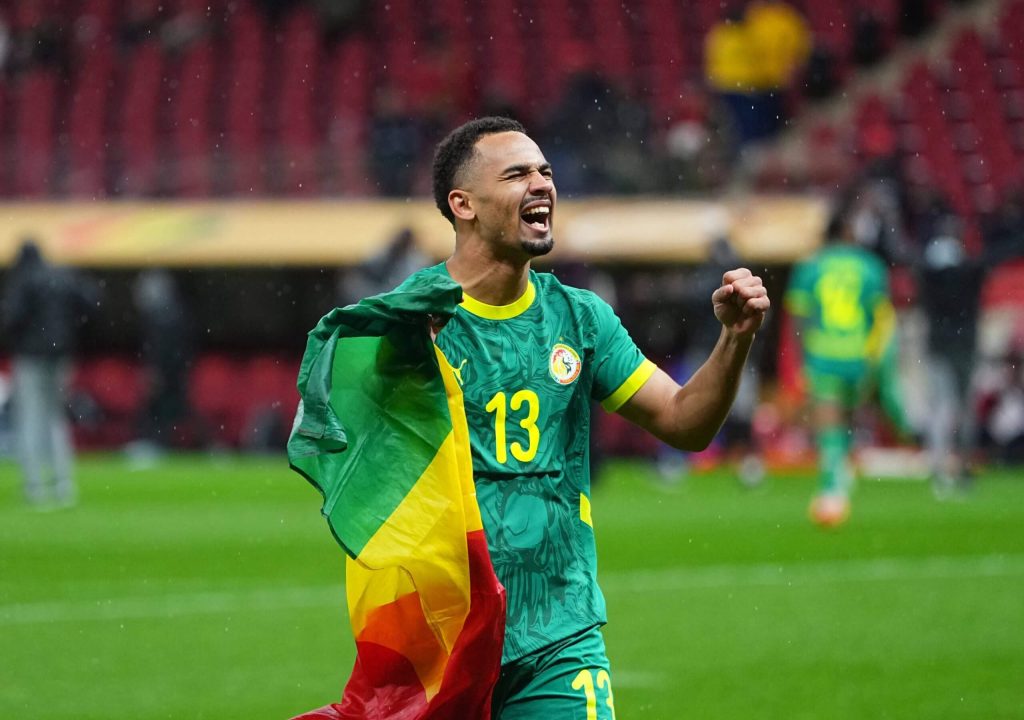
Before 2004, representing one country at youth level permanently tied a player to that nation.
In 2004, FIFA allowed a one-time switch for dual nationals who had represented another country at youth level — provided they had not played a senior competitive match and made the request before the age of 21.
In 2009, FIFA extended this to allow switches after the age of 21 — provided no senior competitive appearance had been made.
Players featuring at this World Cup who switched nations at various stages include:
| Player | Original Youth/Senior Association | Current Nation |
|---|---|---|
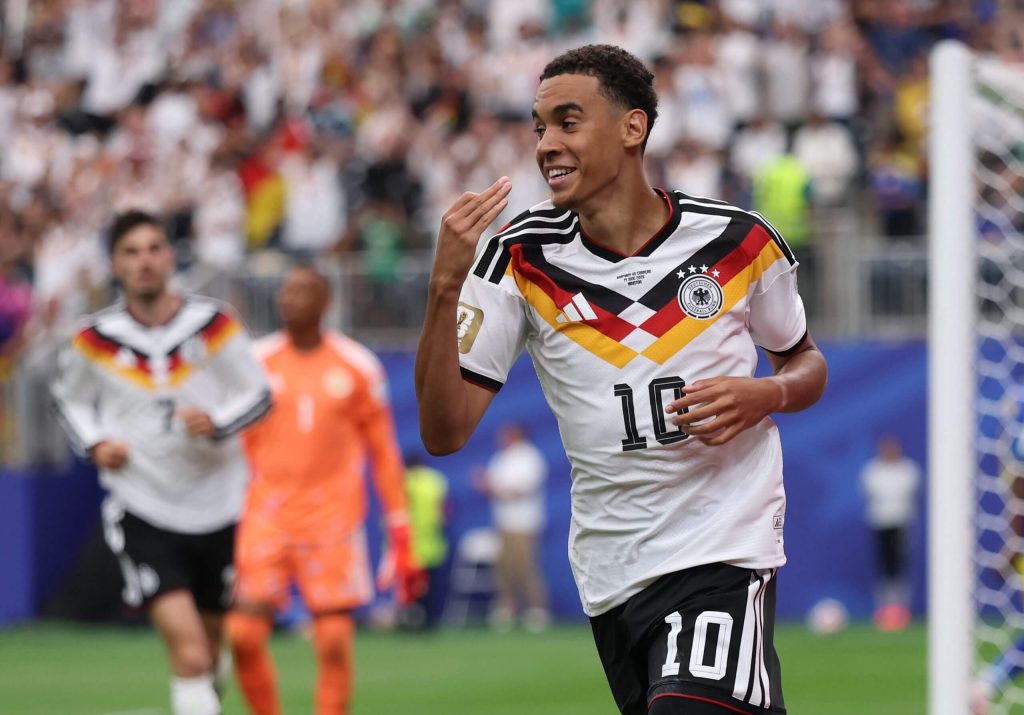
| Jamal Musiala | England | Germany |
| Folarin Balogun | England | USA |
| Declan Rice | Republic of Ireland (3 senior friendlies) | England |
| Brian Gutierrez | USA (2 senior friendlies) | Mexico |
The Munir Case and the 2020 Rule Change
The case of Munir El Haddadi proved pivotal in shaping the current rules.
Born in Spain to a Moroccan father, Munir progressed through Spanish youth football and broke into Barcelona’s first team at 18. A month later, in 2014, he made his senior international debut for Spain — replacing the injured Diego Costa in a Euro 2016 qualifier against Macedonia. His 13-minute appearance in that competitive match — not a friendly — appeared to tie him permanently to Spain.
FIFA initially declined his subsequent request to switch to Morocco, before granting approval seven years later. His case is considered instrumental in driving the most recent rule change, implemented in 2020: a player who has played up to three senior competitive matches before turning 21 can switch once three years have passed since that appearance — provided they never played at a major finals tournament.
The updated rules also tightened requirements around residency: players without birth, parent, or grandparent connections must have lived in the relevant country for five years (or three years before the age of 10), and must demonstrate the move was not made for the purpose of playing for that nation’s representative teams.
This was a direct response to cases like Brazilian striker Ailton, who became a Qatari citizen in 2004 — reportedly offered around £1 million to do so despite never having visited the country and having no family heritage linking him to Qatar.
The Scouting Operation: Saunas, LinkedIn, and Football Manager
The process of identifying eligible players has become increasingly sophisticated. Some nations employ scouts whose sole focus is uncovering dual nationals. For federations with fewer resources, every avenue must be explored: speaking with parents and agents, searching databases like Transfermarkt, posting in WhatsApp groups, contacting local clubs, and monitoring social media.
“You have to be nimble to do my job and creative in how you squeeze every single player you can out of this pool and find them,” a scout for a World Cup participating nation told The Athletic, speaking anonymously to protect professional relationships.
Some players only discover their eligibility when a federation contacts them. Others initiate contact themselves. The methods vary enormously.
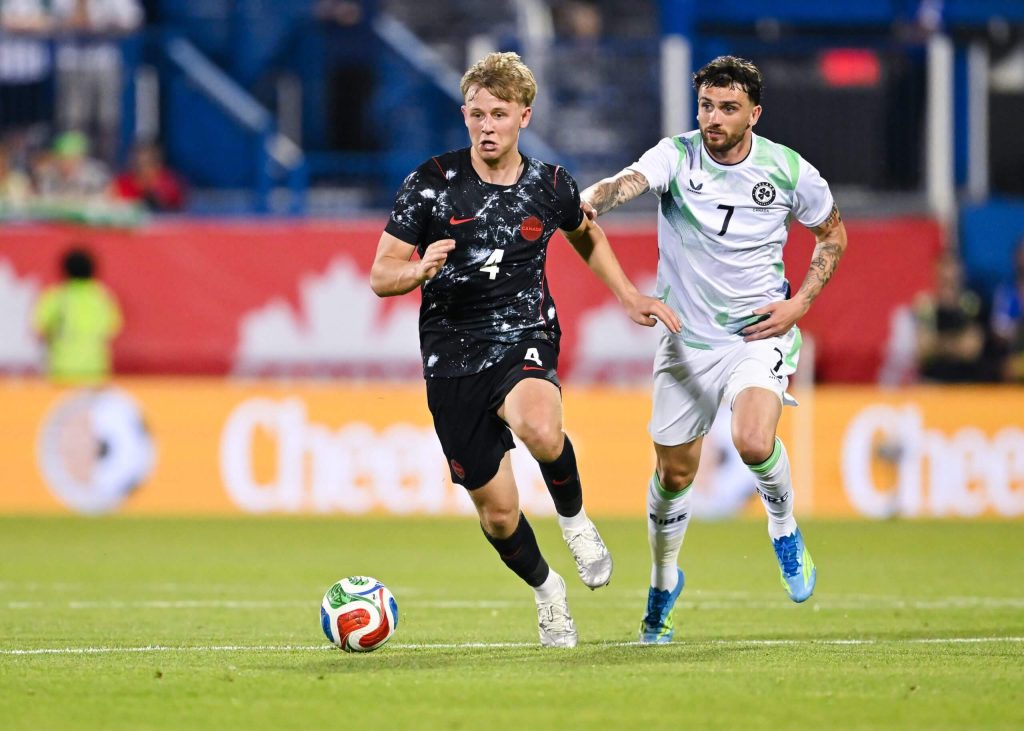
Canada centre-back Alfie Jones discovered he was eligible after casually mentioning in a post-training sauna that his grandmother was born in Canada to then-Hull City teammate and Canada winger Liam Millar. Millar told Canada head coach Jesse Marsch, and — with the assistance of Prime Minister Mark Carney to expedite the citizenship process — Jones made his debut over a year later.
Luc de Fougerolles, Canada’s starting centre-back, was connected to the federation after his father Jean de Fougerolles — born in Montreal — contacted then-Canada under-23 coach Mauro Biello via LinkedIn.
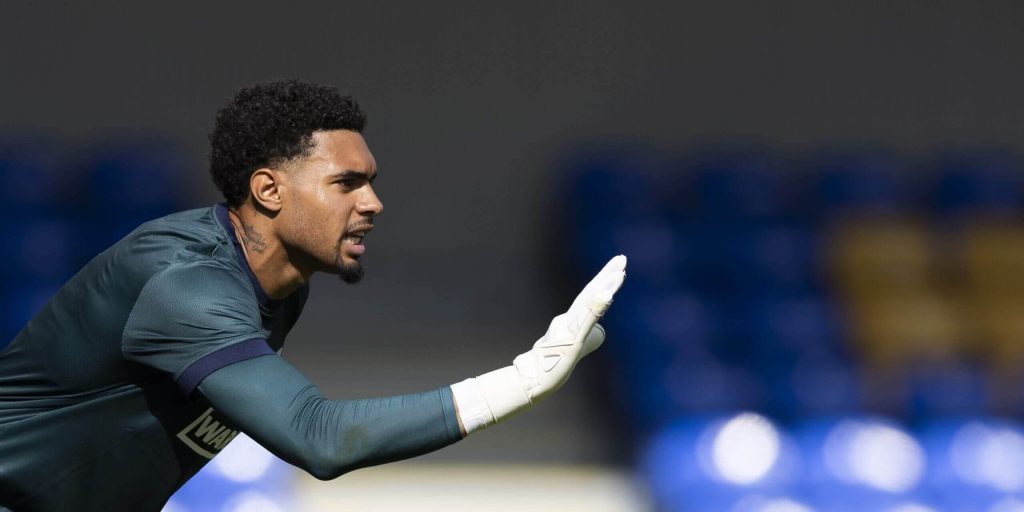
Crystal Palace goalkeeper Owen Goodman — born in England but resident in Canada from age five to thirteen — was initially told he would not meet eligibility requirements. He hired a lawyer to build his case around his Canadian childhood, was eventually granted citizenship in 2025, and was named in Canada’s World Cup squad less than a year later.
Perhaps the most unlikely scouting tool is Football Manager — the football simulation game that lists players’ places of birth and family heritage. Chilean streamer fans, aware through playing FM, launched a successful campaign for English-born Ben Brereton Díaz to represent Chile. FM’s researcher had discovered the forward’s mother was Chilean after reading an article in a Blackburn Rovers matchday programme and logged it in the database.
The Human Element: Convincing Players to Switch
Once a player’s eligibility is confirmed, the courting process begins. It is rarely straightforward.
“You need to go the extra mile to convince the players,” Przemek Soczynski, Poland’s former scouting coordinator in the United Kingdom, told The Athletic.
After discovering U.S. youth international Julian Zakrzewski Hall’s mother was Polish, Polish Football Association president Cezary Kulesza travelled to New York City in May to meet her personally, gifting her a Poland shirt inscribed with the family name Zakrzewski.
Twice a year, the Poland Football Association hosts eligible players and their families at the Polish embassy and the London consulate in Manchester, offering Polish food, gifts, and direct conversations with national team coaches.
“Football is one thing but community is another,” said Soczynski. “We try to show that if you play for us, we treat you seriously and Poland cares.”
At the heart of these processes — however bureaucratic they become — are deeply personal ties. As Diego Costa reflected in a 2013 interview after choosing Spain over the country of his birth Brazil: “It was very difficult to choose between the country where you were born and the country that has given you everything.”
That tension still defines the modern game.
All of Senegal’s players born in France came through Ligue 1 academies. And yet their family history is rooted to the country now giving them their international stage. When Sweden’s Yasin Ayari — whose father is Tunisian — scored against Tunisia on Sunday, he was reluctant to celebrate. The emotion was real and visible.
The 2026 World Cup is, in many ways, the diaspora tournament. It always has been. It just looks different now.