LAZ2
LAZ2 PAR1
PAR1 RCL2
RCL2 PAR1
PAR1 MEX-W
MEX-W ARG-W
ARG-W ATM1
ATM1 DEP0
DEP0 ADO2
ADO2 HEE3
HEE3 CLB2
CLB2 TOR0
TOR0 GVFC0
GVFC0 FCP0
FCP0 Internacional2
 Botafogo0
 UAE
UAE NED
NED PAK
PAK ENG
ENG IND-W
IND-W ZIM-W
ZIM-W GMB
GMB LES
LES MOZ
MOZ ZMB
ZMB Inter Milan
 Fiorentina
 Churchill
 Punjab FC
 NGA
NGA UGA
UGA RIY2
RIY2 TAA1
TAA1 CHE0
CHE0 TOT2
TOT2 VAL1
VAL1 VIL2
VIL2 DOR1
DOR1 SGE0
SGE0 NZ-A135/3 (41 ov)
 IND-A113
 SYL
SYL KHU
KHU MYMS299/4 (87 ov)
 CHATT
CHATT DHA293/3 (84.1 ov)
 RAJ
RAJ RAN320/5 (80 ov)
 BAR
BAR DEN
DEN PNG
PNG NAM321/6
 IRE290 (47.3/50 ov, target 322)
 NZ180/5
 IND181/6 (19.5/20 ov, target 181)
 Mirassol1
 São Paulo1
 Vitória1
 Athletico-PR1
 Athletic
 Getafe
 C Palace
 Newcastle
 Hull
Hull Brentford
 Liverpool
 Brighton
 Man United
 Bournemouth
 Atalanta
 Frosinone
 NAP3
NAP3 ROMA3
ROMA3 KHO0
KHO0 ETT3
ETT3
“The only thing Rishabh bhai and the management have told me is ‘you continue being your most authentic self, but just don’t get banned.'”
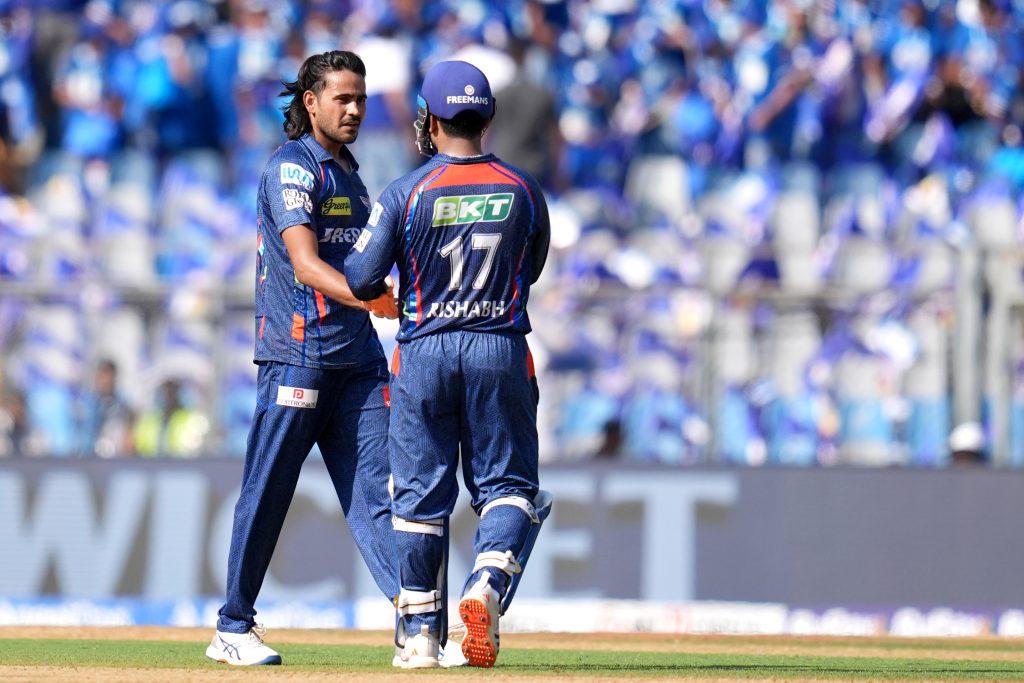
Every now and then, a rookie arrives in the IPL and makes an impression that is genuinely difficult to ignore. Last season, that rookie was Digvesh Rathi. You would be forgiven for thinking it was the celebrations — the chest pumps, the staredowns, the confrontations with match referees — or the attitude that made him stand out. It wasn’t. It was the skills: the carrom ball, the googly, the stump-to-stump line that left some of the best batters in the world looking foolish and increasingly frustrated.
Now heading into his second IPL season with Lucknow Super Giants, Rathi is older by one year, wiser by one full campaign, and not even slightly interested in toning it down.
What He Did Last Season
Rathi grabbed 14 wickets in IPL 2025. The raw number alone tells a story, but ESPNcricinfo’s SmartStats told a more complete one — once the value of those scalps was factored in, his contribution was counted as 19.5 wickets. The names in his notebook read like a who’s who of T20 batting: Abhishek Sharma, Ishan Kishan, Jos Buttler, Shreyas Iyer, Ryan Rickelton, Axar Patel, Prabhsimran Singh (twice), and his friend Priyansh Arya, among others.
| Metric | IPL 2025 |
|---|---|
| Wickets (actual) | 14 |
| Wickets (SmartStats value) | 19.5 |
| Notable scalps | Abhishek Sharma, Buttler, Kishan, Iyer, Rickelton, Axar, Prabhsimran (twice), Priyansh Arya |
| Role | Lead spinner, LSG |
| Retention fee | INR 30 lakh (base price) |
For a player who could not get his name called at two successive IPL auctions — in 2023 and 2024 — those are numbers that demand attention.
The Delhi School of Hard Knocks
To understand Rathi, you have to understand where he comes from. Delhi cricket is not a finishing school. It is a forge. The grounds are not large, the batters are relentless, and the competition for a handful of spots is fierce enough to break most.
“I said in an interview some days ago: Delhi boys don’t like to lose,” Rathi says. “I adjusted quickly to the rigors of IPL cricket because of my background in Delhi cricket. Grounds in Delhi are not big and the most dangerous batters in the IPL are from Delhi itself, so when I started to play, those batters would whack us a lot, often scoring 400-500 runs in 40 overs.”
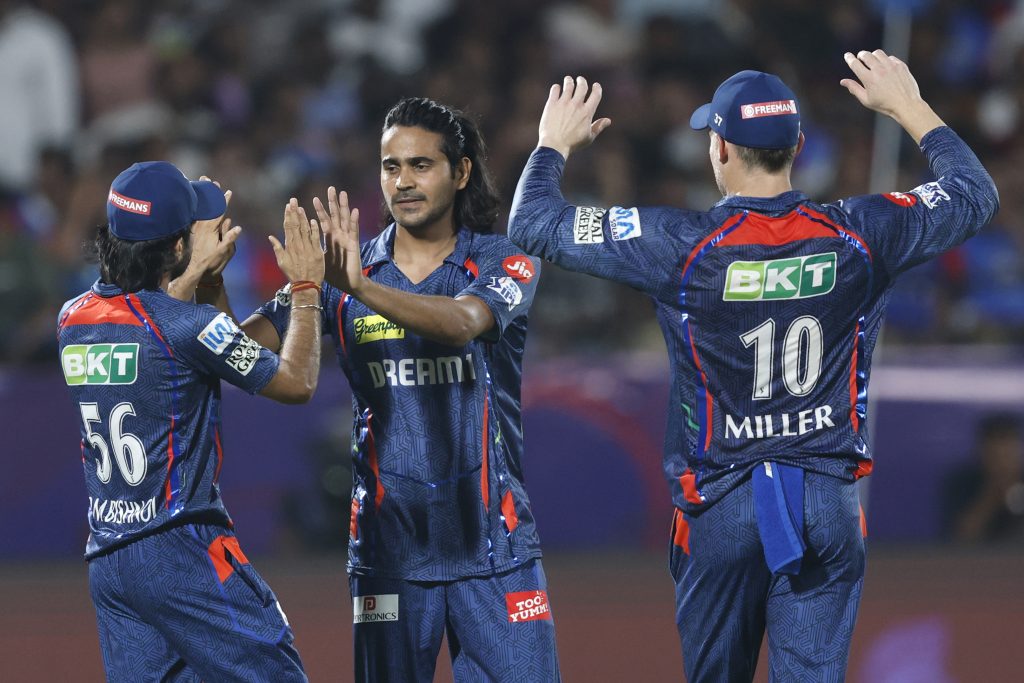
It would have been easy, and understandable, to crumble under that weight. Rathi responded differently. Every boundary conceded sent him back to the nets, working harder, thinking more carefully, refusing to be the one who showed weakness first. “So when a bowler gets hit out of the park, he goes back to the nets and works even harder because they are shocked and thinking ‘did that just happen to me?’ That was the story with me too. So when a person works that hard in the background, then the attitude to thinking of winning instead of being scared comes automatically.”
That mental architecture — hard work producing fearlessness rather than the other way around — is the most important thing to understand about how Rathi operates. He did not walk into the IPL confident because he had been told he was good. He walked in confident because he had earned it on the grounds of Delhi, against batters who had no interest in going easy on him.
The Philosophy: Good Balls Don’t Lie
On the field, Rathi operates from a set of convictions that are simple and hard to argue with.
“Whether it’s Test cricket, ODIs or T20s, a good ball will always be a good ball,” he says. “If a batter can read you, he will play shots against you, so all you need to ensure is you have a plan in your head when you have the ball in your hand at your run-up.”
There is no mysticism in it, no elaborate system of self-belief rituals. Just clarity of thought at the moment it matters most. It is a mindset that was visible in real-time last season — the way Rathi did not get overawed bowling to batters of enormous reputation, the way he was willing to go toe-to-toe and accept the outcome without flinching. He never bowled as if he feared what might happen. He bowled as if he already knew what he wanted to happen.
The Narine Connection and Carl Crowe’s Influence
Heading into IPL 2026, Rathi comes in with a significant technical upgrade. LSG have appointed Carl Crowe as their new spin-bowling coach, a man who joins from Kolkata Knight Riders and who has been the long-time coach of Sunil Narine — Rathi’s own cricketing idol.
The connection is not new. Rathi had first met Crowe when serving as a net bowler at KKR, before he had been bought at any IPL auction. Even then, Crowe had told him an IPL opportunity would come. Now the two are working together full-time, alongside Bharat Arun, LSG’s other new bowling coach. Rathi spent several weeks with both men at an LSG camp for domestic cricketers in Chennai ahead of the new season, and the enthusiasm in his voice when he talks about what he has developed there is hard to miss.
“I was a net bowler at KKR when I first met Narine but I never asked him for any tips,” Rathi says. “That’s because I have seen more bowling of Narine on YouTube than Narine has seen of himself, so I feel like I know his bowling inside-out. That’s where I first met Carl Crowe too, and I remember him telling me back then that an IPL gig would just be around the corner. So it is exciting to be able to have Carl by my side this season.”
As for Narine himself, Rathi studies him the way a student studies a text — repeatedly, obsessively, looking for things that most people would miss. The fact that he could not bring himself to ask his idol for advice when he had the chance says something about how Rathi respects that knowledge. You earn the right to ask, in his world. You don’t just request it.
Lead Spinner, Bigger Responsibility
With Ravi Bishnoi’s departure, Rathi walks into IPL 2026 as LSG’s lead spinner. It is a label he is careful about accepting too literally, even as he embraces the responsibility that comes with it.
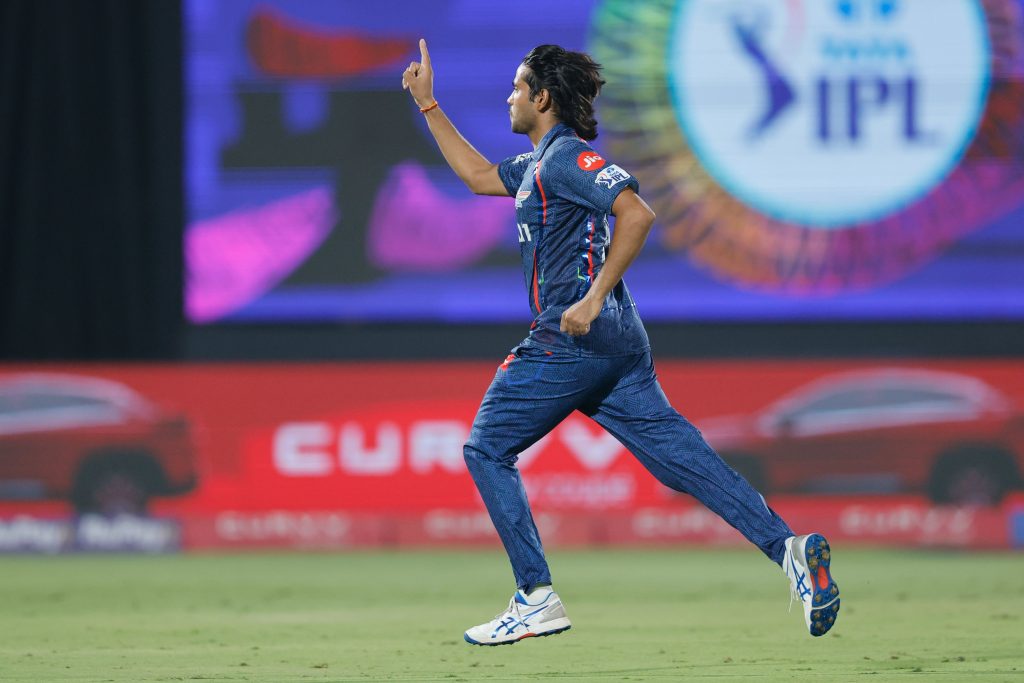
“Last year, I bowled well and Ravi bhai didn’t have a great season,” he says. “But in my mind, I never really believed in the concept of lead spinner or lead bowler or main bowler. I just believe in taking responsibility and delivering on it.”
It is a subtle but important distinction. Lead spinner implies a hierarchy. Taking responsibility implies ownership. Rathi is more interested in the latter — the act of controlling what he can control, which is his own preparation, his plan for each batter, and his execution at the moment of delivery. The title can look after itself.
Loyalty Over Money: The INR 30 Lakh Decision
Perhaps no decision Rathi made in the off-season raised more eyebrows than his acceptance of a INR 30 lakh deal — the base price at which he had been bought in his debut season — to be retained by LSG. He was aware that a return to the auction pool would almost certainly have fetched him considerably more. He stayed anyway.
“I had been giving trials for two seasons across six or seven teams. And those trials had gone well. But nobody bought me in IPL 2023 or 2024. In fact my name didn’t even come up at the auction in those years,” he says. “But the team that bought me, there was no way I was going to tell them ‘I won’t play for you now’. LSG were with me in my bad days, so I will be with them in my good days. That’s why there was never any question of me leaving or going to the auction pool, even if my price tag stayed at INR 30 lakh.“
It is a sentiment that feels almost old-fashioned in a modern IPL ecosystem where player movement is fluid and franchise loyalty is rarely expected or offered. Rathi’s long-time coach Sachin Shukla once summarised his pupil simply: hard work beats talent. The retention decision fits neatly within that worldview. The people who backed you before the rewards came deserve to be around when the rewards arrive.
The Celebrations Are Not Going Anywhere
And then there is the question everyone wanted answered. The demerit points, the fines, the match referee conversations — will any of that rein in the celebrations in 2026?
“That was my first year and I didn’t know the expectations,” Rathi says. “I didn’t intend to disrespect anyone then and neither do I want to now. But nobody can stop me from celebrating.”
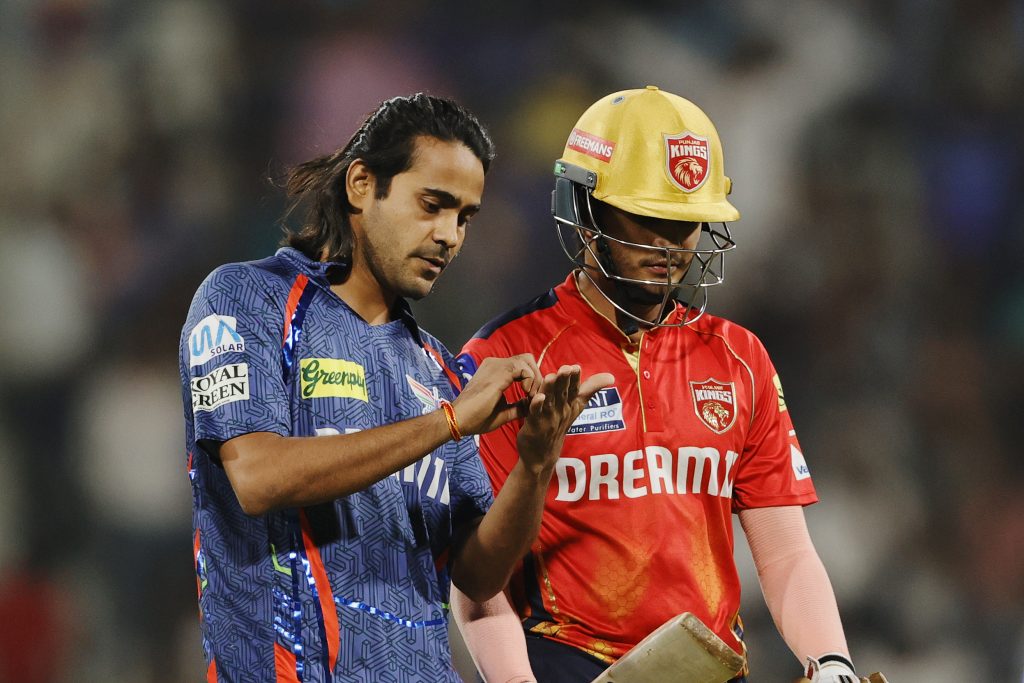
He pauses, then makes the point that is hardest to argue against: “If a batter can celebrate after scoring a hundred by putting their helmet on top of their bat and so on, then I can celebrate too.”
There is no anger in it, no grievance. It is simply Rathi operating from first principles — fairness, consistency, the right to express yourself — and arriving at a conclusion that seems obvious to him. Rishabh Pant has told him to be his most authentic self. The only amendment to that instruction is the small matter of staying on the field.
Given everything Rathi produced last season, LSG will take that trade-off without a second thought.
Read More: Once Built on Experience, CSK Now Exposed by Inexperience