On Friday, August 28, 2026, IEEE Spectrum, the IEEE’s flagship publication, raised a fresh alarm: China’s rare earth curbs on yttrium and erbium are starting to hit datacenters, and the licensing chokeoff is set for a major review this November.
Export volumes of yttrium are reportedly down roughly 75 percent year-on-year compared to 2025, according to the report, and the world’s biggest supplier has not indicated any intention to reverse course.
The Register also reported the same day that datacenters are facing direct hits from China’s rare earth curbs as the clock runs out on an escalated licensing chokeoff, though this remains unconfirmed.
Datacenters China: November 2026: The Review That Could Reshape the Supply Chain
Beijing reportedly placed seven medium and heavy rare earth elements under mandatory licensing in 2025. Yttrium was on that first-wave list, alongside terbium, dysprosium, and four others. The November review is the next pressure point.
If export licenses remain restricted or tighten, server rooms from Bengaluru to Virginia will feel it within a single procurement cycle, because no domestic refining capacity outside China can match current volumes at acceptable cost. The bigger issue is optionality.
Datacenters in India and the US are already stacking power-dense AI racks, and the rare earths at the heart of this story are not exotic curiosities. Yttrium shows up in white LEDs, microwave filters, solid-state lasers, and the ceramic capacitors embedded in nearly every server-class motherboard.
When that input slows, even a small shortage ripples into storage, switching gear, and accelerator boards.
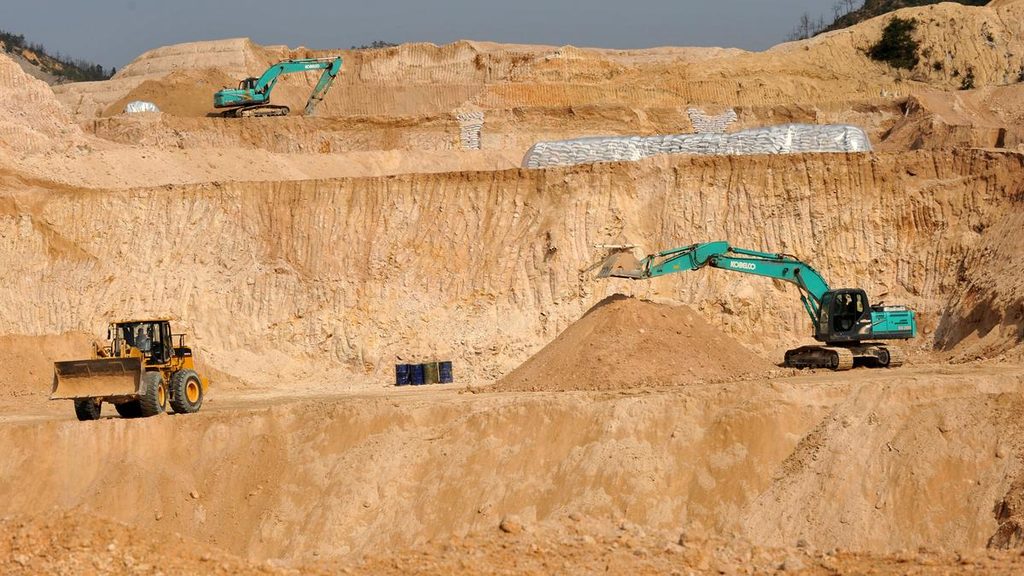
Erbium and Yttrium: The Specific Materials at Risk
Erbium is the second element IEEE Spectrum is tracking. It is used in fibre amplifier circuits that extend the reach of long-haul optical transceivers, the silent plumbing that ties hyperscale datacenters together. Combined with yttrium’s role in capacitors and phosphors, the two elements cover two ends of the datacenter stack: the photons that leave the building and the electronics that process what stays inside.
The 75 percent yttrium drop is not a theoretical projection. It is reportedly a measured change in customs data for 2026 versus 2025, which is the kind of figure that procurement teams at hyperscalers take directly to their boards. The argument that this only affects niche optics no longer holds up once you trace the bills of materials on a single NVMe switch or a 1.6T transceiver.
Why the 2025 Licensing Wave Matters Now
China’s 2025 first-wave restrictions were initially treated as a geopolitical headline rather than an infrastructure problem. That framing is now obsolete. The licensing regime was designed to be slow, deliberate, and adjustable. The November review window is the lever, and IEEE Spectrum is flagging that datacenters have spent the past year underestimating how directly the policy would intersect with their bill of materials.
Some operators have responded by locking in multi-year offtake agreements, others by qualifying alternative ceramic and phosphor chemistries. None of those moves happen cheaply or quickly. A 75 percent drop in a single input is the kind of shock that exposes how concentrated the supply chain remains, even after years of diversification rhetoric.
What Happens After November
The next 90 days are expected to bring fresh disclosure from hyperscalers, defence-adjacent buyers, and the rare earth refiners outside China racing to scale capacity. The November clock is real, and datacenters in India and worldwide are now counting down with the rest of the industry.
Datacenters china rare earth curbs are no longer a forecast; they are a line item reshaping 2026 procurement.
Related Articles
- Huawei and HP Ink Global Patent Deal to Expand Wi-Fi Licensing Reach
- Elon Musk Starlink Reapplies India Approval With Direct-To-Device Tech
- China
FAQs
What did IEEE Spectrum report on August 28, 2026?
IEEE Spectrum reportedly warned that China’s rare earth export licensing is starting to hit datacenter hardware, with yttrium exports reportedly down 75 percent year-on-year against 2025 and a policy review due this November.
Why are yttrium and erbium important for datacenters?
Yttrium is reportedly used in ceramic capacitors, LEDs, microwave filters, and solid-state lasers, while erbium is reportedly used in fibre amplifier circuits inside optical transceivers. Both sit on the critical path of modern server and networking hardware.
When did China first restrict these rare earths?
China reportedly placed seven medium and heavy rare earth elements, including yttrium, under mandatory export licensing in 2025 as part of its first wave of rare earth restrictions.
What happens in November 2026?
Beijing is scheduled to review its rare earth export licensing policies. Depending on the outcome, datacenters could see further restrictions, allocation battles, or partial relief, with direct cost impact on capacitors, optics, and accelerator hardware.
Was this article helpful?
Your feedback directly improves future articles on this site.