SA329 & 387 (134.4 ov)
 AUS429
 BAN272 & 79/6 (29 ov)
 WI245
 HAC1
 PSG5
 NICE5
 REN2
 SHA5
 AHL1
 ELV1
 M050
 VIL
 ESP
 LILL
 RCL
 UAE
 NED
 PAK
 SL
 Chennaiyin
 Kerala
 Chelsea
 Man Utd
 Levante
 Atlético
 Al Taawoun
 Al Ettifaq
 DIR1
 NEOM2
 NEU1
 BFC1
 ABH1
 ITT1
 NAM168 (41/50 ov, target 299)
 IRE298/8
 SOA154 & 182/1 (48 ov, target 422)
 WA406/5d & 169
 TAS335/5 (96 ov)
 NSW
 NZ
 IND
 AS-W
 MS-W
 PS-W
 MR-W
 ST-W
 BH-W
 ND
 AUCK
 AFG221/7
 ZIM202/5 (20 ov, target 222)
 ENG386/5
 SS-W157/6 (20 ov, target 155)
 HH-W174/8 (20 ov, target 193)
 BODO3
 VFK2
 LBK2
 RAN1
 OAK0
 NKU0
 GRA0
 HAR2
 GRE0
 DIJO1
 METZ0
 PAU1
 NAN1
 CLE0
 AVE0
 DUN0
 Bologna
 Monza
 Mohun Bagan
 Punjab FC
 Fiorentina2
 Atalanta2
 Al Nassr5
 Al Kholood3
 Al Riyadh0
 Al Qadsiah6
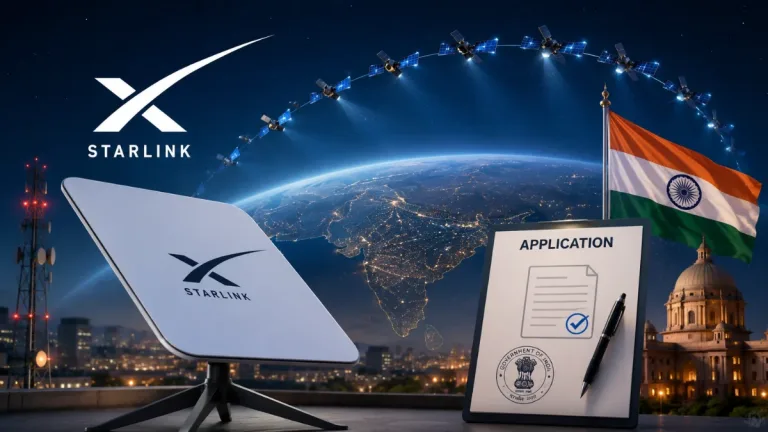
On August 20, 2026, Elon Musk’s Starlink reapplied to India’s space regulator for authorization of its Gen 2 satellite constellation that adds direct-to-device (D2D) connectivity, according to reporting by the Economic Times. The move comes after an earlier rejection left the company’s India timeline in limbo while India is actively shaping how satellite-to-mobile services fit into its broader communications rules.
1) Overview: Reapplication Date, Regulator, and What’s Being Asked
The inciting moment in this arc arrived on August 20, 2026, when Starlink resubmitted its application to India’s space regulator, seeking approval for a Gen 2 low-Earth orbit (LEO) satellite network. The application, as described by Economic Times, targets authorization for nearly 30,000 satellites and places them at an altitude range of 340 km to 615 km.
The regulator involved is the Indian National Space Promotion and Authorisation Centre (IN-SPACe), India’s designated authority for evaluating and authorizing space activities. In the same reporting, Starlink’s proposal is said to incorporate newer capabilities, including direct-to-device connectivity, aimed at connecting compatible mobile devices without relying on traditional ground-based towers.
2) Key Details: Gen 2 Constellation, D2D, and Earlier IN-SPACe Rejection
Here’s the thing: Starlink did not win quick approval the first time. According to the Economic Times report, IN-SPACe rejected an earlier Starlink application for the 30,000-satellite constellation in the early period of the effort, citing non-conformity with certain features and spectrum bands. This time, the resubmission is framed as a Gen 2 update with added technical scope.
Economic Times states that the new application includes direct-to-device (D2D) connectivity, aligning Starlink’s approach more closely with next-generation satellite communications expectations. In D2D-style architectures, the satellite network can communicate with user devices directly, which can change deployment economics and coverage goals in places where terrestrial infrastructure is limited. Altitude also matters for performance and regulatory planning. The stated LEO range of 340 km to 615 km signals a constellation design intended to balance latency, coverage geometry, and service footprint, though the exact radio parameters are not publicly detailed in the report. The article also notes that the application seeks authorization while India considers expanding access to satcom spectrum and finalizing rules for satellite-based mobile services.
3) Context: Why India’s Satcom Rules Are the Real Battleground
Worth noting: the D2D feature is not just a marketing headline—it’s a regulatory stress test. India’s communications framework has to decide how satellite spectrum use, licensing boundaries, and service-level responsibilities map onto mobile services that typically sit under telecom rules and terrestrial network norms. That said, the strongest operational question for policymakers is interference management and spectrum conformity, especially for systems involving thousands of moving assets in LEO.
If Starlink’s earlier rejection hinged on spectrum bands or feature non-conformance, the new application effectively becomes a compliance exercise as much as a technology upgrade. For international context, satellite-to-mobile ambitions have been a recurring theme in industry coverage, including overviews of Starlink’s broader roadmap by outlets like TechCrunch (see coverage at https://techcrunch.com) and discussion of connectivity expectations at The Verge (see https://www.theverge.com). The point for India is that rules mature at a different pace than engineering, and D2D can force a sharper definition of what counts as a mobile service versus a satellite service.
4) What’s Next: Possible Outcomes for Approval and Indian Users
That leads to the present-day implication: if IN-SPACe clears the resubmitted Gen 2 proposal with D2D support, Starlink could become part of India’s evolving satellite-based mobile ecosystem. According to the Economic Times report, the company is seeking authorization for its Gen 2 constellation during a period when India is reviewing how it will expand satellite communication spectrum access and finalize satellite-based mobile service rules.
Here’s the likely path—approval or further compliance requirements, followed by coordination on technical filings and service-level constraints. If Starlink’s D2D parameters are accepted, it would also raise competition dynamics for direct-to-device connectivity approaches and encourage further investment in satcom integration with mobile networks.
For Indian users and developers, the next milestones will be regulatory decisions and the practical timeline to service deployment under India’s licensing framework—meaning the “when” will hinge on approvals, not just launch capability.
Related Articles
- Musk-Owned Cursor Is Quietly Building a Real India Operation — Here's What's…
- India Murf Falcon 2 Launches to Challenge Voice AI Leaders
- No More Guesswork: Embark's New Tool Tells Companies Exactly What a GCC in India Will Cost
FAQs
What did Elon Musk’s Starlink submit to India, and when?
Elon Musk’s Starlink reapplied to IN-SPACe on August 20, 2026, seeking authorization for its Gen 2 LEO satellite constellation with direct-to-device connectivity.
How many satellites are part of the Gen 2 request?
The application described by Economic Times seeks authorization for nearly 30,000 satellites.
Why was Starlink’s earlier application rejected?
The earlier application was rejected by IN-SPACe due to non-conformity of certain features and spectrum bands, as stated in the Economic Times report.
What does “direct-to-device” mean in this context?
Direct-to-device means the satellite system is designed to communicate with compatible user devices without needing the same kind of terrestrial cell tower coverage.
Does approval guarantee service immediately in India?
No, authorization is only one step; service rollout depends on final regulatory conditions, technical coordination, and implementation timelines under India’s satcom and mobile service rules. Elon Musk’s Starlink reapplication signals that India’s satellite-to-mobile future will be decided by spectrum and D2D compliance, not by satellite count alone.
Was this article helpful?
Your feedback directly improves future articles on this site.