NAM321/6 (50 ov)
 IRE
 AVL
 MNC
 RAY
 ELC
 GMB
 ZMB
 NGA
 LES
 CAG
 BOL
 COMO
 SAS
 FCA
 FCU
 KOE
 S04
 MOZ19
 UGA23/0 (0.5/20 ov, target 20)
 NZ180/5
 IND181/6 (19.5/20 ov, target 181)
 Ipswich1
 Nottm Forest1
 Alavés1
 Málaga1
 WA105/3 (18.5/50 ov, target 372)
 NSW371/8
 DEN
 KUW
 KENYA
 QAT
 SWD-W
 EPR-W
 TTN-W
 WPR-W
 BOR
 WAR15/1 (2.5/20 ov)
 LIONS
 Limpo21/1 (2.5/20 ov)
 NZ-A135/3 (41 ov)
 IND-A113
 DHA293/3 (84.1 ov)
 RAJ
 MYMS
 CHATT
 RAN320/5 (80 ov)
 BAR
 MEX-W
 ARG-W
 UAE
 NED
 PAK
 ENG
 IND-W
 ZIM-W
 AFG170/3 (34.3/50 ov, target 170)
 ZIM169
 CHE0
 DYI0
 CHO1
 QIN0
 HEN1
 BEI0
 LIA1
 ZHE0
 QWC1
 YUN0
 SHX0
 Shanghai Shenh0
 TIG0
 SHP0
 WTT1
 SHT3
 M05
 SVW
 RBL
 ELV
 Torino3
 Monza2
 Brest1
 Nice2
 Stuttgart2
 Gladbach3
 Al Ahli4
 Al Khaleej1

Few analysts in the competitive shooter market anticipated that Counter-Strike 2 would fundamentally shift industry standards for player accommodation when Valve rolled out its sweeping audio and visual updates. Valve engineered a technical overhaul for its flagship title that transformed how players with sensory impairments experience tactical shooters. That said, the introduction of visual audio cues, advanced color-blind palettes, and refined HUD scaling systems created a ripple effect across the entire esports ecosystem. GAMERS accustomed to raw, unassisted sensory environments suddenly found themselves navigating a title that balanced hardcore precision with modern inclusivity requirements. Audio clarity traditionally dictated survival in high-stakes matches, leaving hearing-impaired participants at a significant competitive disadvantage. Valve addressed this disparity by deploying spatial frequency filters and visual sound indicators that map directional audio directly onto the peripheral interface without breaking immersion.
Similar to mastering mechanics like the Elden Ring Torrent Mount for traversal efficiency, competitive players quickly learned to integrate these new visual prompts into their split-second decision-making processes. Visual readability also received a major overhaul, moving away from muddy textures and blending player models toward high-contrast environmental rendering. These optical adjustments reduced visual noise on complex maps like Mirage and Inferno, ensuring that characters pop against background geometries regardless of custom resolution settings. Just as viewers track narrative twists in shows like the “Lanterns” Episode 3 Ending, tactical analysts now meticulously evaluate how map lighting adjustments impact raw reaction times across different hardware configurations. Input latency and network responsiveness remain foundational pillars of tactical shooters, yet accessibility settings now extend deeply into control customization and macro allowances.
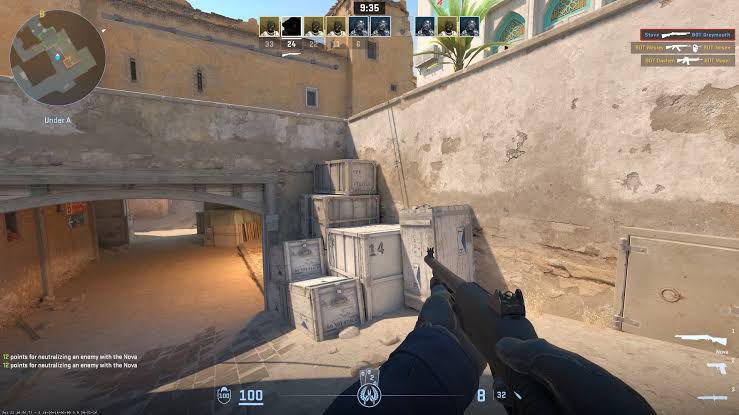
Players managing motor limitations benefit from togglable action states, custom deadzone sliders, and streamlined movement binds that reduce physical strain during marathon gaming sessions. The community reaction mirrors the initial excitement surrounding a major media reveal, comparable to dissecting every frame of a Dive Into You Teaser to extract hidden gameplay implications. Developers across the industry are taking notes on how Valve integrated these systems without alienating the purist demographic that values uncompromising difficulty. When accessibility features enhance clarity for everyone rather than merely serving as a handicap mode, player retention naturally improves across all skill brackets. This philosophy echoes the meticulous world-building found in prestige television adaptations like A Knight of the Seven Kingdoms, where every detail serves a distinct narrative purpose.
| Feature Category | Core Adjustment | Competitive Impact |
|---|---|---|
| Audio Engineering | Spatial frequency filters | High directional accuracy |
| Visual Rendering | High-contrast character shaders | Reduced target acquisition time |
| Input Management | Toggable action states | Lowered physical strain |
| Interface Design | Modular HUD scaling | Improved situational awareness |
Counter-Strike 2 demonstrated that high-level competitive integrity and comprehensive player accommodation can coexist within the exact same software architecture. Future updates will likely push these boundaries even further, establishing a mandatory baseline for every major studio entering the tactical genre.
Related Articles
- Event Horizon Returns To Streaming Today: 2026 Sequel Explained
- BMW i3 Reliability: Long-Term Maintenance Issues Explained
- Mousetrap Ending Explained: Who Is The Rat, and Will There Be a Season 2?
FAQs
What specific accessibility features were added to Counter-Strike 2?
Valve introduced advanced spatial frequency audio filters, visual sound indicators, high-contrast player shaders, and extensive HUD scaling options to assist players with sensory impairments.
Do accessibility settings give players an unfair competitive advantage?
These tools are designed to level the playing field by removing artificial barriers, and many of the visual clarity enhancements benefit all participating players equally.
How do visual sound indicators work in competitive matches?
Visual sound indicators map directional audio cues onto the peripheral interface, allowing hearing-impaired players to track footsteps and gunfire origin without relying entirely on hardware headsets.
Are these settings mandatory for professional esports tournaments?
Tournament organizers generally permit standard in-game accessibility settings, provided they do not rely on third-party software modifications or external hardware macros.
Was this article helpful?
Your feedback directly improves future articles on this site.