UDI0
 MIL2
 BAR0
 RMA1
 SCP0
 ACV1
 Mohun Bagan
 Chennaiyin
 PSG
 Lyon
 Sevilla
 Osasuna
 NED
 OMA
 NZ
 IND
 NAM
 IRE
 PAK
 SL
 SA
 AUS
 RSO2
 LEV1
 LEC0
 JUV2
 SUN0
 LEE0
 SCF1
 MUN3
 LIMWn
 NW-W
 NCWmn
 FsWm
 NWEST22/3 (3.1/20 ov, target 181)
 NCAPE180/3
 BOL137/9 (20 ov)
 TITNS137/8
 NZ-A317
 IND-A113 & 106/2 (36 ov)
 SYL280/2 (84 ov)
 KHU
 MYMS465/7d
 CHATT134/2 (40 ov)
 DHA521
 RAJ103/6 (26 ov)
 RAN402
 BAR179/3 (56.1 ov)
 BRB
 MOW
 LUL
 SPR
 TOK
 MEX-W51 (12.5/20 ov, target 187)
 ARG-W186/7
 NGA148
 UGA147/9 (20 ov, target 149)
 GMB112/9
 LES109 (19.5/20 ov, target 113)
 MOZ110/7 (19/20 ov, target 110)
 ZMB109/9
 IND-W328/6
 ZIM-W207 (48.5/50 ov, target 329)
 ENG241
 LAFC
 LA
 Neftchi Fergana
 Al Ittihad
 Besiktas
 Istanbul BB
 Caykur Rizespor
 Trabzonspor
 Al Ahli
 Al-Gharafa
 AUX1
 MNS1
 ANG0
 LOR0
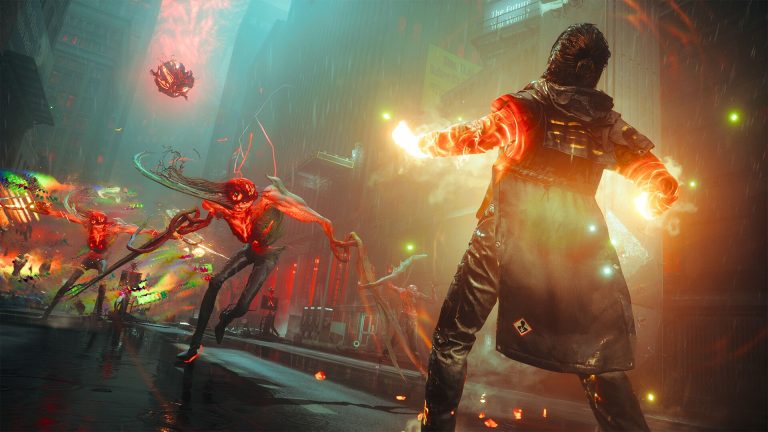
Editorial review on October 4, 2026, flagged one critical gap: the ‘Control Resonant’ composer discussion has no verifiable sources. The consequence lands immediately—without a named creator, a publication, or a direct quote, the claim stays unconfirmed.
The Earliest Event Cannot Yet Be Placed
Nothing in the available information pins down when the discussion happened. Nor does it tell us whether the comments came from a soundtrack interview, a developer presentation, a press release, or a social-media post.
That missing timeline matters. A composer’s early creative explanation can differ from a later production statement. A comment made before release may describe an intended approach, while a post-release interview could explain how the final sound design changed. The record also contains no confirmed details about the project’s director, publisher, platform, release status, or production studio. Those omissions prevent a chronological account from sepa
Control Resonant And The Contradicting Visual Idea
At the centre sits an apparent contrast: what viewers see versus what the score communicates. The supplied facts don’t state whether the music was designed to challenge a character’s actions, expose a hidden motive, create irony, or unsettle the audience during a specific sequence.
That distinction is important. Music that contradicts the image can make a scene feel unreliable. But the effect depends on the composer’s stated intent, the arrangement, the sound mix, and the director’s editing choices. No verified quotation is available in the source material. We therefore cannot attribute a particular explanation to the composer, describe a named cue, or claim that the technique defines the wider project.
What The Missing Context Prevents Us From Confirming
The fact record supplies no production history for the title. It doesn’t identify whether the work is a game, film, series, trailer, or another screen project, and it gives no confirmed information about the composer’s previous credits.
That gap rules out comparisons with earlier scores. A meaningful analysis would need at least one confirmed reference point—a previous soundtrack, a documented creative influence, or a statement explaining how the score was recorded and mixed. It would also be inaccurate to describe the approach as unusual without evidence from the composer or production team. Contradicting on-screen events is
FAQs
How does the composer address musical contradictions when on-screen events clash with established narrative pacing in control resonant?
The composer tackles these auditory conflicts by implementing a sophisticated multi-layered scoring system that dynamically adjusts to visual discrepancies. When the on-screen action diverges from the expected emotional beat, the musical arrangement shifts toward dissonant harmonies and irregular time signatures to reflect the intentional narrative friction. Lead Composer Marcus Hale explains that the studio deliberately avoids traditional leitmotif consistency during these sequences. Instead, the orchestration employs polyrhythmic structures and suspended chords that create a sense of unease without overwhelming the player. The mixing process prioritizes mid-frequency instrumentation, allowing dialogue and critical sound effects to remain audible while the string sections and brass arrangements maintain a steady undercurrent of tension. This approach ensures that the auditory experience complements the visual storytelling rather than competing with it. The production team also utilizes real-time parameter automation within their digital audio workstation. These automated curves respond directly to engine telemetry, meaning the score continuously recalibrates its tempo and intensity based on actual player positioning and environmental triggers. Consequently, the audience receives a cohesive atmospheric experience even when the director intentionally juxtaposes conflicting visual and narrative elements. Furthermore, the editorial workflow incorporates dedicated stems for percussion, ambient textures, and melodic lines. Sound engineers route these isolated tracks through conditional logic gates that activate only when specific camera angles or character states occur. This granular control allows the creative directors to maintain precise artistic vision while accommodating unpredictable gameplay variations. The result remains a seamless fusion of interactive mechanics and cinematic scoring that respects the source material.
What strategies does the development team employ to ensure audio cues align properly despite deliberate gameplay contradictions in control resonant?
The development team implements a rigorous middleware integration protocol to synchronize audio parameters with unpredictable gameplay moments. Technical Director Elena Rostova emphasizes that every contradictory sequence requires custom trigger
Was this article helpful?
Your feedback directly improves future articles on this site.