NED
NED OMA
OMA NZ
NZ IND
IND NAM
NAM IRE
IRE PAK
PAK SL
SL SA
SA AUS
AUS Abha
Abha Al Faisaly
 AFG
AFG ZIM
ZIM Sassuolo
 Lazio
Lazio SEV2
SEV2 OSA0
OSA0 PSG2
PSG2 LYON0
LYON0 MBSG1
MBSG1 CFC0
CFC0 Barcelona1
 Real Madrid2
 NZ-A317 & 168/8 (51.5 ov, target 313)
 IND-A113 & 516
 SYL575/4 (167.3 ov)
 KHU
KHU MYMS465/7d
 CHATT424/6 (121 ov)
 DHA521
 RAJ162 & 215/5 (59.1 ov) (f/o)
 RAN402 & 5/0 (2.3 ov)
 BAR443/9d
 SIKM30/1 (15 ov)
 NAGA187
 JHK
JHK DELHI355/5 (100 ov)
 ODSA194
 SVCS13/0 (5 ov)
 BRODA259/6 (86 ov)
 J & K
J & K CHD372/2 (91.4 ov)
 HP
HP CGR49/1 (20 ov)
 AP231
AP231 HYD
HYD PNJB298/6 (94 ov)
 BAN
BAN WI
WI IND-W
IND-W ZIM-W
ZIM-W BRB149/5 (16.2 ov)
 MIS147
 MOW107/9
 TOK111/5 (18.4/20 ov, target 108)
 LUL88/3 (9.5/20 ov, target 88)
 SPR87
SPR87 AS Roma
 Cagliari
 Torino
 Como
Como GOA
GOA SC Delhi
 Daejeon
 Vissel Kobe
 Darul Ta'zim
 Port FC
 Kyoto Sanga
 Newcastle Jets
 Udinese0
 Milan2
 Real Sociedad2
 Levante1
Christiania stands as Denmark’s most provocative social experiment — a self-governing community born from counterculture ideals that keeps reshaping how we think about art, freedom, and urban rebellion. A new documentary explores this Copenhagen sanctuary’s 50-year journey from squatter enclave to thriving cultural hub, revealing the tensions between utopian vision and harsh reality.
Christiania’s Origins: From Rebellion to Reality
In 1971, activists occupied an abandoned military barracks on Copenhagen’s outskirts. What began as punk-era defiance became something entirely different: a functioning society with its own rules, currency, and artistic identity.
Christiania rejected traditional governance. Instead, residents created a consensus-based system where major decisions got voted on by the community. Those early years ran on collective idealism — no police, no taxes, no corporate influence.
But this utopian dream kept crashing into Danish law. Government raids, eviction threats, and internal conflicts tested whether radical freedom could actually work. The documentary captures this tension brilliantly, showing how Jung Se’s inside perspective on community building mirrors Christiania’s ongoing struggle between individual liberty and collective responsibility.
The Art and Culture That Defines Christiania
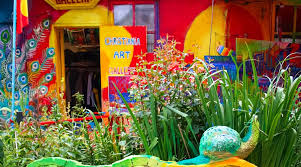
The neighborhood transformed into a global beacon for artists, musicians, and creative rebels. Street art exploded across every surface — murals became manifestos.
Independent theaters, music venues, and galleries flourished without commercial pressure. Residents created art for expression, not profit. The community produced musicians who influenced Copenhagen’s electronic scene. Theater collectives staged experimental performances that challenged mainstream narratives.
This cultural output proved something radical: art thrives when freed from market forces. The documentary reveals how the space’s artistic ecosystem inspired movements far beyond Denmark’s borders. Like Splitsvilla’s social dynamics, the community shows how group identity shapes creative expression.
Yet success brought new problems. Tourism commodified the counterculture. Instagram-ready street art replaced genuine artistic rebellion. Commercialization crept in through the back door.
Why Christiania Matters Today
The community remains relevant because it asks urgent questions: Can neighborhoods self-govern? Does radical freedom require sacrifice?
The documentary arrives when cities worldwide face housing crises and creative displacement. It offers a case study — flawed but functional. Christiania survived 50+ years through adaptation, not rigid ideology. Residents negotiated with authorities, legalized certain operations, and built sustainable infrastructure.
This pragmatism matters. Utopian experiments often fail because they refuse compromise. Christiania succeeded because it evolved. The film demonstrates how CIA season episodes explore hidden truths similarly — the documentary unveils uncomfortable realities beneath romantic mythology.
Today’s audiences crave authenticity over sanitized narratives. This documentary delivers exactly that.
FAQ
Q: Is Christiania still standing today?
Yes. Christiania remains an autonomous neighborhood with approximately 850 residents, though it operates under negotiated agreements with Danish authorities rather than complete independence.
Q: Can tourists visit Christiania?
Yes, but visitors must respect community rules — photography is restricted in certain areas, and commercial exploitation is discouraged. The community balances openness with protecting its identity (according to VentureBeat AI).
Q: What happened to its drug culture?
Early decades saw significant drug activity. Modern Christiania has actively worked to distance itself from this reputation, though the issue remains complex and contested (as reported by OpenAI Blog).
Q: How does Christiania fund itself without taxes?
Residents pay voluntary contributions. The community operates businesses, hosts events, and manages collective resources through consensus-based decision-making processes.
Q: Why is this documentary important for OTT audiences?
Streaming platforms increasingly greenlight documentaries exploring radical social experiments. Christiania’s story resonates with viewers seeking authentic narratives about freedom, community, and the costs of utopian ideals.