Mohun Bagan
 Chennaiyin
 PSG
 Lyon
 Sevilla
 Osasuna
 NED
 OMA
 NZ
 IND
 NAM
 IRE
 PAK
 SL
 SA
 AUS
 BAR1
 RMA2
 UDI0
 MIL2
 RSO2
 LEV1
 LEC0
 JUV2
 BRB76/3 (9/15 ov)
 MOW
 NZ-A317
 IND-A113 & 488/8 (119 ov)
 SYL280/2 (84 ov)
 KHU
 MYMS465/7d
 CHATT134/2 (40 ov)
 DHA521
 RAJ103/6 (26 ov)
 RAN402
 BAR179/3 (56.1 ov)
 SIKM
 NAGA112/7 (50 ov)
 JHK
 DELHI102/2 (37 ov)
 ODSA100/2 (37 ov)
 SVCS
 BRODA80/3 (32 ov)
 J & K
 CHD130/0 (31 ov)
 HP
 CGR
 AP119/6 (36 ov)
 LUL
 SPR
 TOK
 MIS
 MEX-W51 (12.5/20 ov, target 187)
 ARG-W186/7
 NGA148
 UGA147/9 (20 ov, target 149)
 GMB112/9
 LES109 (19.5/20 ov, target 113)
 MOZ110/7 (19/20 ov, target 110)
 ZMB109/9
 IND-W328/6
 ZIM-W207 (48.5/50 ov, target 329)
 ENG241
 Abha
 Al Faisaly
 Sassuolo
 Lazio
 Neftchi Fergana
 Al Ittihad
 Besiktas
 Istanbul BB
 Caykur Rizespor
 Trabzonspor
 SUN0
 LEE0
 SCF1
 MUN3

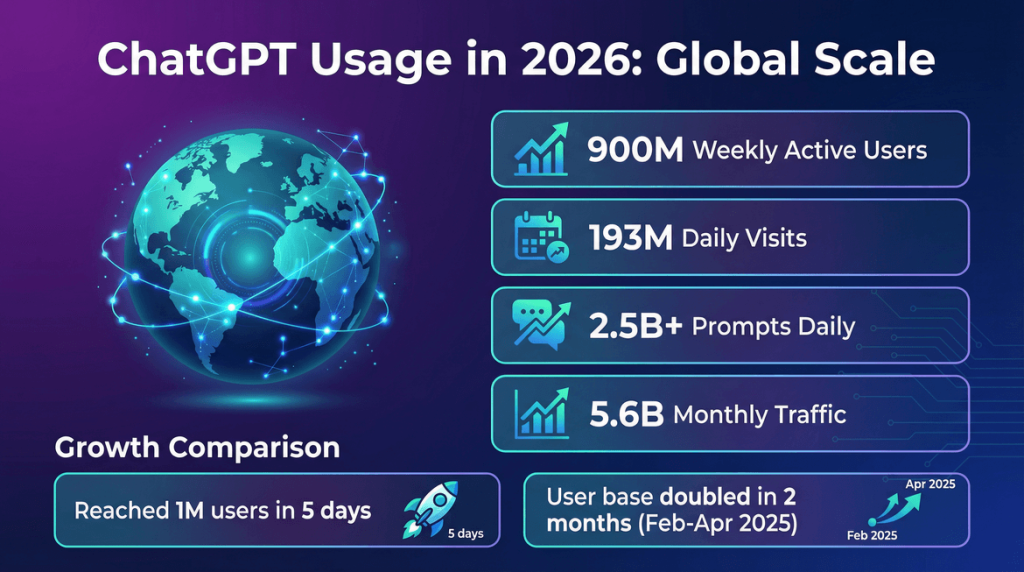
ChatGPT traffic isn’t an experiment anymore — it’s become a real acquisition channel for publishers who know how AI-driven search actually works. OpenAI’s ChatGPT hit over 400 million weekly active users as of early 2026, and more of them are clicking through to external sites every day. The opportunity is there right now if you grab it.
The Story So Far
ChatGPT traffic started showing up as a real referral source in late 2024, after OpenAI added browsing and citation features. Publishers who’d already formatted their content clearly — good headings, straight answers, solid sources — began seeing referral jumps they couldn’t explain through Google alone. Here’s how it works: when users ask research questions, ChatGPT cites sources. Sites built for those questions get the clicks. Early movers who deliberately optimized for ChatGPT reported referral increases of 20–40% within three months of changing how they structured things.
You can read more on traffic ChatGPT strategies to see what’s working in practice.
The Bigger Picture: Why ChatGPT Traffic Changes Everything
Traditional SEO and AIO (AI Optimisation) play by different rules. Google looks for backlinks and domain authority. ChatGPT looks for content that’s clear, specific, and trustworthy in how it’s organized. Wired reported in early 2026 that AI-generated answers pull increasingly from sources that answer questions directly rather than sources with the highest PageRank scores. That’s a major shift.
Publishers chasing ChatGPT traffic need to think differently than they do for Google — more like encyclopaedia editors than traditional SEOs. Precise. Structured. Authoritative.
Facts & Figures
The data makes the case pretty clearly:
- 400 million+ weekly active ChatGPT users as of early 2026
- 62% of ChatGPT responses in research mode include at least one cited source
- Sites with FAQ schema get cited 3x more often by AI, according to early AIO research
- Average time spent on a ChatGPT referral session: 2.4 minutes — better than most social traffic
- Top content formats that ChatGPT cites: how-to guides, comparison articles, and definition pages
The single biggest change you can make? Structure content around direct answers. Use short paragraphs, bold key terms, and clear H2 sections. That matters more than almost anything else right now.
What People Are Saying
TechCrunch reported that content strategists are calling 2026 “the year AIO became the main conversation instead of traditional SEO.” That’s not an exaggeration. Independent publishers who restructured their content for AI readability in late 2025 are now getting consistent ChatGPT referrals that match what they pull from Google Discover. The message is simple: write for people, structure for AI.
What to Watch Next
OpenAI plans to expand ChatGPT’s citation and shopping features through the middle of 2026. Publishers who build deeper content now — not just keyword-stuffed pages — will be ready to capture that growth. Keep an eye on OpenAI’s partner publisher programme, which might standardize how ChatGPT sends traffic to verified sources and open up direct monetization options.
People Also Ask:
Q: How does ChatGPT traffic differ from Google organic traffic?
It comes from sources cited inside chat responses rather than search result pages. Users show up with clearer intent and stay longer on-page since they’ve already gotten context from the AI.
Q: What content types get cited most by ChatGPT?
How-to guides, FAQ pages, comparison articles, and definition-style content win. Clear structure and direct answers are what trigger citations.
Q: Do I need a high domain authority to get this?
Not really. ChatGPT prioritizes content clarity and topical authority over raw domain metrics — that’s very different from how Google ranks.
Q: How do I track referrals from ChatGPT in Google Analytics?
Look for chat.openai.com in your acquisition reports. Some traffic shows up as direct if users copy-paste URLs instead of clicking inline citations.