WI-A
 LIONS72/2 (7.4/20 ov)
 EST0
 ALS0
 GAL
 VFB
 SHK
 SCP
 ATM
 MUN
 BAR
 AVL
 BODO
 LILL
 FEY
 INT
 LAS
 SLB
 MAN
 ROMA
 Newcastle0
 Everton1
 Deportivo2
 Osasuna1
 Atalanta0
 Parma3
 Lorient0
 Brest2
 DOLPH
 WPR
 ASSAM135
 KNTKA496/5 (117 ov)
 MEGHA144
 NAGA254 & 73/3 (25 ov)
 TPURA268 & 54/4 (22 ov)
 SAU118
 BENG143
 MAHA207/9 (79 ov)
 ODSA
 JHK258/5 (108 ov)
 CHD49/3 (20 ov)
 TN571/7d
 CGR284
 HYD275/9 (83 ov)
 DELHI299/6 (90 ov)
 SVCS266
 GOA397
 BIHAR107 & 63/3 (22 ov) (f/o)
 GUJ534/9d
 KER74/3 (23 ov)
 NZ
 IND
 UAE
 OMA
 BAN
 WI
 HH-W
 MR-W
 AS-W
 BH-W
 CD
 AUCK
 OTAGO
 CANT
 MS-W109 (18.1/20 ov, target 125)
 PS-W124/9
 LUL98/2 (11.4/20 ov, target 98)
 POA97/9
 BIK174/3
 JAB172/7 (20 ov, target 175)
 CHR129/6
 SPR131/5 (16.4/20 ov, target 130)
 KAY180/6
 KAG181/6 (19.4/20 ov, target 181)
 ALH0
 SHO2
 VMI0
 MER0
 Sassuolo2
 Fiorentina4
 CAHN0
 KYO0
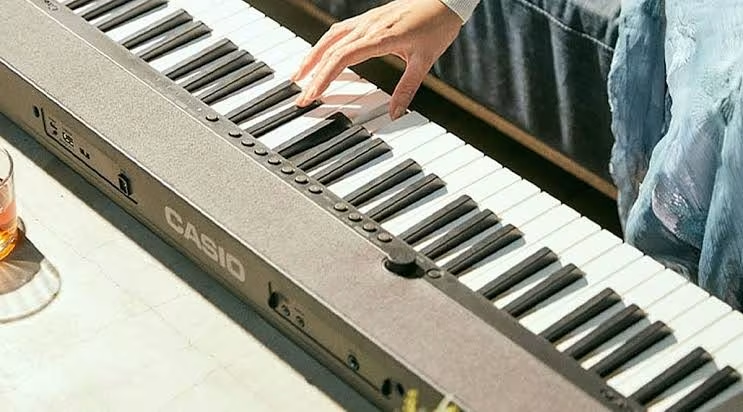
Standard keyboards can take years of practice to play in tune with tracks. Casio’s new keyboard reportedly matches every keystroke to any song’s key instantly.
The CT-FS1 is an interactive digital keyboard reportedly designed to prevent pitch errors during playback. Casio announced the model on Tuesday, November 3, 2026, and confirmed a launch date of Friday, November 20, 2026. The specifications and pricing below come from initial reporting and haven’t yet been officially confirmed.
Key Details and Hardware Specifications
The interactive device reportedly targets entry-level players with its proprietary Feel Sync technology. Users upload audio through a companion app, and an onboard algorithm keeps the keyboard in key, whatever the source material. It’s said to handle complex compositions with rapid modulations or multiple bridges, too.
The unit uses an ARM Cortex-M4 processor and 512 megabytes of random-access memory (RAM) for real-time audio analysis. It has 2 gigabytes of internal storage for caching song parameters, which appear on a 3.5-inch monochrome liquid-crystal display (LCD) panel. A rechargeable lithium-ion cell provides six hours of continuous playback. At an expected $299.99, the CT-FS1 would offer an accessible entry point for rhythm-focused practice. These details come from Engadget.
How Feel Sync Changes Practice Habits
The main innovation comes from the adaptive software, not traditional teaching methods. The system won’t teach scales or music theory. Instead, it focuses on timing and expression, skills novices often overlook. The Feel Sync engine divides the 61 touch-responsive keys into two zones. A beginner can tap rhythms on one side while an experienced player handles the melody on the other.
This setup could make shared sessions more collaborative. The keyboard works as a standard digital piano, too, so players can choose whether to use its error-proof mode. Those who want to build conventional technique can simply turn off the algorithm.
The algorithm handles tracks with frequent modulations, letting users play along with jazz standards or pop ballads without manual retuning. That could spare musicians from carrying sheet music or chord charts when they want to perform on the spot. Split zones could also make duets easier: one player handles simple bass patterns while another explores harmony, creating richer textures than solo play typically allows.
Market Impact and Competitor Analysis
At an expected $299.99, the CT-FS1 would compete in a crowded segment led by Yamaha and Roland beginner models. Competitors rely on large touchscreen interfaces; Casio is said to favor tactile buttons and a small LCD instead. That choice could lower costs and power use, helping support the six-hour battery life—a possible plus for portable musicians compared with tablet-based learning solutions.
Casio’s move could appeal to learners who find modern apps too visually overwhelming. By easing the fear of dissonance, the company could address a psychological barrier that leads many students to abandon instruments within their first month. The lithium-ion cell supports reliable use during outdoor rehearsals or travel.
Competitors with high-resolution color screens often sacrifice runtime, leaving players searching for outlets. Casio’s monochrome interface could conserve energy while remaining legible in bright environments—a practical consideration for teachers giving demonstrations.
Implications and Future Outlook
The reported use of ARM architecture in a consumer keyboard could signal a shift toward edge-computing capabilities in musical gear. By processing audio locally, the keyboard could avoid latency issues common with cloud-dependent tools and provide responsive feedback during performance.
As artificial intelligence (AI) models get smaller and more efficient, similar adaptive engines could show up in mid-range synthesizers. The CT-FS1 could show how instant gratification encourages hesitant beginners to start playing, potentially expanding the market for physical instruments. Casio plans to begin accepting pre-orders on November 20, 2026, giving consumers time to assess build quality before wider distribution begins. The device could show that removing the fear of mistakes may be the best way to get people playing an instrument again.
| Feature | Specification |
|---|---|
| Processor | ARM Cortex-M4 |
| Memory | 512 MB RAM |
| Storage | 2 GB internal |
| Display | 3.5-inch monochrome LCD |
| Battery Life | 6 hours of playback |
FAQs
When does the Casio CT-FS1 launch?
Casio’s announcement gives the official launch date as Friday, November 20, 2026.
How does Feel Sync technology work?
Users upload songs to a companion app. The onboard algorithm analyzes the audio and automatically matches every keystroke to the correct key.
Do players have to use the error-proof mode?
The device works as a standard digital piano, and players can turn off Feel Sync to play without assistance.
What connectivity options does the device offer?
The specific port configurations haven’t been confirmed.
How much does Casio’s new keyboard cost?
The keyboard is expected to cost $299.99, but its final retail price hasn’t been officially verified. Source: Engadget
Read Next
- The google suncatcher Satellite Runs AI in Orbit and Sends a Haiku Home
- Stuck Without A Hard Drive
- ‘AI is not creating the problem’: OpenAI CEO Sam Altman says AI is merely uncovering all
Was this article helpful?
Your feedback directly improves future articles on this site.