MBSG
 CFC
 PSG
 LYON
 SEV
 OSA
 NED
 OMA
 NZ
 IND
 NAM
 IRE
 PAK
 SL
 SA
 AUS
 Barcelona1
 Real Madrid2
 Udinese0
 Milan2
 Real Sociedad2
 Levante1
 Lecce0
 Juventus2
 LUL
 SPR
 NZ-A317
 IND-A113 & 488/8 (119 ov)
 SYL280/2 (84 ov)
 KHU
 MYMS465/7d
 CHATT317/3 (98 ov)
 DHA521
 RAJ103/6 (26 ov)
 RAN402
 BAR443/9d (124 ov)
 SIKM30/1 (15 ov)
 NAGA187
 JHK
 DELHI309/5 (90 ov)
 ODSA194
 SVCS13/0 (5 ov)
 BRODA222/6 (74 ov)
 J & K
 CHD298/1 (66 ov)
 HP
 CGR
 AP231 (73.2 ov)
 MOW
 TOK
 BRB
 MIS
 BIK
 CHR
 MEX-W51 (12.5/20 ov, target 187)
 ARG-W186/7
 NGA148
 UGA147/9 (20 ov, target 149)
 GMB112/9
 LES109 (19.5/20 ov, target 113)
 MOZ110/7 (19/20 ov, target 110)
 ZMB109/9
 IND-W328/6
 ZIM-W207 (48.5/50 ov, target 329)
 ENG241
 Abha
 Al Faisaly
 Sassuolo
 Lazio
 AS Roma
 Cagliari
 Torino
 Como
 NEF
 ITT
 Sunderland0
 Leeds0
 Freiburg1
 Bayern3
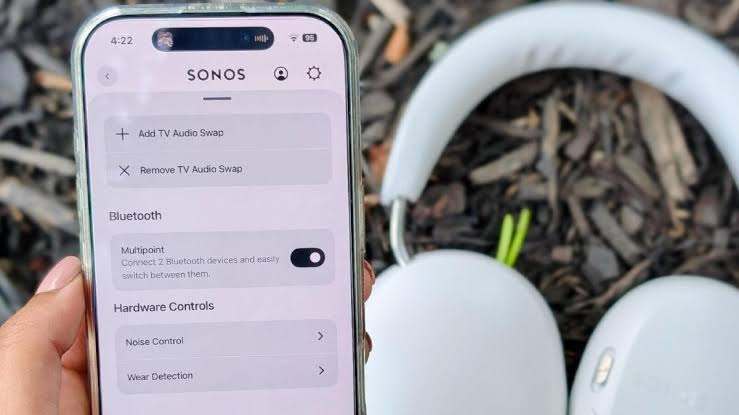
Users constantly juggle audio sources when their primary headphones fail to bridge the gap between a laptop meeting and an incoming smartphone call. This friction disrupts workflow and forces manual reconnections that drain both attention and battery life across modern wireless peripherals.
Details regarding implementation variations are based on leaks and supply-chain reports, which have not yet been officially confirmed. We analyze the technology based on established specification trends and manufacturer behavior.
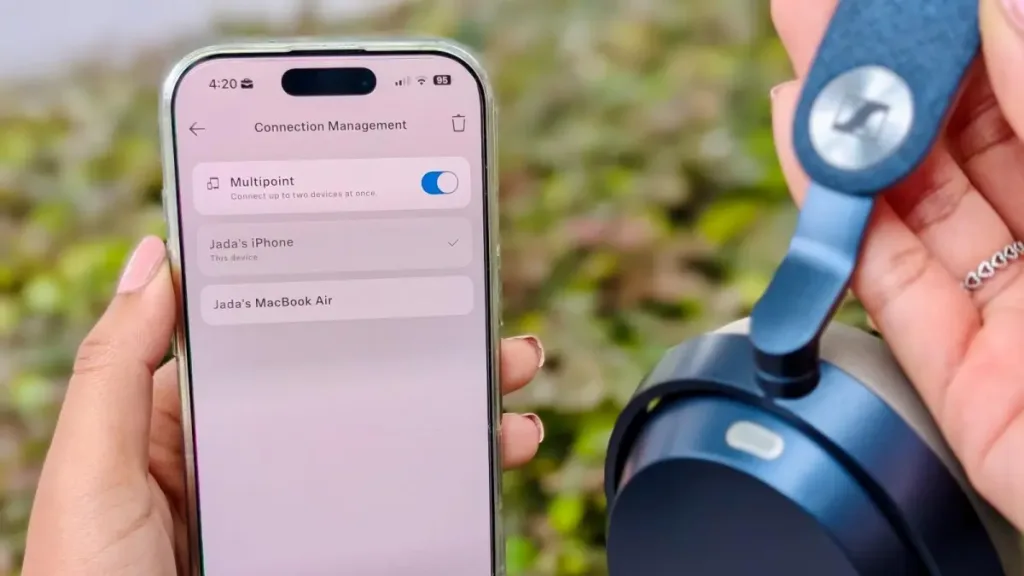
The Problem With Single-Source Audio
Switching audio manually creates a significant bottleneck for professionals managing multiple screens and mobile devices. When a laptop hosts a critical video conference, users often miss time-sensitive notifications from their smartphones because the audio path remains locked to the computer.
This limitation forces people to physically reach for their phones every time a notification arrives, breaking concentration during deep work sessions. The result is a fragmented user experience in which hardware fails to adapt to the fluid nature of daily digital habits.
Root Cause And Specification Evolution
The underlying issue stems from legacy Bluetooth protocols designed for point-to-point connections rather than concurrent streams. Standard implementations historically struggled with bandwidth allocation, making simultaneous data transfer unreliable across different profiles.
The official Bluetooth Core Specification 5.2, introduced by the Bluetooth Special Interest Group (SIG), enhanced multi-device audio routing capabilities for modern wireless peripherals. This update provided a framework for devices to maintain active links while Intelligently prioritizing traffic based on latency requirements. Bluetooth version comparisons indicate that newer standards can improve multi-device support, although implementation still varies by manufacturer.
Market Implementation And Ecosystem Lock-In
Premium manufacturers now offer reliable solutions, though approaches differ significantly. Sony reportedly enables connectivity across source devices with models such as the Sony WH-1000XM5, allowing listeners to stream from a laptop while remaining ready for phone calls. Jabra pioneered early adoption, introducing advanced dual-connectivity features in models such as the Jabra Elite 85t, released on October 15, 2020, which set a benchmark for reliable handoff mechanisms.
Major ecosystems often bypass standard multipoint entirely. Apple utilizes proprietary Apple H1 and H2 chips across its devices; the AirPods Pro (2nd generation) uses the H2 chip to enable automatic switching across iCloud-connected Apple devices instead of standard Bluetooth Multipoint. Samsung also relies on firmware updates to expand capabilities, having implemented Bluetooth Multipoint support for its Galaxy Buds2 Pro during a software update rolled out on February 14, 2023. Computers ranging from the Primebook Max Explained configurations to budget ultrabooks demand stable audio paths even when running demanding workflows. For more detail, see Gizmodo.
| Technology | Connection Model | Platform Scope | Latency Impact |
|---|---|---|---|
| Bluetooth Multipoint | Dual-link active | Universal | Moderate battery drain |
| Apple Ecosystem Switching | Single-stream priority | Apple devices only | Minimal delay via H1 or H2 chip |
| Legacy Bluetooth Routing | Point-to-point only | Universal | N/A |
Practical Benefits And User Workflows
The practical impact extends beyond convenience into measurable productivity gains. Professionals handling cross-platform tasks report fewer interruptions when audio seamlessly bridges disparate tools.
A designer working on a desktop can monitor Discord messages on a tablet while listening to lo-fi beats, all without dropping connections. This capability supports hybrid work environments where splitting attention between applications becomes routine. For gamers streaming content alongside communication apps, maintaining a persistent link prevents audio glitches that ruin competitive performance. The technology effectively turns a single peripheral into a central hub for digital interaction.
Trade-Offs And Compatibility Warnings
Despite the advantages, multipoint introduces distinct compromises that buyers must consider. Maintaining two active radio links reportedly increases power consumption, potentially reducing overall battery endurance by reportedly up to twenty percent compared with single-device usage.
Connection stability can also suffer; some units struggle to prioritize audio streams when both devices transmit data simultaneously, leading to audible stuttering or dropped calls. Latency spikes may occur if the headset attempts to switch contexts too quickly during active playback. Users experiencing these issues typically find that disabling multipoint restores the original reliability profile, albeit at the cost of convenience.
Verdict And Outlook On Bluetooth Multipoint Adoption
Bluetooth Multipoint represents a necessary evolution for anyone managing multiple screens or mobile devices. We recommend enabling this feature for users who value continuity over maximum battery life, particularly those relying on open-ecosystem headphones from brands such as Sony or Jabra.
Apple users benefit from built-in switching within their walled garden but should expect limited cross-brand utility. As specifications continue to mature, we anticipate lower-power implementations that mitigate battery drain while preserving seamless handoffs. Until then, the technology remains useful for bridging the gap between isolated digital devices.
Can I connect more than two devices using Bluetooth Multipoint?
Most standard multipoint headsets support connections to two devices simultaneously, although exact capabilities vary by model.
Does enabling multipoint negatively affect call quality?
Call quality generally remains unaffected as long as the headset successfully prioritizes the microphone input over the media stream during a connection switch.
Is Bluetooth Multipoint the same as fast pairing technology?
Fast pairing focuses on initial connection speed, whereas multipoint manages ongoing simultaneous links between a headset and multiple paired devices.
Will older headphones gain multipoint support through a software update?
Some headphones may gain multipoint functionality through a software update if their hardware supports the feature. Models without the necessary hardware cannot add it through software alone. If you juggle phones and laptops daily, multipoint is essential; if you prioritize battery life above all else, keep connections single-source.
Was this article helpful?
Your feedback directly improves future articles on this site.