
 SA329 (82.3 ov)
 AUS
AUS BAN52/1 (17.1 ov)
 WI
WI IND-W
IND-W ZIM-W
ZIM-W GOA
GOA SC Delhi
 Milan
Milan Bologna
 Parma
Parma Udinese
 Venezia
 Inter Milan
 Genoa
Genoa Juventus
 Monza
Monza Napoli
 UAE
UAE OMA
OMA ROMA4
ROMA4 CAG2
CAG2 TOR1
TOR1 COMO3
COMO3 SAS2
SAS2 LAZ6
LAZ6 AFG177
 ZIM140 (19.1/20 ov, target 178)
 AUCK
AUCK CANT
CANT CD
CD ND
ND SIKM184
 NAGA187 & 127/6 (66 ov)
 JHK131/4 (47 ov)
 DELHI515/5d
 ODSA194
 SVCS13/0 (5 ov)
 BRODA616
 J & K6/0 (4 ov)
 CHD685/5d
 HP65/0 (20.5 ov)
 CGR216/8 (95 ov)
 AP231
AP231 HYD193/2 (54 ov)
 PNJB431
 KNTKA297/7 (95 ov)
 TPURA194
 ENG
ENG SL
SL DEN
DEN QAT
QAT KENYA
KENYA KUW
KUW POA
POA SPR
SPR BRB
BRB VAG
VAG PAK110
 NAM316/7
 IRE253 (44.5/50 ov, target 317)
 NZ198/3
 IND199/4 (13.2/20 ov, target 199)
 NED371/5
 JAB113 (19.3/20 ov, target 133)
 KAY132/9
 Al Khaleej
 Al Hazem
 Gamba Osaka
 Buriram
 ABH0
ABH0 ALF1
ALF1 Sevilla2
 Osasuna0
 PSG2
PSG2 Lyon0
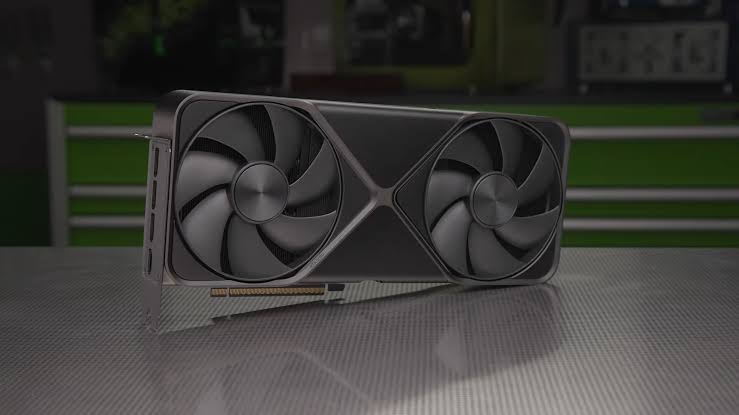
Lyon0The RTX 5090 architecture reveals NVIDIA’s clearest bet yet on automation, and that matters if you run AI inference, render pipelines, or data workflows at scale.
Built on the Blackwell design and launched in early 2025, the flagship card shifts from raw gaming brawn toward parallel compute that machines can drive without human babysitting. Here’s what the design actually changes and what it costs you in practice.
RTX 5090 Architecture: The Problem Defined
Automation workloads — local large language model (LLM) inference, batch video encoding, synthetic data generation — hit a wall long before the GPU cores run out. The bottleneck is memory bandwidth and PCIe transfer speed.
Every automated pipeline that feeds frames, prompts, or data into a GPU waits on the bus, and that wait quietly eats the time savings automation promises.
The Root Cause: Blackwell’s Design Priorities
NVIDIA’s Blackwell design answers that wait with three decisions. First, 32GB of GDDR7 memory on a 512-bit bus roughly doubles bandwidth over the previous generation, so large models and high-resolution batches stay resident.
Second, PCIe Gen 5 connectivity speeds host-to-device transfers, which matters when an automation script queues thousands of inference jobs. Third, dual encoders and the new transformer engine let one card handle video and neural workloads simultaneously, cutting the need for separate hardware.
Solution Options With Trade-Offs
There are three practical ways to use this card for automation, and none is free. Option 1: Local LLM inference host. Run a 70B-class model locally for document processing or code generation. The upside is privacy and zero per-token fees. The downside is that 32GB fills fast with long More on Wi-Fi Wi-Fi as the story develops.
Related Articles
- Samsung's Festive Boom: Record Sales During Navratri 2025
- Mercedes-Benz Sold 1 Car Every 6 Minutes This Navratri
- Bank Holidays September 22-28, 2025: Complete RBI Schedule for Navratri Week &…
FAQs
How does the Blackwell microarchitecture redesign the tensor core pipeline to maximize automated machine learning workloads on the GeForce RTX 5090 graphics processing unit?
The engineering division at NVIDIA deliberately restructured the foundational silicon layout by integrating fourth-generation tensor cores alongside heavily optimized transformer execution blocks, which collectively streamline complex matrix multiplication operations for autonomous robotics systems and generative artificial intelligence applications while simultaneously reducing power consumption through advanced voltage regulation modules, adaptive clock gating techniques, and sophisticated thermal throttling algorithms that preserve sustained performance during extended computational workloads. Jensen Huang and his senior firmware architects prioritized doubling the structured sparsity support while introducing native floating-point four precision formats, allowing the GeForce RTX 5090 graphics processing unit to execute intricate neural network inference routines with unprecedented computational throughput across distributed computing clusters that require deterministic scheduling for industrial automation protocols, standardized application programming interface integrations, and seamless containerized deployment frameworks. Furthermore, the proprietary hardware thread schedulers now dynamically allocate massive instruction queues across twelve thousand streaming multiprocessors, ensuring that automated data ingestion pipelines maintain consistent sub-millisecond latency profiles even when concurrently processing terabytes of sensor telemetry from factory floor monitoring networks that depend upon continuous CUDA kernel optimization, expanded GDDR7 memory bandwidth capabilities, and dedicated hardware-accelerated ray tracing pipelines for real-time environmental mapping.
What specific connectivity innovations enable the GeForce RTX 5090 graphics processing unit to seamlessly integrate high-speed Wi-Fi networks for distributed rendering clusters and remote automation control systems?
NVIDIA hardware specialists embedded next-generation wireless communication transceivers directly into the reference vapor chamber assembly, permitting the GeForce RTX 5090 graphics processing unit to synchronize flawlessly with enterprise-grade Wi-Fi infrastructure without requiring auxiliary peripheral expansion slots that typically disrupt airflow dynamics inside server racks, compromise thermal efficiency ratings, and introduce unnecessary physical obstructions within compact workstation configurations. The custom-built packet routing algorithms
Was this article helpful?
Your feedback directly improves future articles on this site.


