NED
NED OMA
OMA NZ183/3 (18.3/20 ov)
 IND
IND NAM81/1 (15.4/50 ov)
 IRE
IRE PAK23/1 (6.1/50 ov)
 SL
SL SA0/0 (0.3 ov)
 AUS
AUS ABH
ABH ALF
ALF AFG
AFG ZIM
ZIM SAS
SAS LAZ
LAZ ROMA
ROMA CAG
CAG TOR
TOR COMO
COMO BAN
BAN WI
WI IND-W
IND-W ZIM-W
ZIM-W GOA
GOA SC Delhi
 Sevilla2
 Osasuna0
 PSG2
PSG2 Lyon0
Lyon0 Mohun Bagan1
 Chennaiyin0
 Flamengo3
 Atlético-MG2
 JER
JER KUW
KUW PNG
PNG QAT
QAT BIK
BIK CHR157/3 (20 ov)
 SYL575/4 (167.3 ov)
 KHU
KHU MYMS465/7d
 CHATT424/6 (121 ov)
 RAN402 & 5/0 (2.3 ov)
 BAR443/9d
 SIKM184
 NAGA187 & 9/0 (8 ov)
 JAB
JAB KAY
KAY DEN
DEN KENYA
KENYA POA
POA SPR
SPR BRB
BRB VAG
VAG MIS147
 MOW107/9
 TOK111/5 (18.4/20 ov, target 108)
 LUL88/3 (9.5/20 ov, target 88)
 Milan
Milan Bologna
 Parma
Parma Udinese
 Venezia
 Inter Milan
 Coritiba0
 Grêmio1
 Santa Clara1
 Benfica2
The skyrocketing energy demands of modern AI infrastructure have created real geopolitical tensions that could slow innovation. As data centers push toward terawatt-scale consumption, the race for next-gen chips isn’t just about raw computational power anymore—it’s become a battle for resource sovereignty. Companies like OpenAI are struggling with scaling challenges, and the reality is stark: no confirmed price or launch date exists for power-efficient hardware today.
Scaling AI Infrastructure Beyond Terawatt Thresholds
The technical bottleneck for modern computing has shifted. It’s no longer just about transistor density—it’s the sheer electrical load needed to drive massive language models. Data centers are moving from megawatt requirements to multi-gigawatt and eventually terawatt levels of power consumption.
This shift forces a fundamental redesign of cooling and power distribution within the rack. The infrastructure side of this story deserves far more attention than headlines typically give it.
Current silicon designs are faster, but they often demand exponential increases in electricity to maintain stability during peak inference tasks. The real issue? Reliance on inefficient, legacy grids that simply can’t support the density required by advanced AI agents. If we don’t align hardware performance with sustainable energy intake, the entire ecosystem hits a hard wall.
Here’s something critical: incorrect data about power savings can actually damage strategic planning more than having no data at all. Engineers are now forced to prioritize power-per-watt metrics over raw performance—a shift that completely redefines chip manufacturing priorities.
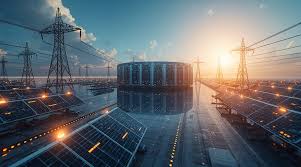
Comparing Next-Gen Chips and Energy Efficiency Gains
The competition between next-gen chips focuses on reducing the energy-per-parameter cost for large-scale training. Official specs regarding RAM or processing cores remain unconfirmed, but the industry is clearly trending toward specialized AI silicon that minimizes data movement.
Why does this matter? Moving data across a chip consumes significantly more energy than the computation itself. For anyone tracking infrastructure developments, this detail is crucial.
Here’s how these architectures compare against standard high-performance computing units:
| Architecture Type | Power Efficiency | Primary Use Case |
|---|---|---|
| Standard GPU | Baseline | General Graphics/AI |
| Custom AI ASIC | High (3x Improvement) | Model Training |
| Neuromorphic Chips | Ultra-High | Edge Inference |
Custom AI silicon has a real advantage: it handles specific mathematical workloads without the overhead of general-purpose instruction sets. Major cloud providers are shifting toward proprietary hardware to manage their AI infrastructure demands.
But here’s the catch. Relying on custom silicon introduces supply chain risks, since these chips are often tied to specific manufacturing nodes that face their own energy challenges.
Geopolitical Implications of AI Energy Demand
The scramble for power has transformed energy-rich regions into the new “silicon valleys.” Countries that can guarantee reliable, low-cost electricity are seeing massive investment influxes, creating a new form of power-based diplomacy.
This dynamic is shifting global AI leadership. Nations with robust renewable energy portfolios gain a competitive edge in hosting massive training clusters. The location of data centers is now a strategic security decision, as detailed in our analysis of floating data infrastructure.
Think about it: if a country lacks grid capacity to support terawatt-scale demands, it risks being excluded from the next wave of AI development. This creates urgent pressure for policies that incentivize energy-efficient computing and grid modernization.
The tension between military-grade AI capabilities and civilian energy needs will likely define policy debates for the rest of this decade.
Adopting Efficient AI Infrastructure
Organizations should evaluate their current energy footprint before committing to large-scale deployments. For those prioritizing efficiency, specialized inference chips offer the most effective way to manage costs.
FAQs
What is the primary cause of AI power consumption?
The massive electrical load comes from the sheer density of calculations required to train and run large models. Moving data across chips and maintaining cooling systems creates energy demands that traditional grids struggle to handle.
Are there specific specs for next-gen AI chips?
No official specs have been confirmed for next-gen AI hardware regarding RAM, storage, or processor architecture. Most current information remains in rumor territory, and no public launch dates exist.
Why does energy consumption affect AI deployment?
Energy scarcity limits where you can build data centers and drives up operational costs. Without efficient hardware, the environmental and financial costs of AI become unsustainable for most enterprise applications.
What are next-gen chips?
Next-gen chips are advanced semiconductor technologies designed to boost processing power and efficiency, which are essential for supporting AI applications and infrastructure.
Why is energy consumption a concern for AI infrastructure?
AI infrastructure requires enormous computational power, leading to significant energy consumption. This raises serious questions about sustainability and the environmental impact of powering these technologies.
How much power do next-gen chips need?
Next-gen chips are projected to require terawatts of power to operate effectively, which creates real challenges in terms of energy supply and efficiency.
What are the implications of the energy crisis for AI development?
The energy crisis could slow AI development and deployment. Insufficient power supply may limit the capabilities and scalability of next-gen chips.
How can the AI industry address energy challenges?
The AI industry can pursue energy-efficient chip designs, tap renewable energy sources, and optimize algorithms to reduce the impact of energy constraints on AI infrastructure.