NAP2
NAP2 ROMA1
ROMA1 CHE0
CHE0 TOT0
TOT0 VAL1
VAL1 VIL0
VIL0 DOR0
DOR0 SGE0
SGE0 Samsunspor1
 Amed SFK2
 WIL0
WIL0 CAM3
CAM3 ALV0
ALV0 FCA1
FCA1 RIY
RIY TAA
TAA LAZ
LAZ PAR
PAR RCL
RCL PAR
PAR MEX-W
MEX-W ARG-W
ARG-W ATM
ATM DEP
DEP UAE
UAE NED
NED PAK
PAK ENG
ENG IND-W
IND-W ZIM-W
ZIM-W KHO0
KHO0 ETT3
ETT3 RAC2
RAC2 ESP1
ESP1 ARS2
ARS2 EVE0
EVE0 KNGHT126/6
 MPUMA20/1 (3/20 ov, target 127)
 NZ-A135/3 (41 ov)
 IND-A113
 SYL
SYL KHU
KHU MYMS299/4 (87 ov)
 CHATT
CHATT DHA293/3 (84.1 ov)
 RAJ
RAJ RAN320/5 (80 ov)
 BAR
BAR GMB
GMB LES
LES MOZ
MOZ ZMB
ZMB NGA
NGA UGA
UGA NAM321/6
 IRE290 (47.3/50 ov, target 322)
 NZ180/5
 IND181/6 (19.5 ov)
 BHA1
BHA1 WHU0
WHU0 Inter Milan
 Fiorentina
 Churchill
 Punjab FC
 Athletic
 Getafe
 C Palace
 Newcastle
 COV0
COV0 FUL1
FUL1 OFC0
OFC0 NEU0
NEU0 NEOM2
NEOM2 ABH0
ABH0
The All India Football Federation has confirmed that the start date for the Indian Super League 2025-26 season will be announced next week, following strong recommendations from the AIFF-ISL Three-Member Co-ordination Committee. This announcement brings much-needed clarity to Indian football after months of uncertainty surrounding the country’s premier football competition.
The committee, which held multiple meetings with ISL clubs between December 22, 2025, and January 2, 2026, has submitted a decisive report to the AIFF President. The recommendations include firm directions to ensure the league begins without further delay, marking a critical turning point for a season that has been plagued by contractual disputes and administrative challenges.
The Committee’s Strong Mandate
The AIFF-ISL Co-ordination Committee has taken an uncompromising stance on the delayed season. In its report, the committee ordered an immediate announcement of the ISL start date and demanded that the short-term competition format be finalized at once. The urgency in the committee’s language reflects growing concerns about the damage continued delays are causing to Indian football.
The three-member committee consists of Navas Meeran, President of the Kerala Football Association, Dr. Caitano José Fernandes, President of the Goa Football Association, and Anirban Dutta, Honorary Secretary of the Indian Football Association in West Bengal. AIFF Deputy Secretary General M. Satyanarayan participated as an ex officio member, providing administrative support to the proceedings.
According to the committee’s observations, AIFF must act decisively as the league owner if clubs fail to reach a consensus on key issues. Most significantly, the committee warned that any club refusing to participate should be disqualified and relegated to the lower division, demonstrating its willingness to take firm action to preserve the integrity of the competition.
A Series of Critical Meetings
The coordination committee conducted an intensive series of discussions with ISL clubs over an eleven-day period from late December through early January. These meetings revealed deep divisions between the AIFF and club representatives over financial responsibilities, operational structures, and the future direction of Indian football.
In the first meeting, the AIFF presented two short-term competition models for the ISL 2025-26 season. However, club representatives were not ready to agree to either proposal. Instead, they insisted that AIFF first outline a comprehensive long-term roadmap before committing to participation in the current season. This demand reflected clubs’ frustration with what they perceived as short-term thinking without strategic vision.
Responding to club concerns, the committee worked with AIFF officials to prepare a long-term framework. When this plan was presented in the subsequent meeting, club representatives broadly welcomed the approach. This positive reception allowed both sides to shift focus back to the immediate priority of starting the 2025-26 season.
Financial discussions dominated later meetings. Clubs demanded clear details on operating costs and their specific liabilities before confirming participation. They emphasized that without financial clarity, they could not responsibly commit their organizations to another season. The clubs also proposed that AIFF and clubs jointly approach the Government of India for infrastructure support and Public Sector Undertaking sponsorships, recognizing that external assistance may be necessary given the challenging financial landscape.
During these talks, clubs raised the possibility of floating a fresh Request for Quotation for a long-term, 20-year ISL structure. The AIFF clarified that any such RFQ would require approval from the Supreme Court of India, which has been monitoring the league’s governance issues. Meanwhile, AIFF stressed that finalizing the short-term format was essential to secure Asian Football Confederation waivers, including requirements on minimum match numbers for Asian competitions.
Financial Structure and Responsibilities
The committee has recommended a specific financial arrangement for the 2025-26 season designed to balance fiscal responsibility with practical necessity. Under this model, the AIFF would bear the costs of refereeing and broadcast production, recognizing these as league-level expenses that should not burden individual clubs.
Meanwhile, clubs would continue to organize their home matches, maintaining the operational structure that has worked in previous seasons. The committee sees no reason to change this proven system, which allows clubs to control their home match experience while managing associated costs directly.
The committee has proposed a participation fee of one crore rupees per club. In its view, this contribution is necessary to meet basic league expenses and ensure all participating clubs have financial commitment to the competition’s success. However, this recommendation has faced strong resistance from club representatives.
Club Demands and Concerns
Thirteen of the fourteen ISL clubs responded to the AIFF’s January 1 deadline, with only Jamshedpur FC failing to submit a formal response. While these thirteen clubs expressed willingness to participate, they attached significant conditions that must be met before they can confirm their commitment.
The clubs’ primary concern centers on financial responsibility. They argue that since AIFF is the league operator and rights holder, the federation should bear all league-level operational costs if no broadcaster or commercial partner is appointed. This position reflects clubs’ view that they should not be held financially responsible for AIFF’s inability to secure commercial partnerships.
Club representatives have strongly opposed any participation fee for the 2025-26 season. Given the shortened format caused by delays and the lack of guaranteed revenue streams, clubs consider such a fee unfair and potentially damaging to their financial stability. They are requesting a complete exemption for this interim season.
At the same time, clubs have indicated readiness to pay routine team-related expenses including player salaries, travel costs, accommodation, and other direct operational needs. However, they have firmly rejected open-ended or unpredictable costs that could threaten their financial viability. According to club representatives, financial certainty is essential for the long-term stability and sustainability of Indian football.
Beyond the immediate season, ISL clubs are demanding clarity on the future. They want AIFF to provide a clear, time-bound roadmap that includes appointing a commercial partner, finalizing revenue-sharing models, establishing governance structures, and creating a path toward a self-sustaining league model. Without this broader framework, clubs fear they will face repeated crises and uncertainty in future seasons.
Finally, clubs have urged AIFF to seek government support given the exceptional circumstances facing Indian football. They believe that Ministry of Sports intervention and support may be necessary to stabilize the league and provide a foundation for future growth.
AIFF’s Official Response
Following receipt of the coordination committee’s report, the AIFF Emergency Committee convened on January 3, 2026, to consider and acknowledge the recommendations. The Emergency Committee formally accepted the report and recommended that the league be conducted by the All India Football Federation, clarifying governance questions that had contributed to delays.

In an official statement, AIFF confirmed its commitment to moving forward: “The AIFF will conduct the league, and the date of commencement will be announced next week.” This clear statement represents the federation’s most definitive commitment to date regarding the delayed season.
The decision to announce the start date within a week provides a concrete timeline that should allow clubs to finalize preparations, complete pre-season training, and arrange logistics for the campaign. However, the short notice also reflects the compressed timeframe clubs will face in preparing for the season.
The Contractual Crisis Behind the Delays
The ISL 2025-26 season has been plagued by uncertainty since mid-2025 when Football Sports Development Limited formally informed the ISL clubs and AIFF that the season was on hold due to unresolved contractual issues. These problems stem from the approaching expiration of the Master Rights Agreement between AIFF and FSDL.
The current Master Rights Agreement was signed in 2010 and is set to expire in December 2025. This agreement has governed the relationship between AIFF and FSDL, which has organized and operated the ISL since its inception in 2014. With the agreement’s expiration, fundamental questions about league ownership, commercial rights, governance structures, and revenue distribution have come to the forefront.
In October 2025, AIFF floated a tender for commercial partners to operate the league going forward. However, the tender failed to attract any bidders, deepening the crisis and leaving the league without a clear operational structure for the upcoming season. This failure reflected potential bidders’ concerns about the league’s financial viability and governance challenges.
The Supreme Court of India has been monitoring the situation closely. The court intervened to request that both parties resolve their differences and start the 2025-26 season as quickly as possible, recognizing the damage ongoing delays were causing to Indian football. This judicial pressure has been instrumental in forcing both sides back to the negotiating table and focusing on practical solutions.
Impact on Indian Football
The prolonged uncertainty surrounding the ISL has had significant repercussions across Indian football. The league’s absence from AIFF’s official 2025-26 competition calendar initially raised serious questions about whether the season would occur at all. While other competitions including the Durand Cup, Super Cup, I-League, and Indian Women’s League were listed with confirmed dates, the ISL remained conspicuously absent.
This uncertainty has affected player contracts, coaching appointments, transfer activities, and pre-season preparations. Many clubs have been reluctant to make significant investments in new signings or infrastructure without knowing whether a season would actually take place. Youth development programs have also faced disruption as clubs struggle to plan long-term initiatives amid short-term uncertainty.
The situation has damaged India’s reputation within Asian football. As the country’s top-tier league with AFC Champions League qualification spots at stake, the ISL’s instability reflects poorly on Indian football’s organizational capacity. The AFC has been monitoring the situation closely, with concerns about India’s ability to meet minimum standards for continental competition participation.
Fan engagement has also suffered. Supporters who follow the league passionately have been left in limbo, unable to plan for match attendance or understand when they can next watch their favorite teams. This uncertainty risks long-term damage to the fan base that has been carefully built since the league’s inception in 2014.
The Season Format
While full details await official announcement, the ISL 2025-26 season is expected to follow a modified format given the delayed start. The league will feature 14 teams, including 13 returning clubs and Inter Kashi, who were promoted from the I-League after being declared champions by the Court of Arbitration for Sport.
The traditional format involves a regular season where all teams play each other home and away, followed by playoffs involving the top six teams. However, the shortened timeframe available for the 2025-26 season may necessitate adjustments to this structure. Possible modifications could include single round-robin play or a truncated playoff system.
One significant change confirmed for this season is the introduction of promotion and relegation in accordance with the AFC roadmap. The bottom-placed team will be relegated to the I-League, while the I-League champion will earn promotion to the ISL. This represents a major step toward creating an integrated league system in Indian football.
Additionally, clubs will no longer pay franchisee fees. Instead, each club will pay a standard participation fee of one crore rupees annually, though as noted earlier, this remains a point of contention between AIFF and club representatives. The participation fee is intended to be reimbursed from the central revenue pool, though the details of revenue distribution remain to be finalized.
Key Season Details
| Category | Details |
|---|---|
| Season Number | 12th ISL season / 30th top-tier Indian football season |
| Number of Teams | 14 teams |
| Returning Teams | 13 from previous season |
| Promoted Team | Inter Kashi (from I-League) |
| Reigning Champions | Mohun Bagan Super Giant (League Shield and Cup) |
| Start Date | To be announced next week |
| Expected Duration | December 2025 – May 2026 (subject to confirmation) |
| Promotion/Relegation | Active for first time |
Committee Members and Structure
| Name | Position | Role |
|---|---|---|
| Navas Meeran | Kerala Football Association President | Committee Member |
| Dr. Caitano José Fernandes | Goa Football Association President | Committee Member |
| Anirban Dutta | Indian Football Association (West Bengal) Secretary | Committee Member |
| M. Satyanarayan | AIFF Deputy Secretary General | Ex Officio Member |
Committee Recommendations Summary
| Recommendation | Details |
|---|---|
| Cost Distribution | AIFF bears refereeing and broadcast production costs; clubs organize home matches |
| Participation Fee | ₹1 crore per club (contested by clubs) |
| Start Date | Immediate announcement required |
| Format Finalization | Short-term competition format to be decided immediately |
| AIFF Authority | Must exercise league owner authority if consensus fails |
| Non-Participation | Refusing clubs to be disqualified and relegated |
| Urgency | No further delay or digression permitted |
The 14 Competing Teams
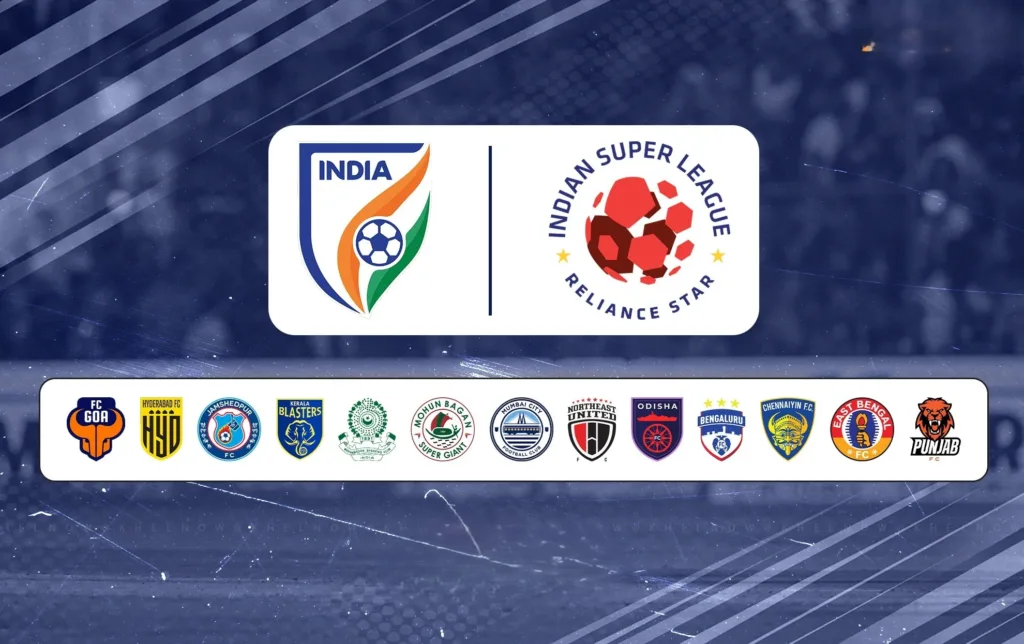
The ISL 2025-26 season will feature these fourteen clubs:
- Bengaluru FC
- Chennaiyin FC
- East Bengal FC
- FC Goa
- Inter Kashi (promoted from I-League)
- Jamshedpur FC
- Kerala Blasters FC
- Mohammedan SC
- Mohun Bagan Super Giant (defending champions)
- Mumbai City FC
- NorthEast United FC
- Odisha FC
- Punjab FC
- Sporting Club Delhi (formerly Hyderabad FC, relocated and rebranded)
Each team brings unique strengths and fan bases to the competition. Mohun Bagan Super Giant will attempt to defend their league shield and cup double from the previous season, while newly promoted Inter Kashi will seek to establish themselves at the top level of Indian football.
Asian Competition Implications
The delays surrounding the ISL have significant implications for Indian clubs’ participation in Asian competitions. The AFC has specific requirements regarding league structure, minimum match numbers, and competitive standards that member associations must meet to maintain their continental competition slots.
The League Shield winners typically qualify directly for the AFC Champions League Two group stage, providing Indian football crucial exposure at the continental level. However, delays in starting the domestic season could jeopardize this pathway if the league fails to meet AFC minimum standards.
AIFF has emphasized the importance of finalizing the short-term format to seek necessary AFC waivers. These waivers may be required if the shortened season format does not fully comply with standard AFC requirements. Maintaining positive relationships with the AFC is essential for protecting India’s continental competition slots and the country’s standing within Asian football.
Government Support and Infrastructure
One area where clubs and AIFF find common ground is the need for government support. Both parties have indicated willingness to jointly approach the Government of India for infrastructure assistance and Public Sector Undertaking sponsorships.
Government investment in football infrastructure has historically lagged behind other sports in India. Stadium facilities, training grounds, youth academies, and supporting infrastructure all require significant capital investment that neither AIFF nor clubs can easily provide independently. Government support could help address these long-term needs while providing immediate financial relief for the struggling league.
PSU sponsorships represent another potential revenue source that could stabilize the league financially. Many Indian Public Sector Undertakings have historically supported sports initiatives, and football could benefit from similar partnerships. Such sponsorships would provide predictable revenue streams while aligning with government objectives around sports development and national representation.
Read More: Rúben Amorim Has Been Sacked by Man United After 14 Months in Charge