
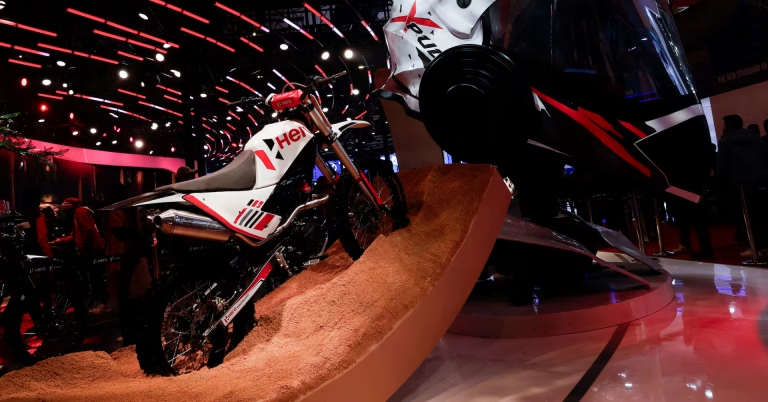
India’s two-wheeler industry—the world’s largest—is witnessing a dramatic reshuffling of power dynamics. With Hero MotoCorp commanding 28.7% market share, the traditional hierarchy faces unprecedented challenges from rising competitors, electric disruption, and shifting consumer preferences toward premium segments. Here’s your complete breakdown of who owns what slice of India’s 25+ million annual two-wheeler pie.
Table of Contents
India Two-Wheeler Market Share Breakdown (2026)
| Brand | Market Share | Key Strengths | Flagship Models | Primary Segment |
|---|---|---|---|---|
| Hero MotoCorp | 28.7% | Entry-level dominance, rural reach | Splendor, HF Deluxe, Passion | Commuter motorcycles |
| Honda | 24.8% | Scooter leadership, reliability | Activa, Shine, SP125 | Scooters + commuter bikes |
| TVS Motor | 18.7% | Innovation, EV leadership | Jupiter, Apache, iQube Electric | Balanced portfolio |
| Bajaj Auto | 10.6% | Premium bikes, exports | Pulsar, Dominar, Chetak EV | Performance motorcycles |
| Suzuki | 5.4% | 125cc scooter specialist | Access 125, Gixxer, Avenis | Scooters + sport bikes |
| Royal Enfield | 5.1% | Premium mid-size bikes | Classic 350, Bullet, Himalayan | 350cc+ motorcycles |
| Yamaha | 3.3% | Sporty designs, niche appeal | FZ, Ray ZR, MT-15 | Sport bikes + scooters |
| Others | 3.4% | EV startups, niche players | Ola S1, Ather 450X, Vida V1 | Electric two-wheelers |
Data compiled from FADA retail sales reports and industry analysis
Market Leader Breakdown: Who Owns What?

1. Hero MotoCorp (28.7%) – The Commuter King Under Pressure
Once commanding over 35% market share in the early 2010s, Hero MotoCorp has seen its dominance erode by 6+ percentage points in recent years. Despite leading with 28.7%, the company faces structural challenges:
Strengths:
- Unmatched rural distribution network (6,000+ touchpoints)
- Iconic brands: Splendor (world’s largest-selling motorcycle), HF Deluxe
- Entry-level pricing (₹60,000-₹90,000 range)
Challenges:
- Over-reliance on 100-110cc commuter segment (declining growth)
- Late entry into electric mobility (Vida V1 launched only in 2022)
- Slow premium segment portfolio expansion
According to Autocar Professional analysis, Hero lost 1.43 percentage points in the first nine months of 2025 alone—the steepest decline among major players.
For insights into Hero’s EV strategy, check our Hero Vida electric scooter review.
2. Honda (24.8%) – Scooter Giant Struggles with EV Transition
Honda’s 24.8% share makes it the undisputed scooter market leader (39% scooter segment share), but cracks are showing:
Strengths:
- Activa brand loyalty (1.5+ million units sold in H1 FY2026)
- Reliability perception across demographics
- Strong urban presence
Challenges:
- Electric scooter fiasco: Activa e: and QC1 production halted due to poor demand
- Market share declined from 25.35% (2024) to 24.50% (9M 2025)
- Losing ground to TVS in scooter segment (TVS at 29% vs Honda’s 39%)
Honda plans to achieve 30% two-wheeler market share by 2030 through aggressive EV investments, including a dedicated electric plant by 2028. Read more on Honda’s official India page.
For comprehensive scooter comparisons, visit our best scooters in India 2026 guide.

3. TVS Motor (18.7%) – The Innovation Powerhouse Gaining Ground
TVS has emerged as the fastest-growing major player, increasing market share from 17.5% to 18.7% through strategic diversification:
Strengths:
- EV market leadership: iQube commands 23.5% of electric two-wheeler registrations
- Balanced portfolio: scooters (Jupiter), sport bikes (Apache), EVs
- Strong export presence (40+ countries)
Key Wins:
- Scooter market share jumped to 29% (from 21% in 2024)
- Apache series success in 160-200cc sport segment
- First traditional OEM to crack electric market effectively
TVS’s success demonstrates the power of innovation—they’re not just defending share but actively stealing customers from Honda and Hero.
Explore our TVS iQube electric scooter detailed review for EV insights.
4. Bajaj Auto (10.6%) – Premium Specialist Facing Headwinds
Bajaj’s 10.6% share reflects its premium positioning strategy, but recent challenges include:
Strengths:
- Dominant in 200cc+ sport bikes (Pulsar, Dominar)
- Export-focused business model
- Chetak EV comeback (24.9% electric market share)
Challenges:
- Market share dropped from 11.54% (2024) to 10.78% (2025)
- Production issues in July-August 2025 hurt volumes
- Struggling to compete in mass-market commuter segment
Bajaj’s Freedom 125 CNG motorcycle—the world’s first—represents bold experimentation to reclaim lost ground.

5. Suzuki (5.4%) – The 125cc Scooter Specialist
Suzuki has carved a profitable niche with 15% scooter segment share focused on 125cc variants:
Key Models:
- Access 125 (bestseller)
- Avenis (sporty scooter)
- Burgman Street (premium offering)
Growth Driver: All three scooters share the same 125cc engine, benefiting from consumer upgrade trends from 110cc to 125cc segments.
Suzuki’s upcoming e-Access electric scooter will compete directly with TVS iQube and Bajaj Chetak when launched in 2026.
6. Royal Enfield (5.1%) – Premium Mid-Size Champion
Royal Enfield’s 5.1% share represents stellar 27% YoY growth, driven by:
Strengths:
- Cult brand status in 350-650cc segment
- Premium pricing (₹1.5-4 lakh range)
- Export success in European and American markets
Bestsellers: Classic 350, Bullet 350, Himalayan, Meteor 350
Royal Enfield’s growth trajectory showcases India’s premiumization trend—consumers willing to pay more for aspirational brands.
For motorcycle enthusiasts, read our Royal Enfield buying guide 2026.

7. Yamaha (3.3%) – Niche Player with Sporty DNA
Yamaha’s modest 3.3% share reflects its premium positioning and limited portfolio:
Portfolio:
- Scooters: Ray ZR, Fascino, Aerox 155
- Sport bikes: FZ, MT-15, R15 V4
Challenge: Scooter share declined to 4.07% (from 4.61% in 2024) due to intense competition from Honda and TVS.
8. Others (3.4%) – The Electric Disruptors
This segment includes pure-EV players reshaping the industry:
Major Players:
- Ola Electric (1.24% overall market): Fell from 2.15% in 2024 due to quality concerns
- Ather Energy (14.2% EV market): Premium electric scooters (450X, Rizta)
- Ampere (10.1% EV market): Value-focused electric scooters
- Hero Vida (growing rapidly): New entrant backed by Hero MotoCorp
Electric two-wheelers achieved 7.6% market penetration in July 2025, with projections to hit 15%+ by 2027.
For electric scooter comparisons, visit our best electric scooters India 2026.
Key Trends Reshaping Market Share
1. Premiumization Wave: Royal Enfield (+27% YoY) and Bajaj’s premium bikes thriving while entry-level stagnates
2. EV Disruption: Traditional leaders (Honda, Hero) losing share to EV-ready competitors (TVS, Bajaj)
3. Rural vs Urban Divide: Hero dominates rural; Honda/TVS lead urban markets
4. Export Focus: Bajaj and Royal Enfield offsetting domestic losses through international expansion
For broader automotive industry analysis, read our Indian auto industry trends 2026.
FAQs
Which company has the highest two-wheeler market share in India?
Hero MotoCorp leads with 28.7% market share, though declining from 35%+ a decade ago due to premiumization trends and EV disruption favoring TVS and Bajaj.
Who is winning India’s electric two-wheeler market?
TVS Motor dominates with 23.5% EV market share, followed by Bajaj (24.9%), Ola Electric (18.8%), and Ather Energy (14.2%) as of 2026 data.


