MEX-W
MEX-W ARG-W
ARG-W Chapecoense2
 Fluminense1
 UAE
UAE NED
NED PAK
PAK ENG
ENG IND-W
IND-W ZIM-W
ZIM-W GMB
GMB LES
LES MOZ
MOZ ZMB
ZMB Inter Milan
 Fiorentina
 Churchill
 Punjab FC
 NGA
NGA UGA
UGA ATM1
ATM1 DEP0
DEP0 LAZ2
LAZ2 PAR1
PAR1 RCL2
RCL2 PAR1
PAR1 RIY2
RIY2 TAA1
TAA1 NZ-A212/6 (64.2 ov)
 IND-A113
 SYL
SYL KHU
KHU MYMS299/4 (87 ov)
 CHATT
CHATT DHA293/3 (84.1 ov)
 RAJ
RAJ RAN320/5 (80 ov)
 BAR
BAR DEN
DEN PNG
PNG NAM321/6
 IRE290 (47.3/50 ov, target 322)
 NZ180/5
 IND181/6 (19.5/20 ov, target 181)
 WEL0
WEL0 MBV0
MBV0 Athletic
 Getafe
 C Palace
 Newcastle
 Hull
Hull Brentford
 Liverpool
 Brighton
 Man United
 Bournemouth
 Atalanta
 Frosinone
 CHE0
CHE0 TOT2
TOT2 VAL1
VAL1 VIL2
VIL2
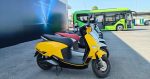
India’s logistics sector has always had a scale problem — not a lack of demand, but a maze of fragmented systems that make it hard for merchants and delivery fleets to actually connect. Bounce just took a step toward fixing that, joining ONDC’s Open Delivery Protocol to bring its electric mobility network into the country’s open commerce infrastructure.
The partnership pairs Bounce’s vertically integrated EV manufacturing and fleet operations with ONDC’s interoperable logistics rails — letting merchants tap into a growing pool of delivery providers through a single integration, rather than negotiating one-off partnerships with each.
What ONDC’s Open Delivery Protocol Actually Solves
Merchants have long struggled to access reliable third-party delivery at scale, while smaller fleet operators face barriers to technology and steady demand. ONDC’s protocol addresses both sides at once, letting logistics providers of any size compete on equal footing while cutting down the integration complexity that’s historically locked out smaller players.
| Metric | Current Scale |
|---|---|
| Logistics service providers on ONDC | 50+ |
| Small fleet operators | 30+ |
| Cities covered | 150+ |
| Merchants using ONDC Logistics | 80,000+ |
| Delivery partners on network | 150,000+ |
| Fastest delivery window (via FIFO) | Under 15 minutes |
Where Bounce Fits In
Through its ONDC-enabled platform, Bounce Task, the company brings something distinct to the table: in-house EV manufacturing paired directly with fleet operations. That combination lets it optimize vehicle performance and costs across the entire delivery lifecycle, rather than just managing a fleet built by someone else.
Bounce currently supports over 12,000 delivery executives across Bengaluru, Hyderabad, NCR, and Mumbai, and reached group-level profitability in March 2026. Its Bhiwadi manufacturing facility has an annual capacity of 200,000 units — infrastructure built specifically to scale alongside rider demand.
ONDC’s COO Rohit Lohia framed the value simply: merchants integrate once and gain access to a growing logistics network, while fleet operators like Bounce get access to demand without needing separate deals with every player. Bounce’s CEO Vivekananda Hallekere echoed this, describing the goal as connecting an entire manufacturer-to-gig-worker pipeline to an open network rather than a closed one.
For more on how open network models are reshaping digital commerce, Wikipedia’s overview of open networks offers useful background. For more updates on India’s evolving mobility and logistics landscape, visit our tech and business section.
FAQs
How many riders does Bounce currently support?
Over 12,000 delivery executives across Bengaluru, Hyderabad, NCR, and Mumbai.
What makes Bounce different from other ONDC logistics partners?
It combines in-house EV manufacturing with fleet operations, unlike most conventional logistics providers.