The Indian automotive landscape stands at a precipice.
Industry watchers and budget-conscious buyers alike are asking: can Maruti‘s upcoming electric offering actually challenge the Tata Tiago EV, or will the pioneer retain its crown?
What Do We Know About Maruti’s Affordable EV So Far?
Maruti Suzuki’s parent company, Suzuki Motor Corporation, has been telegraphing its EV push for India through investments targeting launches between 2025 and 2026.
The budget EV is widely reported to draw inspiration from the Suzuki eWX concept or utilize a derivative of the company’s small-car architecture—the same platform philosophy that made Maruti synonymous with affordable mobility in India.
While official specifications remain under wraps, the pricing target of approximately Rs. 10 lakh places it squarely in contention with established rivals. The strategic timing matters here. Maruti has historically been cautious about EV adoption, preferring to let technology mature before committing production resources.
This calculated approach now faces a market where competitors have already established footholds—and customer trust.
How Does the pricing Compare to Tata Tiago EV?
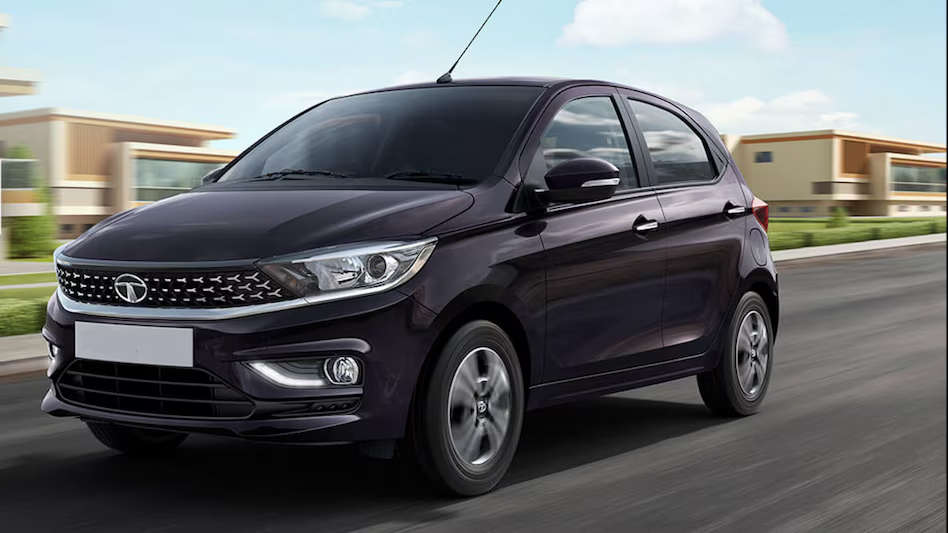
The Tata Tiago EV currently enters the market at approximately Rs. 8.49 lakh (ex-showroom), offering multiple variants that cater to different budget sensibilities. Maruti’s proposed Rs. 10 lakh starting Maruti Sales Aug 2026 figures demonstrate continued dominance in traditional powertrains, giving the company a powerful platform to cross-sell EVs to its existing customer base.
What Range and Battery Options Might Maruti Offer?
While Maruti has not confirmed specifications, industry speculation points toward a battery pack in the 25-30 kWh range—sufficient for real-world driving of approximately 250-300 km on a single charge.
By comparison, the Tata Tiago EV offers a 24 kWh battery delivering around 315 km (ARAI-certified), with a smaller 19.2 kWh option yielding roughly 250 km range across XT and XZ+ trims.
If Maruti can match or exceed Tata’s range figures while maintaining competitive pricing, the competitive dynamics would shift dramatically. The sub-Rs. 10 lakh segment remains critical for mass EV adoption in India, and buyers in this bracket demand maximum value per rupee spent.
Why Is Maruti’s Entry Significant for the Indian EV Market?
Maruti’s entry into the affordable EV space represents more than just another product launch—it signals the mainstreaming of electric mobility in India. For years, Tata Motors has virtually owned the sub-Rs. 15 lakh EV segment, building early-mover advantage into a dominant market position.
What Challenges Could Maruti Face Against Established Rivals?
Beyond pricing and range, Maruti must overcome the trust deficit that comes with any first-generation product. Tata’s Tiago EV has had years to work out customer concerns, refine software, and build service infrastructure specifically for electric vehicles.
Did Maruti Accidentally Reveal plans for Broader EV Rollout? It remains unclear, but the company must convince buyers its EV expertise matches its combustion engine pedigree. Additionally, charging infrastructure remains uneven across India—a challenge every EV manufacturer faces. Maruti’s extensive dealership network could become a competitive advantage if the company invests heavily in EV-specific service capabilities.
Bottom Line: Can Maruti Actually Beat Tata at Its Own Game?
The honest answer requires patience. Maruti’s Rs. 10 lakh EV entering the market represents a genuine threat to Tata’s dominance, but toppling an established competitor with years of head start won’t happen overnight.
If Maruti delivers competitive range, reliable build quality, and leverages its unmatched service network, the Tiago EV will finally face a worthy challenger. Until official specifications arrive and real-world testing begins, the question remains open—but the mere possibility has already sent ripples through India’s EV landscape.
More on is Coming Maruti as the story develops.
Related Articles
- Maruti’s Rs. 10 Lakh EV Is Coming: Can It Take On Tata Tiago EV?
- Maruti Suzuki Wagon R Flex Fuel at ₹7.24 Lakh: The Budget Car…
- Maruti Suzuki eVX: 5 Things to Know About the Upcoming EV SUV
FAQs
When will Maruti launch its affordable EV in India?
Based on Suzuki Motor Corporation’s announced investment timeline, Maruti’s budget EV is expected to launch sometime between late 2025 and 2026, though exact dates remain unconfirmed.
What is the expected?
The upcoming Maruti EV is targeting a How does Tata Tiago EV compare in terms of range?
The Tata Tiago EV offers a 24 kWh battery pack with approximately 315 km Arai-certified range, with a smaller 19.2 kWh option delivering around 250 km range.
Why is Maruti’s EV entry important for Indian buyers?
Maruti Suzuki commands roughly 40% of India’s passenger vehicle market. Its entry into the affordable EV segment will increase competition, potentially driving down.
Was this article helpful?
Your feedback directly improves future articles on this site.