NZ113/3 (14.4 ov)
 IND
IND NAM321/6
 IRE208/5 (37.3/50 ov, target 322)
 MEX-W
MEX-W ARG-W
ARG-W ARS
ARS EVE
EVE COV
COV FUL
FUL OFC
OFC NEU
NEU NEOM
NEOM ABH
ABH RAC
RAC ESP
ESP KHO
KHO ETT
ETT NAP
NAP ROMA
ROMA MOZ19
MOZ19 UGA23/0 (0.5/20 ov, target 20)
 Ipswich1
 Nottm Forest1
 Alavés1
 Málaga1
 Torino3
 Monza2
 KENYA
KENYA QAT
QAT SWD-W
SWD-W EPR-W
EPR-W TTN-W
TTN-W WPR-W
WPR-W BOR135/3 (18/20 ov, target 137)
 WAR136/8
 NZ-A135/3 (41 ov)
 IND-A113
 DHA293/3 (84.1 ov)
 RAJ
RAJ MYMS299/4 (87 ov)
 CHATT
CHATT RAN320/5 (80 ov)
 BAR
BAR SYL
SYL KHU
KHU UAE
UAE NED
NED PAK
PAK ENG
ENG IND-W
IND-W ZIM-W
ZIM-W GMB
GMB LES
LES ZMB
ZMB NGA
NGA AFG170/3 (34.3/50 ov, target 170)
 ZIM169
 CHE
CHE TOT
TOT Brest1
 Nice2
Nice2 Stuttgart2
 Gladbach3
 Al Ahli4
 Al Khaleej1
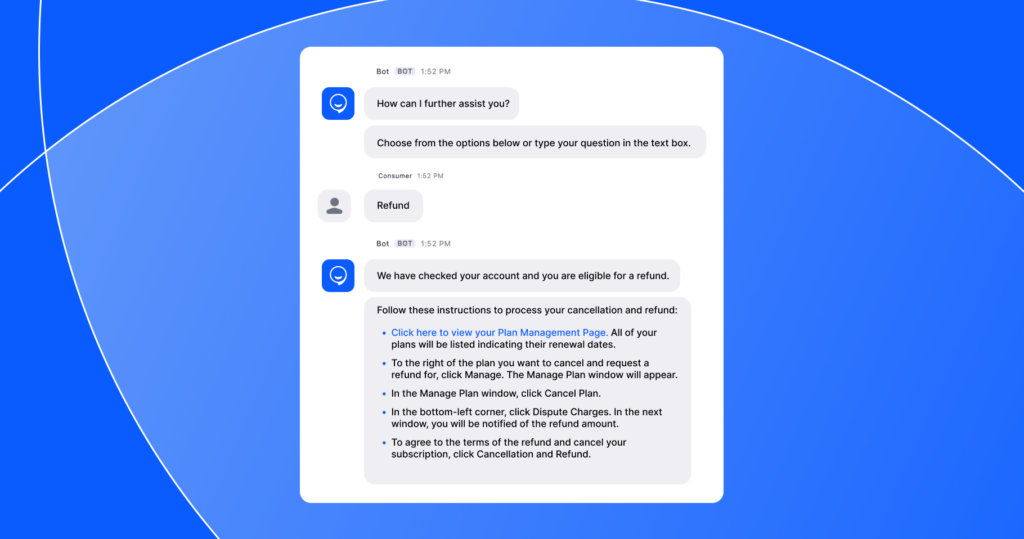
Chatbots suck, and Zoom has the data to prove it. A Morning Consult survey commissioned by Zoom found that 43% of consumers say chatbots fail to resolve their issues, 38% get stuck in loops, and 37% have to repeat information. On February 24, 2026, Zoom unveiled Zoom Virtual Agent 3.0 (ZVA) — the company’s answer to why customer service automation feels broken, and a bet that “agentic AI” can finally fix it.
This isn’t just a chatbot upgrade. It’s Zoom entering what it calls the “resolution economy” — where enterprises compete not on speed, but on first-contact resolution, reduced repeat contacts, and end-to-end workflow completion. Translation: actually solving problems, not just deflecting them to humans.
The Problem: SaaS Chatbots Are Glorified FAQs
Most enterprise chatbots today are conversational containment tools — designed to keep customers away from expensive human agents, not actually solve problems. They can answer “What’s your return policy?” but fail spectacularly at “I need to replace a defective product covered under warranty.”
The breakdown happens because traditional chatbots:
- Can’t orchestrate multi-step workflows across systems (CRM, billing, order management, support tickets)
- Don’t maintain context when transferring to human agents (forcing customers to repeat everything)
- Lack observability into why they fail (CX teams can’t debug or improve)
- Can’t learn from human resolutions (no feedback loop to improve over time)
Zoom’s pitch? ZVA 3.0 is built for execution and resolution, not just conversation.
What’s Actually New in Zoom Virtual Agent 3.0
ZVA 3.0 operates across voice and chat and introduces a completely new execution architecture. Here’s what matters:
| Feature | What It Does | Why It Matters |
|---|---|---|
| Enhanced AI Execution Framework | Multi-step workflows across CRM, billing, order management with full observability | Actually completes tasks (not just answers questions) |
| Agent Journey Transparency | Admins see data sources, decision logic, workflow paths behind every action | CX teams can audit, troubleshoot, and refine automation |
| Multimodal LLM Intelligence (Spring 2026) | Interprets customer-submitted documents, images, serial numbers, forms | Automates scenarios that previously required manual review |
| Continuous Learning (Spring 2026) | Extracts insights from escalated calls that human agents resolved successfully | Creates feedback loop to reduce repeat contacts |
| Proactive Outbound Engagement (Spring 2026) | Initiates contact, confirms updates, completes tasks based on known events | Resolves issues before customers reach out |
The multimodal LLM capability is particularly interesting — imagine a customer uploads a photo of a broken product’s serial number, and ZVA automatically:
- Extracts the serial number via OCR
- Validates warranty eligibility in the backend system
- Schedules device pickup
- Initiates replacement order
- Confirms shipment — all in one continuous interaction
That’s not a chatbot. That’s workflow automation disguised as conversation.
The “Resolution Economy” — Zoom’s New Framing
Chris Morrissey, GM of Zoom CX, framed it perfectly: “Agentic AI was just the beginning. Zoom Virtual Agent 3.0 orchestrates multi-step workflows across systems, continuously learns from human resolutions, and provides full transparency into every agentic action.”
Zoom is betting that enterprise CX is shifting from:
Old Economy: Deflect calls → Measure containment rate → Optimize for speed
Resolution Economy: Solve problems → Measure first-contact resolution → Optimize for outcome
The metric that matters isn’t “% of calls we avoided” — it’s “% of issues we actually resolved without human intervention.”
Zoom’s Internal Results: 35% → 0% No-Match Rate
Zoom dogfoods its own product, and the internal results are striking:
Query Understanding Accuracy:
- Before: 35% no-match rate (the bot didn’t understand 1 in 3 customer requests)
- After: 0% no-match rate (nearly perfect intent recognition)
Billing Team Deflection:
- Before: 0% deflection (all inquiries went to humans)
- After: 30% deflection in 3 months, saving 1,000+ agent hours per month
If Zoom can replicate these results externally, the ROI for enterprises is obvious: fewer human agents needed, faster resolution times, happier customers.
The Warranty Fulfillment Example: End-to-End Resolution
Zoom’s use case demonstration is worth breaking down step-by-step:
Scenario: Customer submits a warranty claim
Traditional Chatbot Flow:
- Customer: “I need to file a warranty claim”
- Bot: “Please provide your serial number”
- Customer types serial number (typo possible)
- Bot: “Let me transfer you to an agent”
- Human agent: “Can you repeat your serial number?”
- Customer repeats info, uploads photo manually
- Agent validates warranty, schedules pickup, processes replacement
- Total time: 15–30 minutes, human agent required
ZVA 3.0 Flow:
- Customer uploads photo of defective device
- ZVA extracts serial number via OCR
- Validates warranty eligibility automatically across backend systems
- Schedules pickup via logistics API
- Initiates replacement order in ERP
- Confirms shipment tracking
- Total time: 2–3 minutes, zero human interaction
If escalation is required, the complete workflow history transfers to the human agent — no repetition needed.
The Competitive Landscape: Who’s ZVA 3.0 Fighting?
| Player | Approach | Strength | Weakness |
|---|---|---|---|
| Salesforce Service Cloud | Einstein bots + Service Cloud integration | Massive install base, CRM lock-in | Expensive, bloated, slow innovation |
| Zendesk Answer Bot | Basic intent matching + article suggestions | Simple, affordable | Not agentic, just FAQ retrieval |
| Intercom Fin | AI chatbot with GPT-4 backend | Modern UI, fast setup | Limited workflow orchestration |
| Ada CX | Pure-play AI customer service automation | Focused product, deep automation | Narrow use case, no broader platform |
| Zoom Virtual Agent 3.0 | Agentic execution + multi-step workflows | Observability, continuous learning | Unproven at scale externally |
Zoom’s edge: native integration with Zoom Contact Center, Zoom Phone, and Zoom Meetings. The handoff from bot → human agent → video call → resolution is seamless within Zoom’s ecosystem.
Spring 2026 Features: What’s Coming Next
The multimodal LLM, continuous learning, and proactive outbound features launching in Spring 2026 are where ZVA 3.0 gets genuinely interesting.
Continuous Learning creates a self-improving system: every time a human agent resolves an issue the bot couldn’t, ZVA extracts that resolution pattern and applies it (with oversight) to future similar requests. Over time, the bot handles more edge cases without escalation.
Proactive Outbound flips customer service from reactive to proactive: if Zoom detects a service outage affecting 1,000 customers, ZVA can proactively call/message them, confirm the issue, and apply credits automatically — before customers even reach out.
The India CX Opportunity
For Indian BPOs and customer service operations, ZVA 3.0 represents both threat and opportunity:
Threat: Automation could eliminate entry-level call center jobs if enterprises adopt aggressively
Opportunity: Indian CX providers can deploy ZVA 3.0 internally, become more efficient, and handle higher-value complex escalations rather than routine inquiries
India is already a global CX hub (Infosys, TCS, Wipro, HCL all run massive BPO operations). Zoom’s tool could help these firms compete on quality and efficiency rather than just cost.
The Verdict: Can Zoom Actually Beat the 43% Failure Rate?
The thesis is sound: agentic AI + multi-step workflow orchestration + continuous learning + observability addresses the four reasons chatbots fail today. Zoom’s internal results (35% → 0% no-match, 0% → 30% deflection) are compelling proof-of-concept.
But internal adoption is always easier than external. Enterprises will need to see:
- Proven results across diverse industries (retail, telecom, finance, healthcare)
- Seamless CRM integrations beyond Zoom’s ecosystem (Salesforce, Zendesk, Microsoft Dynamics)
- Governance and compliance for regulated industries
If Zoom executes, ZVA 3.0 becomes the first truly agentic customer service platform that actually solves problems rather than just deflecting them. If it doesn’t, it’s another overpriced chatbot wrapper with clever marketing.
The “resolution economy” is here. The question is whether enterprises will pay for it.
Follow the latest enterprise AI developments, customer service automation, and Zoom product launches at Technosports.