CEL0
CEL0 BET0
BET0 Goztepe2
 Çorum FK0
 UDI
UDI MIL
MIL BAR
BAR RMA
RMA Mohun Bagan
 Chennaiyin
 PSG
PSG Lyon
Lyon Sevilla
 Osasuna
 NED
NED OMA
OMA NZ
NZ IND
IND NAM
NAM IRE
IRE MEX-W51 (12.5/20 ov, target 187)
 ARG-W186/7
 NGA148
 UGA147/9 (20 ov, target 149)
 ATH4
ATH4 GET0
GET0 INT2
INT2 FIO1
FIO1 LIMWn
LIMWn NW-W
NW-W NCWmn
NCWmn FsWm
FsWm NWEST22/3 (3.1/20 ov, target 181)
 NCAPE180/3
 BOL137/9 (20 ov)
 TITNS137/8
 NZ-A317
 IND-A113 & 106/2 (36 ov)
 SYL280/2 (84 ov)
 KHU
KHU MYMS465/7d
 CHATT134/2 (40 ov)
 DHA521
 RAJ103/6 (26 ov)
 RAN402
 BAR179/3 (56.1 ov)
 BRB
BRB MOW
MOW TOK
TOK MIS
MIS JER
JER KUW
KUW PNG
PNG QAT
QAT GMB112/9
 LES109 (19.5/20 ov, target 113)
 MOZ110/7 (19/20 ov, target 110)
 ZMB109/9
 IND-W328/6
 ZIM-W207 (48.5/50 ov, target 329)
 PAK243/9 (47.1/50 ov, target 242)
 ENG241
 CHI0
CHI0 ESP2
ESP2 MEX0
MEX0 AUS0
AUS0 AZ
AZ TWE
TWE SCP
SCP ACV
ACV LAFC
LAFC LA
LA CHU2
CHU2 PFC3
PFC3 Atlético1
 Deportivo0
 Lazio2
 Parma1
 Lens2
Lens2 Paris FC1
The Xiaomi 17 Ultra and OnePlus 15 represent opposite flagship philosophies—one a creator-focused photography powerhouse, the other a balanced performance champion. For most users, the OnePlus 15 delivers better value at $900 (~₹73,000) with faster charging, responsive gaming display, and consistent cameras, while the Xiaomi 17 Ultra justifies its premium only if Leica photography and zoom versatility are non-negotiable priorities.
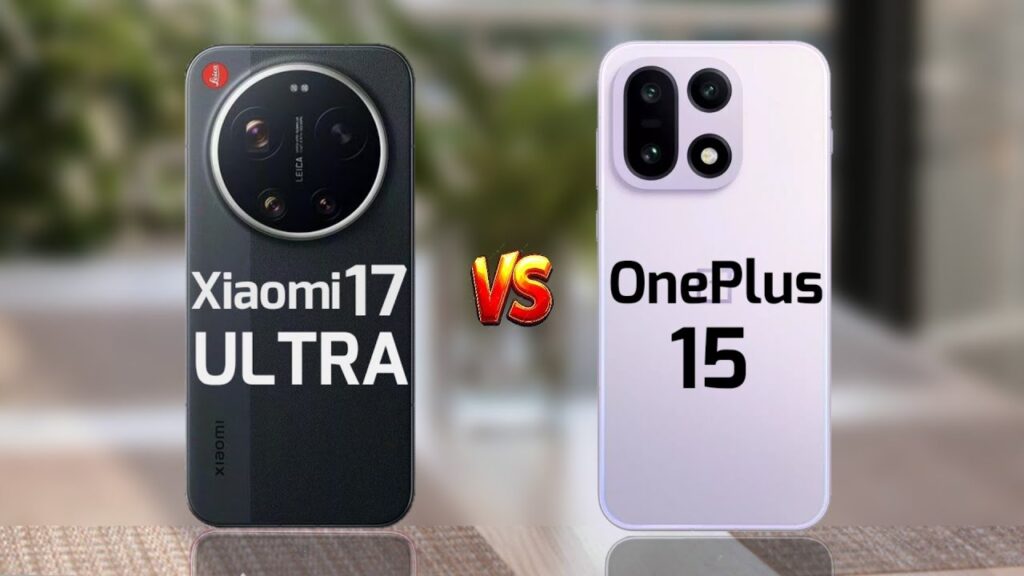
Xiaomi 17 Ultra vs OnePlus 15: Key Differences
Specification Comparison
| Category | Xiaomi 17 Ultra | OnePlus 15 |
|---|---|---|
| Price | ~₹1,19,990 | ~₹72,999 |
| Display | 6.9″ AMOLED, 1.5K, 120Hz LTPO, Dolby Vision | 6.78″ AMOLED, 1.5K, 165Hz LTPO, 3200Hz touch |
| Cameras | 50MP (1/1.28″ Leica) + 50MP 5x periscope + 50MP UW | 50MP (1/1.56″) + 50MP 3.5x periscope + 50MP UW |
| Battery | 6,800mAh, 90W/50W wireless | 7,300mAh, 100W SuperVOOC |
| Durability | IP68 | IP68/IP69/IP69K, Gorilla Glass Victus 2 |
| Design | Professional camera-centric, Leica styling | Cleaner flagship aesthetic, aerospace-grade nano-ceramic |
Camera: Leica Magic vs Practical Excellence
The Xiaomi 17 Ultra’s 1/1.28-inch sensor with f/1.7 aperture captures more light than OnePlus’s 1/1.56-inch f/1.8 sensor, delivering superior low-light performance. The 5x periscope telephoto suits landscape and wildlife photography, while OnePlus’s 3.5x zoom proves more practical for portraits without getting uncomfortably close.
Xiaomi‘s Leica partnership adds cinematic color science and professional shooting modes targeting content creators, but OnePlus delivers consistently reliable shots with less post-processing tweaking—better for users who want great photos without camera expertise.
The OnePlus 15 wins the ultrawide battle with a 116-degree field of view versus Xiaomi’s 107-degree, plus a larger sensor and wider aperture.
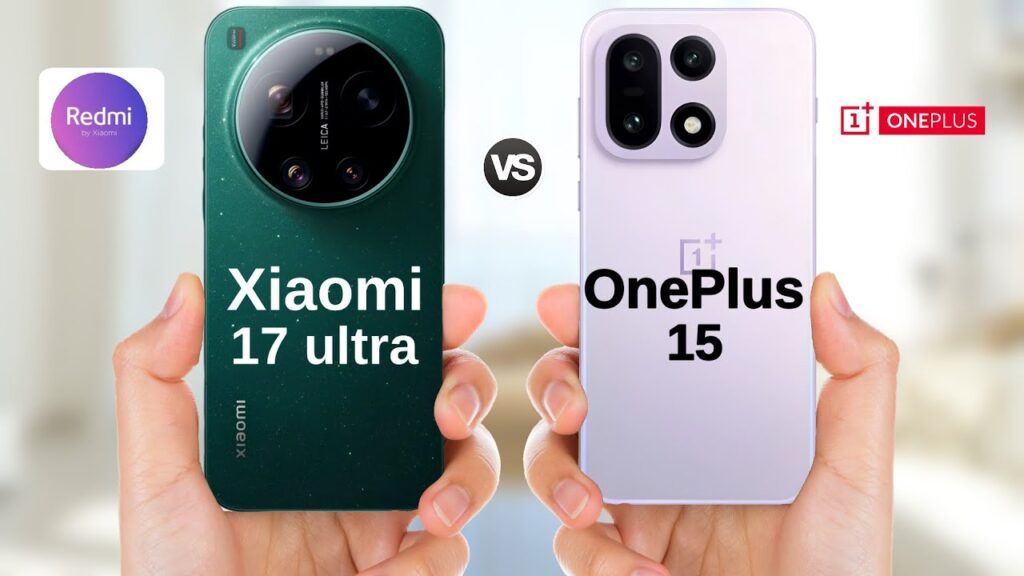
Display: Speed vs Cinematic Quality
OnePlus prioritizes responsiveness with 165Hz refresh rate and 3200Hz touch response—perfect for gaming (165fps Call of Duty Mobile support) and fast UI navigation. Xiaomi counters with richer colors, Dolby Vision HDR, and cinematic viewing quality ideal for media consumption and video editing.
Both use LTPO adaptive refresh technology, but OnePlus feels snappier during daily use while Xiaomi delivers more immersive visuals for movies and creative work.
Performance: Sustained vs Peak Power
Both run Snapdragon 8 Elite Gen 5, but tuning differs. Xiaomi 17 Ultra emphasizes sustained stability for long editing sessions and multitasking, while OnePlus focuses on consistent gaming performance without thermal throttling.
HyperOS (Xiaomi) adds more features, OxygenOS (OnePlus) feels lighter and more focused. Xiaomi hits higher peak performance in bursts, OnePlus maintains steadier output over extended use.
Battery & Charging: The Practical Winner
OnePlus’s 7,300mAh battery paired with 100W SuperVOOC charging delivers exceptional convenience—multi-day usage with rapid top-ups. Xiaomi’s 6,800mAh with 90W wired/50W wireless provides shorter endurance despite wireless charging flexibility.
For everyday reliability, OnePlus’s combination proves more practical.
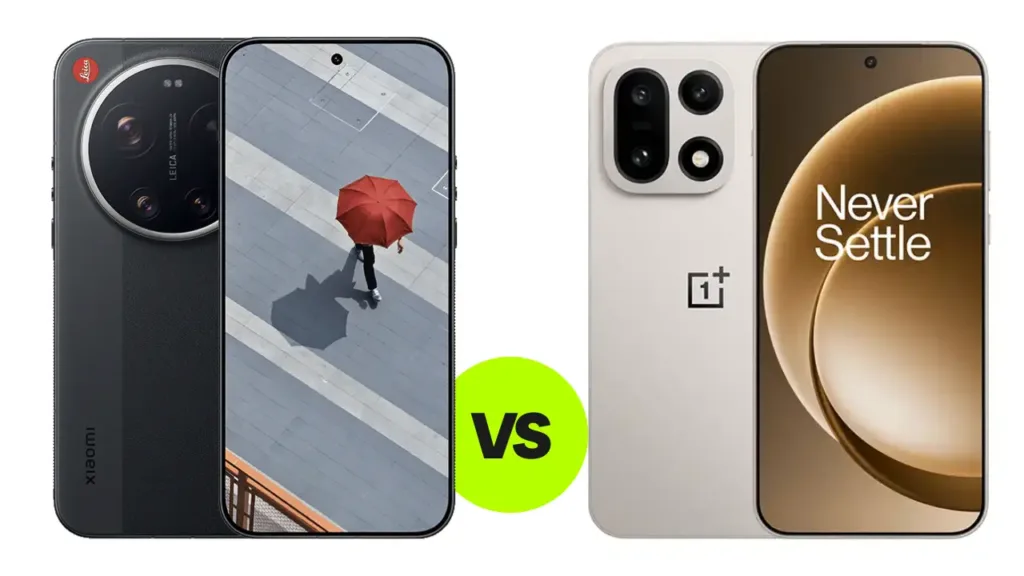
The Verdict
Choose OnePlus 15 if: You want balanced flagship performance, faster charging, gaming prowess, superior durability (IP69K + Victus 2), and ₹47,000 savings.
Choose Xiaomi 17 Ultra if: Photography defines your smartphone experience, you need versatile zoom capabilities, Leica color science matters, and you’re willing to pay premium prices for creator-focused tools.
For most users, OnePlus 15 delivers better overall value while exceeding in areas that matter daily—battery life, charging speed, durability, and responsive displays.