NZ
NZ IND
IND NAM
NAM IRE
IRE MOZ
MOZ UGA
UGA Aston Villa
 Man City
 Rayo
Rayo Elche
Elche GMB
GMB ZMB
ZMB NGA
NGA LES
LES Cagliari
 Bologna
 IPS1
IPS1 NFO1
NFO1 ALA1
ALA1 MCF1
MCF1 TOR3
TOR3 MON2
MON2 BRE1
BRE1 NICE2
NICE2 TAS103/5 (20.2/35 ov, target 276)
 VIC304/7 (50 ov)
 WA
WA NSW22/1 (4.2/50 ov)
 NZ-A135/3 (41 ov)
 IND-A113
 DHA
DHA RAJ
RAJ MYMS
MYMS CHATT
CHATT RAN
RAN BAR
BAR SYL
SYL KHU
KHU MEX-W
MEX-W ARG-W
ARG-W UAE
UAE NED
NED AFG170/3 (34.3/50 ov, target 170)
 ZIM169
 IND-W200/1 (27.1/50 ov, target 198)
 ZIM-W197
 DOLPH56/0 (3.5/8 ov, target 56)
 SWD51/4 (8/8 ov)
 WSW1
WSW1 BRI1
BRI1 Como
Como Sassuolo
 Augsburg
 Union Berlin
 Cologne
 Schalke
 Mainz
Mainz Bremen
 RB Leipzig
 Elversberg
 VFB2
VFB2 BMG3
BMG3 AHL4
AHL4 KHA1
KHA1
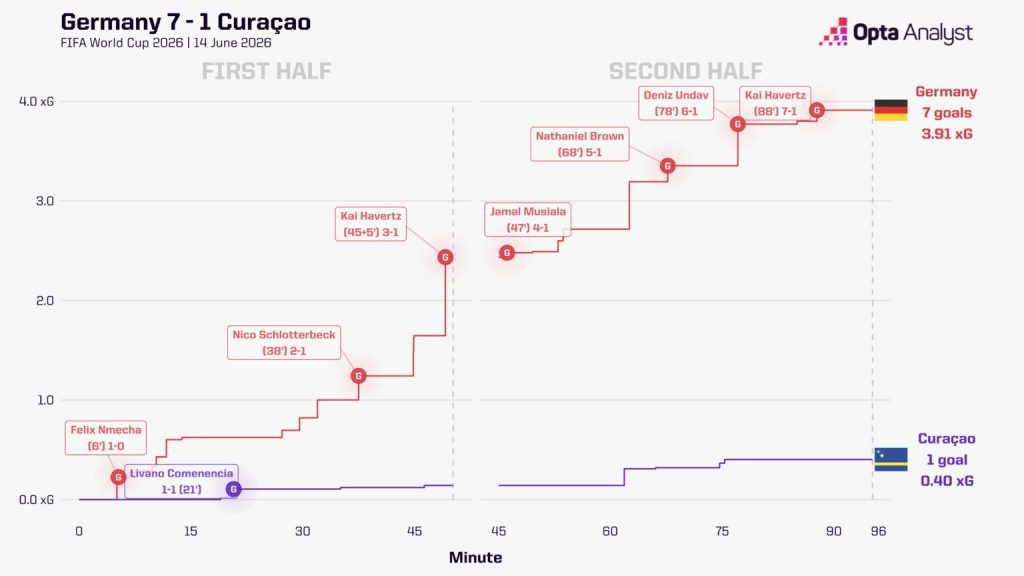
Germany enjoyed a fantastic start to their 2026 FIFA World Cup campaign, beating Curaçao 7-1 in Houston. Unlike the famous 7-1 of 2014, this result was widely expected — but it was still essential after consecutive opening-game shocks in the previous two tournaments. After conceding early sucker punches against Mexico in 2018 and Japan in 2022, Germany needed a confident, commanding beginning.
They got one. Here are the five numbers that best define what happened.
7-1 — The Return to Dominant Opening Victories
7-1 to Germany. That scoreline rings a bell — and it should. This was Germany’s first competitive 7-1 win since the 2014 World Cup semi-final against Brazil, the most famous thrashing in the tournament’s modern history.
The significance goes beyond the scoreline itself. Germany’s last four successful World Cups before their 2018 and 2022 group-stage exits all began with emphatic opening wins, with four or more goals scored on each occasion.
| Germany’s Opening World Cup Results (Recent Tournaments) | Result | Eventual Finish |
|---|---|---|
| 2002 | Won (large margin) | Semi-finals |
| 2006 | Won (large margin) | Third place |
| 2010 | Won (large margin) | Semi-finals |
| 2014 | Won 4-0 vs Portugal | Champions |
| 2018 | Lost 0-1 vs Mexico | Group stage |
| 2022 | Lost 1-2 vs Japan | Group stage |
| 2026 | Won 7-1 vs Curaçao | TBD |
The pattern is clear. When Germany open the tournament with dominance, they tend to go deep. When they do not, they go home early.
Their remaining Group E opponents — Ecuador (ranked 24th) and Ivory Coast (33rd) — will provide considerably stiffer tests than Curaçao (82nd). But the psychological platform this result provides cannot be underestimated.
26 Minutes — Undav’s Extraordinary Impact
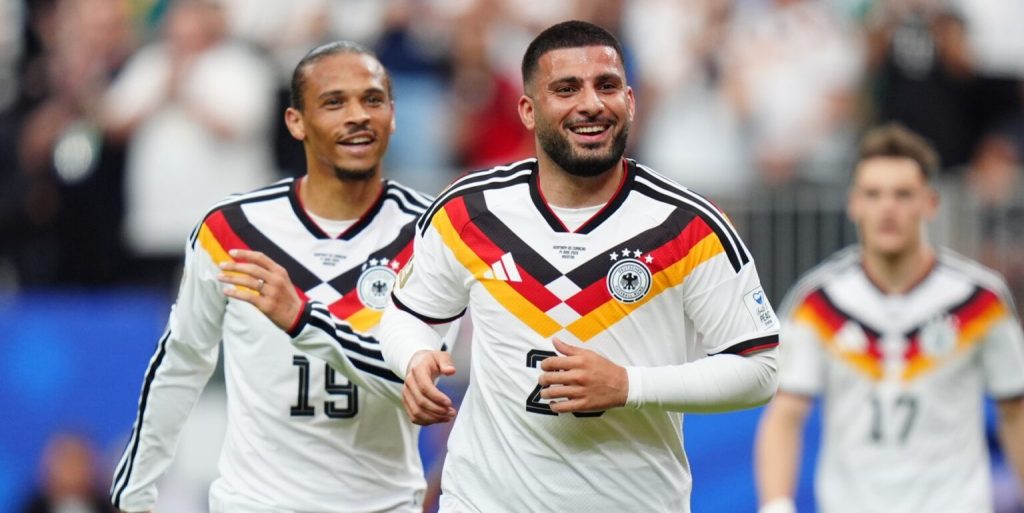
Before this tournament, the case for Deniz Undav as a key contributor for Germany was built on his extraordinary domestic form in 2025-26. He made that case even more compelling in just 26 minutes off the bench.
Entering in the 64th minute, Undav provided one goal and two assists — becoming the first player to be involved in three or more goals in a single appearance at this tournament. He also became only the second German player to assist two goals in a World Cup game as a substitute, after Pierre Littbarski against the UAE in 1990.
| Deniz Undav Under Nagelsmann | Stat |
|---|---|
| International goals | 7 in 10 appearances |
| Minutes per goal | 57 (best of any German player with 2+ caps under Nagelsmann) |
| Comparison | Musiala (9 goals), Havertz (11), Wirtz (11) — all with at least twice as many games |
Only Jamal Musiala (9), Kai Havertz (11), and Florian Wirtz (11) have scored more for Germany under Nagelsmann since September 2023 — but all three have played at least twice as many games. No German player with more than one cap under the current manager has a better minutes-per-goal ratio than Undav’s 57 minutes per goal.
His performance also contributed to a broader historical record: eight different Germans were involved in a goal against Curaçao. This was the first time as many as eight different players scored or assisted in a Germany World Cup match since they beat Saudi Arabia 8-0 in their opening game of the 2002 World Cup.
239 Goals — Germany Now Lead the World Cup All-Time Scoring Charts
This is a record they will not hold forever — but for now, Germany can celebrate it.
Their seven goals against Curaçao took their all-time men’s World Cup goal tally (including games as West Germany) to 239 — overtaking Brazil’s 238 to make them the all-time leading scorers in World Cup history.
| All-Time World Cup Goals (Men’s) | Goals | Average per Game |
|---|---|---|
| Germany (incl. West Germany) | 239 | 2.12 |
| Brazil | 238 | 2.07 |
| Hungary | — | 2.72 |
Germany are one of only seven nations to have scored 100+ goals in the history of the men’s World Cup, and one of just three nations — alongside Hungary (2.72 goals per game) and Brazil (2.07) — to have averaged over two goals per game throughout the tournament’s history. Germany’s average stands at 2.12.
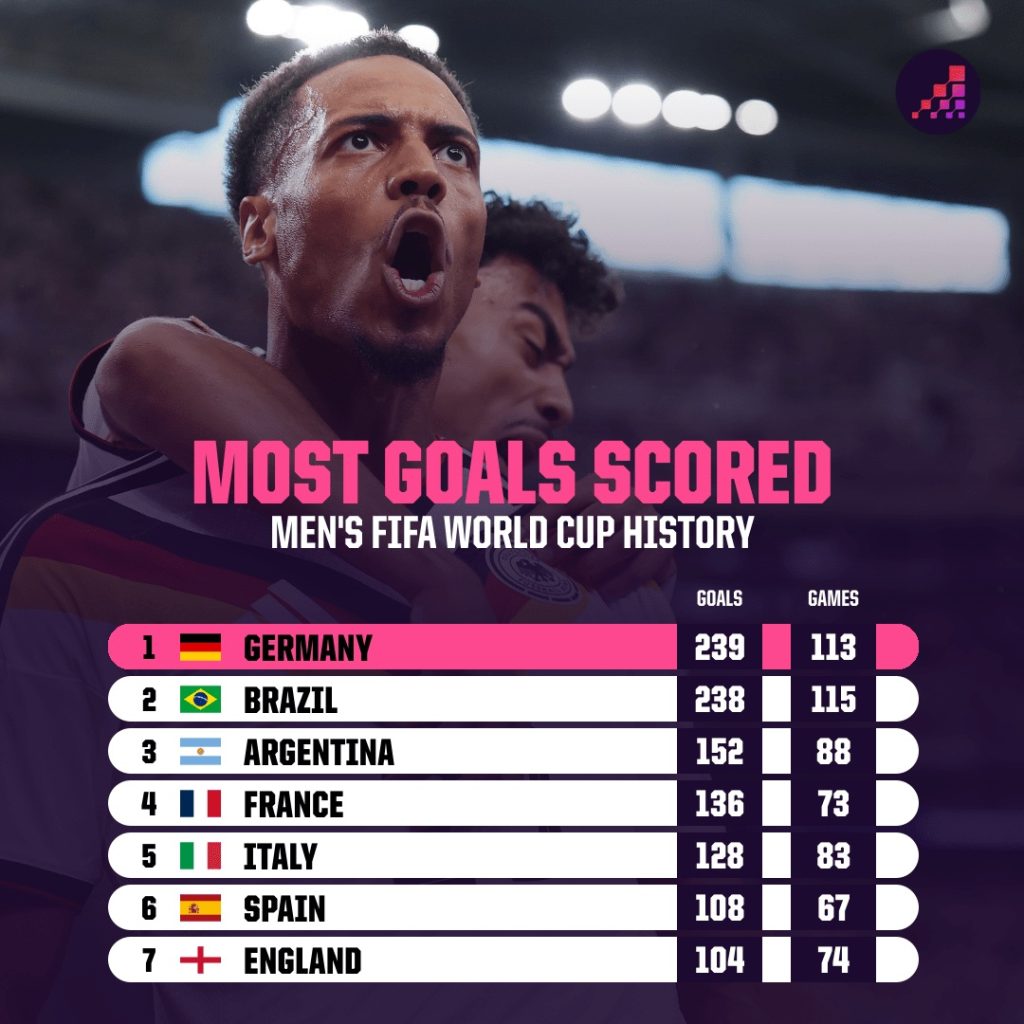
They are also now just 11 goals shy of becoming only the second nation to reach 250 World Cup goals, with Brazil in their sights.
78 Years, 260 Days — The Oldest Manager in World Cup History
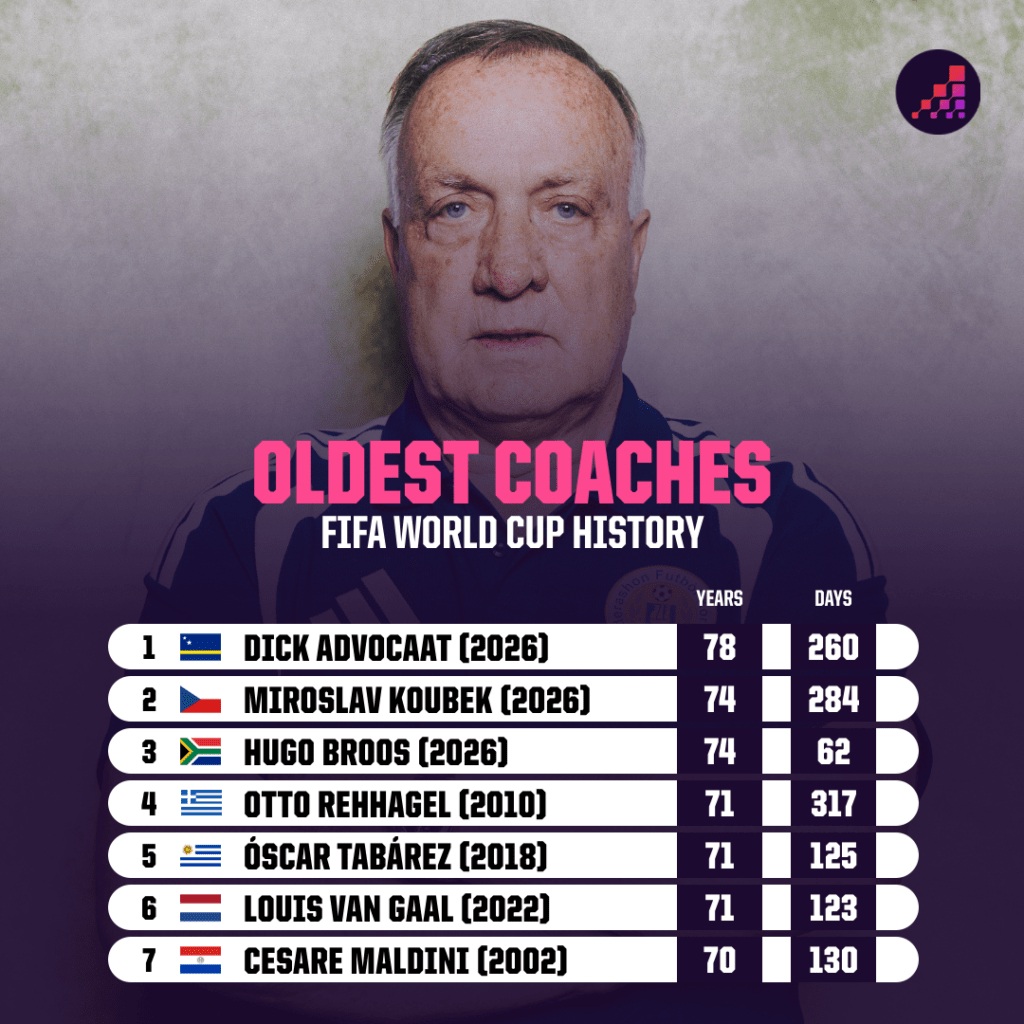
Dick Advocaat broke the record as the oldest manager in men’s FIFA World Cup history during this match. At 78 years and 260 days old, he became the first coach to lead a team in the competition aged over 75.
He will extend that record over the course of these finals. When Curaçao face Ivory Coast on 25 June in their final group-stage match, Advocaat will be 78 years and 271 days old.
| Oldest Managers in Men’s World Cup History | Manager | Age |
|---|---|---|
| Dick Advocaat (Curaçao, 2026) | 78y & 260d | Record-breaker |
| Previous record holder | Below 75 years | — |
The result also carried significant context for Curaçao as debutants. They are the first men’s World Cup debutants since South Korea in 1954 to concede seven or more goals in their opening match — South Korea conceded nine against Hungary in that game. Curaçao’s six-goal deficit was also the heaviest suffered by a debuting team since that same fixture.
There were genuine positives for Curaçao in the window around their goal through Livano Comenencia in the 21st minute — a period where they showed real counter-attacking threat and unsettled Germany briefly. Whether they can carry that threat into their remaining matches against Ecuador and Ivory Coast will be the defining question of their debut campaign.
0 Cards — Calm Amid Chaos
Referee Jalal Jayed did not brandish a single card throughout the match. In the context of a tournament that began with Mexico vs South Africa seeing a remarkable three red cards, this was a striking contrast.
This was just the ninth game across the last nine World Cup tournaments to pass without a card being shown, and the first at the 2026 edition.
| World Cup Games Without a Single Card (Recent Examples) | Tournament | Match |
|---|---|---|
| England vs USA | 2022 | — |
| Germany vs Japan | 2022 | — |
| Uruguay vs Saudi Arabia | 2018 | — |
| Argentina vs Iceland | 2018 | — |
| Germany vs Curaçao | 2026 | First of this tournament |
The discipline was perhaps more surprising given the match sat broadly in the middle of the 2026 tournament for fouls committed (29) — with four games producing more and four producing fewer before it. There was even a first-half penalty awarded for a foul by Riechedly Bazoer on Felix Nmecha. Yet the game remained completely card-free throughout.
Read More: Iran Made It to the World Cup. Their Best Player Sardar Azmoun Didn’t: Inside the Controversial Absence
Also Read: FIFA Wins Court Battle Over Lion and Sun Flag Ban Ahead of Iran’s World Cup Opener