LAZ2
LAZ2 PAR1
PAR1 RCL2
RCL2 PAR1
PAR1 MEX-W
MEX-W ARG-W
ARG-W ATM1
ATM1 DEP0
DEP0 ADO2
ADO2 HEE3
HEE3 CLB2
CLB2 TOR0
TOR0 GVFC0
GVFC0 FCP0
FCP0 Internacional2
 Botafogo0
 UAE
UAE NED
NED PAK
PAK ENG
ENG IND-W
IND-W ZIM-W
ZIM-W GMB
GMB LES
LES MOZ
MOZ ZMB
ZMB Inter Milan
 Fiorentina
 Churchill
 Punjab FC
 NGA
NGA UGA
UGA RIY2
RIY2 TAA1
TAA1 CHE0
CHE0 TOT2
TOT2 VAL1
VAL1 VIL2
VIL2 DOR1
DOR1 SGE0
SGE0 NZ-A135/3 (41 ov)
 IND-A113
 SYL
SYL KHU
KHU MYMS299/4 (87 ov)
 CHATT
CHATT DHA293/3 (84.1 ov)
 RAJ
RAJ RAN320/5 (80 ov)
 BAR
BAR DEN
DEN PNG
PNG NAM321/6
 IRE290 (47.3/50 ov, target 322)
 NZ180/5
 IND181/6 (19.5/20 ov, target 181)
 Mirassol1
 São Paulo1
 Vitória1
 Athletico-PR1
 Athletic
 Getafe
 C Palace
 Newcastle
 Hull
Hull Brentford
 Liverpool
 Brighton
 Man United
 Bournemouth
 Atalanta
 Frosinone
 NAP3
NAP3 ROMA3
ROMA3 KHO0
KHO0 ETT3
ETT3
Despite never having won anything at international level — their only major final appearance being a Euro 1980 defeat to West Germany — hopes in Belgium are once again high going into the World Cup.
In a group alongside Egypt, Iran, and New Zealand, reaching the knockout stages is being treated as a near-certainty. But the broader story of Belgium’s 2026 World Cup is one of transition: from the celebrated ‘golden generation’ to the ‘next generation’, and the question of whether the two groups together can finally deliver the prize that has eluded Belgian football for so long.
The Golden Generation’s Last Stand
For more than a decade, Belgian football has been defined by a remarkable concentration of talent that — for all its individual brilliance — never won anything. Eden Hazard, Dries Mertens, Vincent Kompany, Jan Vertonghen, Toby Alderweireld, Mousa Dembélé — all retired without silverware.
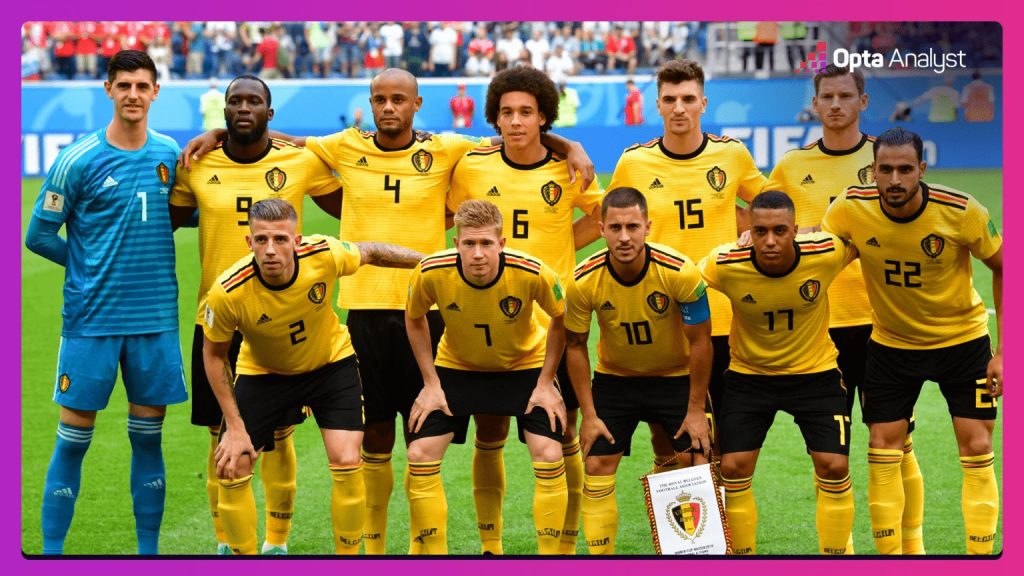
The best achievement of this group remains a third-place finish at the 2018 World Cup, after being knocked out by eventual winners France in the semi-finals before beating England in the third-place play-off.
Four members of that golden generation remain: Thibaut Courtois, Kevin De Bruyne, Romelu Lukaku, and Axel Witsel. All four are centurions.
| Belgium’s Centurions in the 2026 Squad | Caps | Age at Opening Game |
|---|---|---|
| Axel Witsel | 136 | 37 years, 154 days |
| Romelu Lukaku | 124 | 33/34 |
| Kevin De Bruyne | 117 | 33/34 |
| Thibaut Courtois | 107 | 33/34 |
Only Qatar (7), Croatia (4), and Panama (4) named as many centurions in their initial World Cup squads. Witsel, at 37 years and 154 days on the day of Belgium’s opening match, could become the oldest player to feature for Belgium at a major tournament, breaking the record currently held by Wilfried van Moer (37 years and 119 days at the 1982 World Cup). For all four players, this is almost certainly their final major tournament.
The Club Form Concerns
The fitness and form of Belgium’s senior quartet heading into this tournament have been far from ideal.
Courtois played 51 games for Real Madrid in all competitions in 2025-26 but came off injured at half-time in the Champions League last 16, missing the club’s most important matches of the season.
Witsel played 32 La Liga matches for Girona — a side that was relegated to the Segunda División.
Lukaku played just 64 minutes for Napoli in 2025-26 due to injuries and multiple, well-documented misunderstandings with manager Antonio Conte and club president Aurelio De Laurentiis. This from a striker who scored a remarkable 90 international goals for Belgium and had been central to Napoli’s Scudetto-winning campaign the previous year.
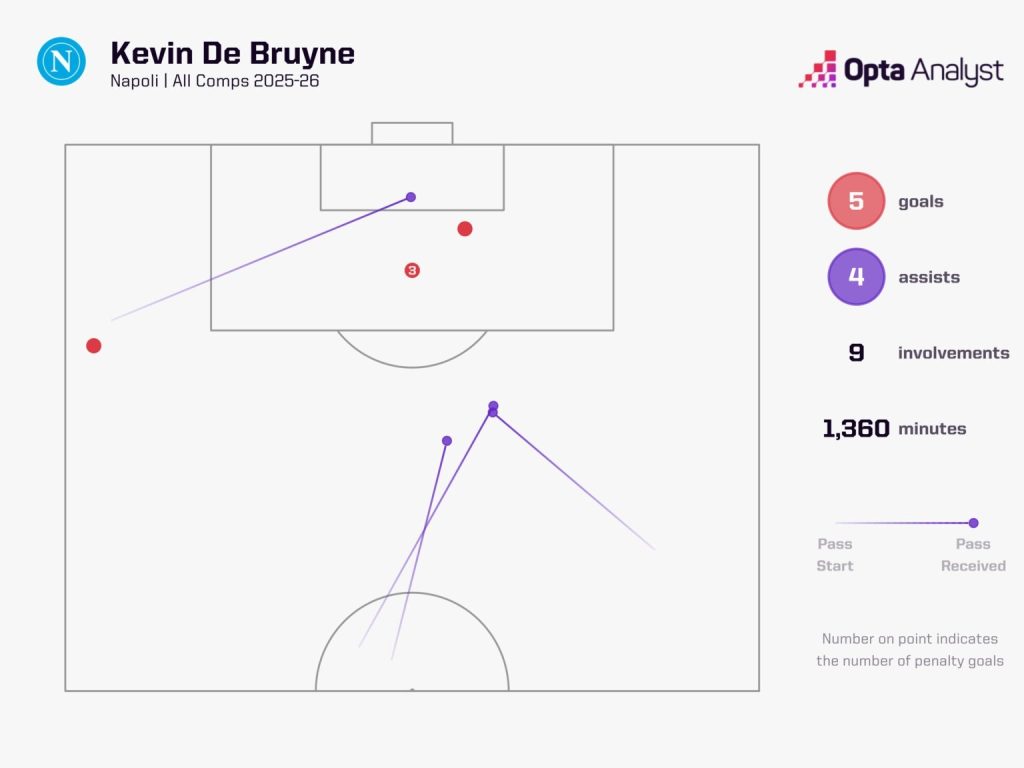
De Bruyne’s first season in Naples was the most concerning. He played just 21 matches in all competitions — a career-low — while contributing just nine goal involvements (5 goals, 4 assists), his lowest tally since leaving Belgian outfit KRC Genk in 2012. A hamstring injury sustained after scoring a penalty against eventual Serie A champions Internazionale in October largely defined his season.
Jérémy Doku: The Heir to the Creative Throne
Belgium’s most exciting talent heading into this tournament is De Bruyne’s former Manchester City teammate, Jérémy Doku. The 24-year-old winger is coming off the best season of his career.
| Jérémy Doku — 2025-26 Season | Stat |
|---|---|
| Goals (all competitions) | 10 |
| Assists (all competitions) | 11 |
| Total appearances | 50 |
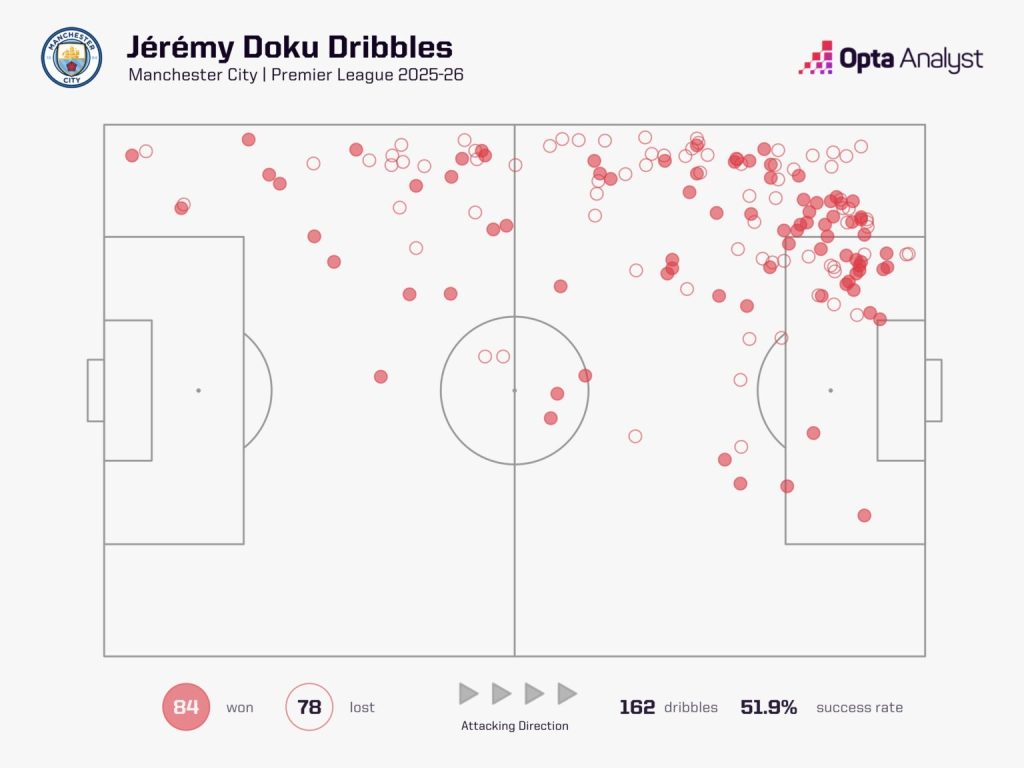
| Dribbles per 90 — Premier League | 4.2 (most of any player) |
| Dribbles per 90 — Champions League | 5.6 (most of any player) |
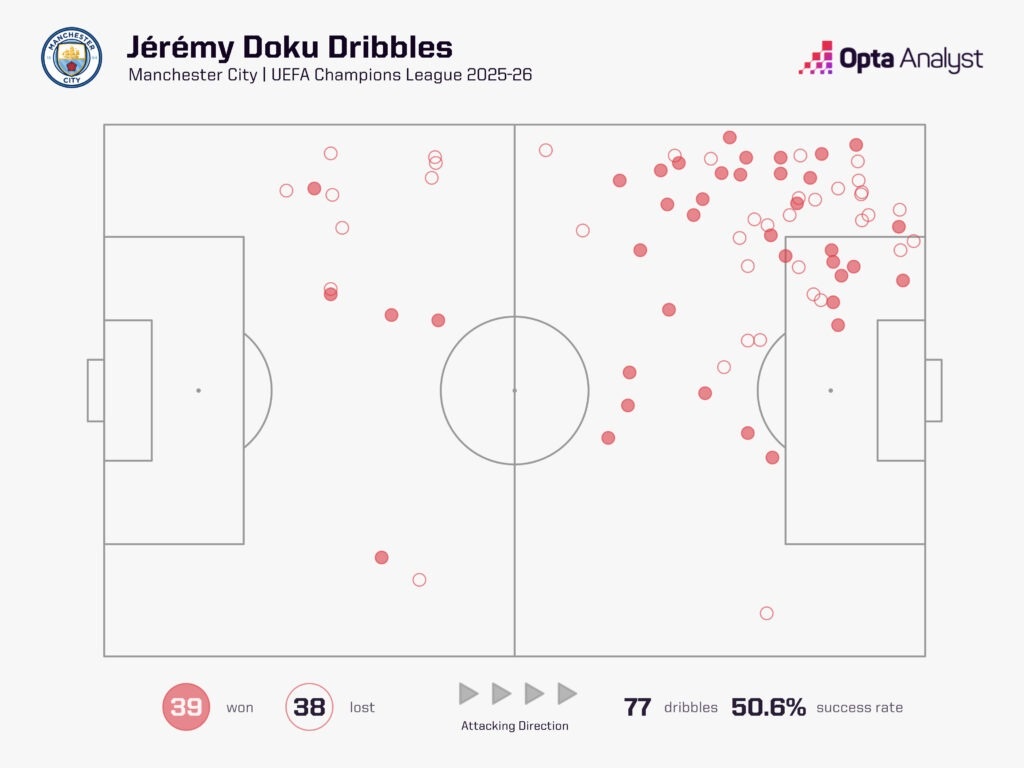
His ability to complete more dribbles per 90 than any other player in both the Premier League and the Champions League in the same season is an extraordinary statistical achievement. He represents the next generation’s clearest claim to leading Belgium’s attack.
The New Faces: Moreira, Fernandez-Pardo, Ngoy
Diego Moreira
Son of former Guinea-Bissau international Almami Moreira and born in Liège, Moreira featured for almost every Portuguese youth team before being called up by Garcia for the Belgian national squad in 2025 — a significant allegiance switch that reflected the federation’s efforts to retain talent.
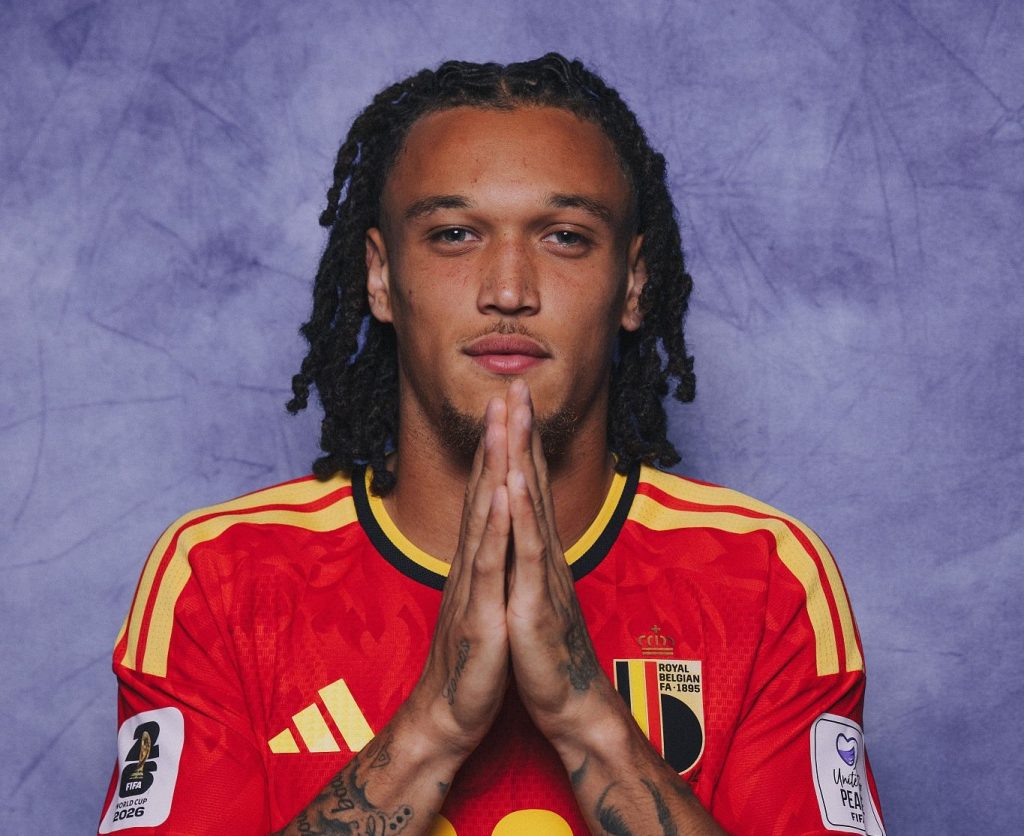
His Strasbourg season was impressive: five goals and eight assists in all competitions, a Conference League semi-final appearance, and remarkable dribbling numbers. Only seven players attempted more dribbles per 90 than him in the Conference League this season (5.6), and he ranked 20th in Ligue 1 among players with at least 1,000 minutes.
Matias Fernandez-Pardo
Another recent arrival — Brussels-born and only recently welcomed back to the Belgian national team after requesting an allegiance switch to Spain in 2025.
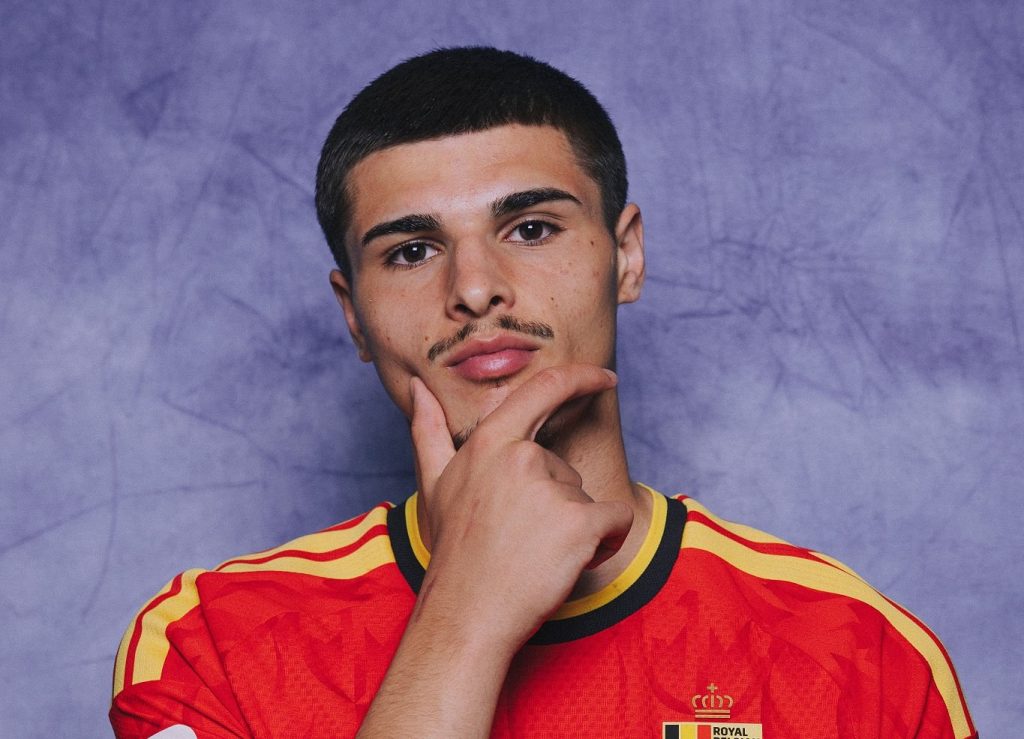
The 21-year-old Lille forward scored eight goals and provided four assists in 41 Ligue 1 appearances this season. His inclusion has been perceived as a statement by the federation, coming after the loss of top young talents Jorthy Mokio (to DR Congo) and Rayane Bounida (to Morocco) in recent years.
Nathan Ngoy
With Vertonghen and Alderweireld retired since the last World Cup, Garcia needed to rebuild his backline. Ngoy — 23, signed by Lille after going under the radar at Standard Liège — quickly became a regular for a side that finished third in Ligue 1 with the third-best defensive record. He only made his national team debut in March but has since started all three of Belgium’s matches.
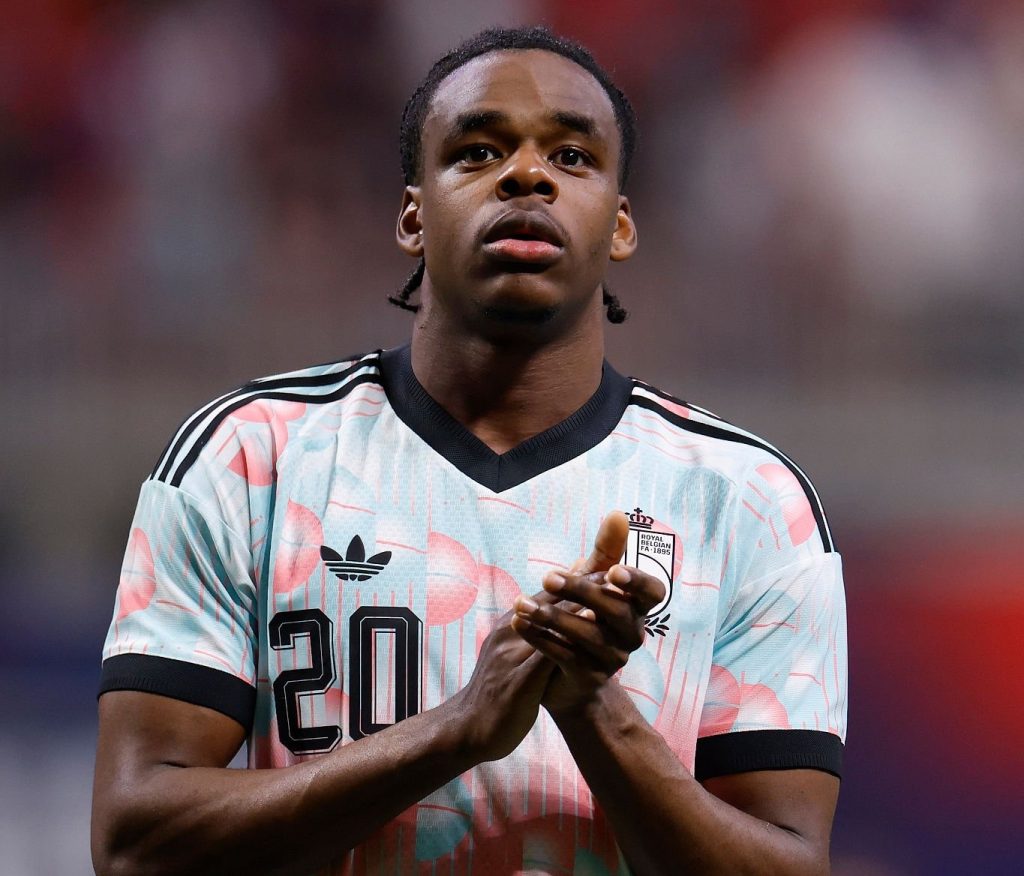
In those games, he won 75% of his aerial duels, made the most clearances and headed clearances of any Belgium teammate, and registered the joint-most interceptions and recoveries.
A More Well-Rounded Squad Than the ‘Golden Years’?
The remarkable aspect of Belgium’s current squad is that the combination of remaining golden generation members and this new wave of talent may actually produce a more balanced, well-rounded group than any previous iteration.
Beyond Doku, Moreira, Fernandez-Pardo, and Ngoy, add a more mature Charles De Ketelaere, the Premier League experience of Amadou Onana, and Leandro Trossard’s recent form for Premier League champions and Champions League finalists Arsenal — and this looks like a squad with genuine attacking depth, defensive solidity, and creative variety across multiple positions.
The reliance on any single individual — previously centred almost entirely on De Bruyne — is reduced. Lukaku will have genuine wide options around him. Doku provides a direct threat that defenders must plan for specifically. The backline has been refreshed without sacrificing defensive organisation.
The Central Question
Will the final pillars of the golden generation finally bring Belgium a prize at their last opportunity? Or will the next generation be the real driving force?
The honest answer is: probably both. De Bruyne’s vision and passing — even in reduced form — remains elite when he is fit. Courtois’ goalkeeping is still world-class. Lukaku’s 90 international goals reflect a predatory quality that does not simply vanish.
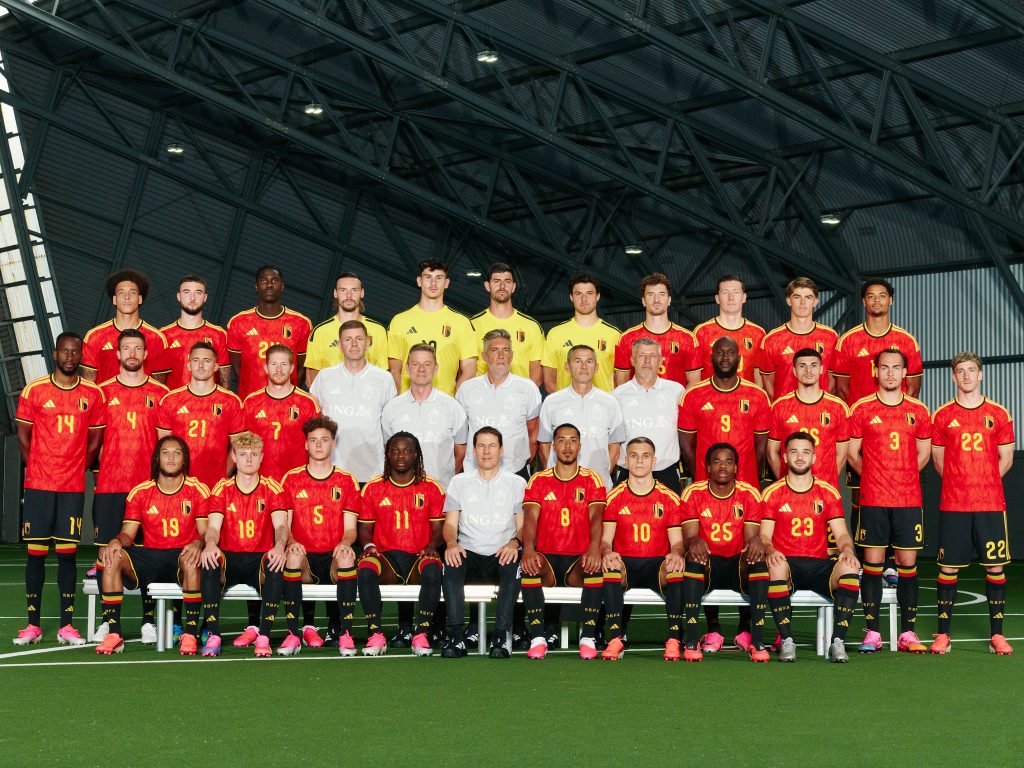
But if Belgium go deep into this tournament, it will be Doku’s dribbles, Moreira’s creativity, and Ngoy’s defensive assurance that provide the legs under the experience.