MEX-W
MEX-W ARG-W
ARG-W RBNY1
RBNY1 MIA0
MIA0 Palmeiras1
 Bragantino0
 Vasco1
 Corinthians2
 Chapecoense1
 Fluminense0
 UAE
UAE NED
NED PAK
PAK ENG
ENG IND-W
IND-W ZIM-W
ZIM-W GMB
GMB LES
LES MOZ
MOZ ZMB
ZMB Inter Milan
 Fiorentina
 Churchill
 Punjab FC
 NGA
NGA UGA
UGA ATM1
ATM1 DEP0
DEP0 LAZ2
LAZ2 PAR1
PAR1 RCL2
RCL2 PAR1
PAR1 RIY2
RIY2 TAA1
TAA1 NZ-A164/5 (51.2 ov)
 IND-A113
 SYL
SYL KHU
KHU MYMS299/4 (87 ov)
 CHATT
CHATT DHA293/3 (84.1 ov)
 RAJ
RAJ RAN320/5 (80 ov)
 BAR
BAR DEN
DEN PNG
PNG NAM321/6
 IRE290 (47.3/50 ov, target 322)
 NZ180/5
 IND181/6 (19.5/20 ov, target 181)
 Athletic
 Getafe
 C Palace
 Newcastle
 Hull
Hull Brentford
 Liverpool
 Brighton
 Man United
 Bournemouth
 Atalanta
 Frosinone
 CHE0
CHE0 TOT2
TOT2 VAL1
VAL1 VIL2
VIL2
From being hailed as India’s “cheat code” alongside Jasprit Bumrah to posting the worst economy rate in T20 history over a six-match span—Varun Chakravarthy’s dramatic fall from grace has left cricket fans stunned. The mystery spinner who once bamboozled the best batsmen in the world now finds himself under intense scrutiny, with every delivery analyzed and every wicketless over questioned. His latest performance against Sunrisers Hyderabad at Eden Gardens—where he conceded 31 runs in just 2 overs without a wicket—has only deepened concerns. But is this slump a temporary blip, or has the bowler who set impossibly high standards become a victim of his own remarkable success?
The Shocking Numbers Behind Varun’s Struggles
The statistics paint a sobering picture of Varun Chakravarthy’s recent performances. Since India’s T20 World Cup loss to South Africa in Ahmedabad, the KKR spinner has been on a nightmarish run that has shocked analysts and fans alike. In his last six games, he’s conceded 273 runs in just 23 overs—an economy rate of 11.86 that represents the worst bowling streak in T20 cricket history for any bowler with a minimum of 20 overs.
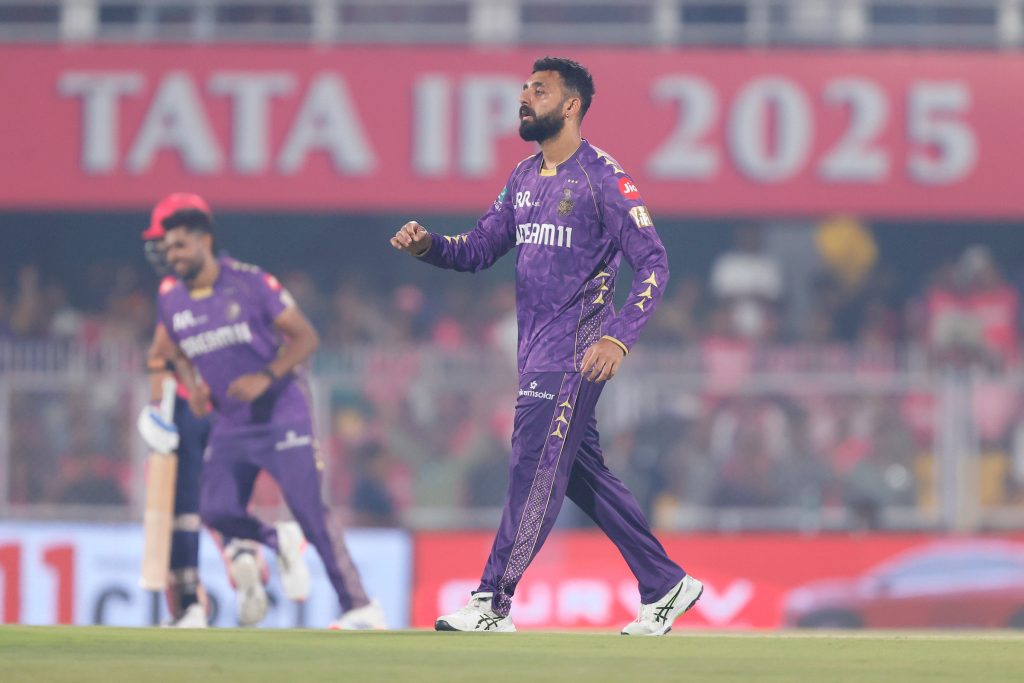
The Eden Gardens match against SRH provided no relief. Varun bowled just 2 overs, conceding 31 runs at an economy of 15.50 without taking a single wicket. This came in a match where KKR desperately needed their premier spinner to deliver, as SRH posted a mammoth 226/8 in their 20 overs, with Travis Head (46 off 21) and Abhishek Sharma (48 off 21) setting the platform for a massive total.
What makes this decline even more startling is the contrast with his previous form. The man who was instrumental in India’s title defense has managed just five wickets in his last six T20 matches, a far cry from the wicket-taking machine that terrorized batting lineups earlier in the tournament.
| Performance Metric | Before SA Game (1 Year) | After SA Game (6 Games) |
|---|---|---|
| Full Balls Bowled | 79 | 22 |
| Sixes Conceded | 7 | 7 |
| Fours Conceded | 7 | 5 |
| Economy on Full Balls | 8.88 | 19.9 |
| Boundary Frequency | 1 in 5.6 balls | 1 in 1.8 balls |
Eden Gardens Reality Check: The Nightmare Continues
The home game against Sunrisers Hyderabad was supposed to be an opportunity for Varun Chakravarthy to rediscover his form at the familiar Eden Gardens surface. Instead, it turned into another chapter in his ongoing struggle. KKR’s bowling attack was torn apart by SRH’s aggressive batting lineup, with the visitors posting 226/8—a total that proved far too much for the home side.
Varun’s figures of 2-0-31-0 tell only part of the story. His economy rate of 15.50 was the second-worst among KKR bowlers on the night, and crucially, he failed to provide the breakthrough his team desperately needed during the explosive opening partnership. While Blessing Muzarabani led the bowling attack with 4 wickets, Varun was notably absent from the wickets column.
The contrast with his teammates was stark. Sunil Narine, bowling his full quota of 4 overs, managed an economy of 9.75. Even Vaibhav Arora (11.75) and Kartik Tyagi (12.00) fared better than Varun in containing the opposition. For a bowler who was once considered KKR’s trump card, being outperformed by pace bowlers on a traditionally spin-friendly Eden Gardens surface raises serious questions.
| KKR Bowler vs SRH | Overs | Runs | Wickets | Economy |
|---|---|---|---|---|
| Blessing Muzarabani | 4 | 41 | 4 | 10.25 |
| Sunil Narine | 4 | 39 | 0 | 9.75 |
| Vaibhav Arora | 4 | 47 | 2 | 11.75 |
| Kartik Tyagi | 4 | 48 | 1 | 12.00 |
| Varun Chakravarthy | 2 | 31 | 0 | 15.50 |
| Anukul Roy | 2 | 16 | 0 | 8.00 |
Why Is Varun Struggling? The Technical Breakdown
According to cricket experts Piyush Chawla and Ambati Rayudu on ESPNcricinfo’s TimeOut show, Varun Chakravarthy’s desperation to pick up wickets has led him astray. The spinner appears to be searching for a magic ball with every delivery—an approach that has fundamentally altered his bowling mechanics.
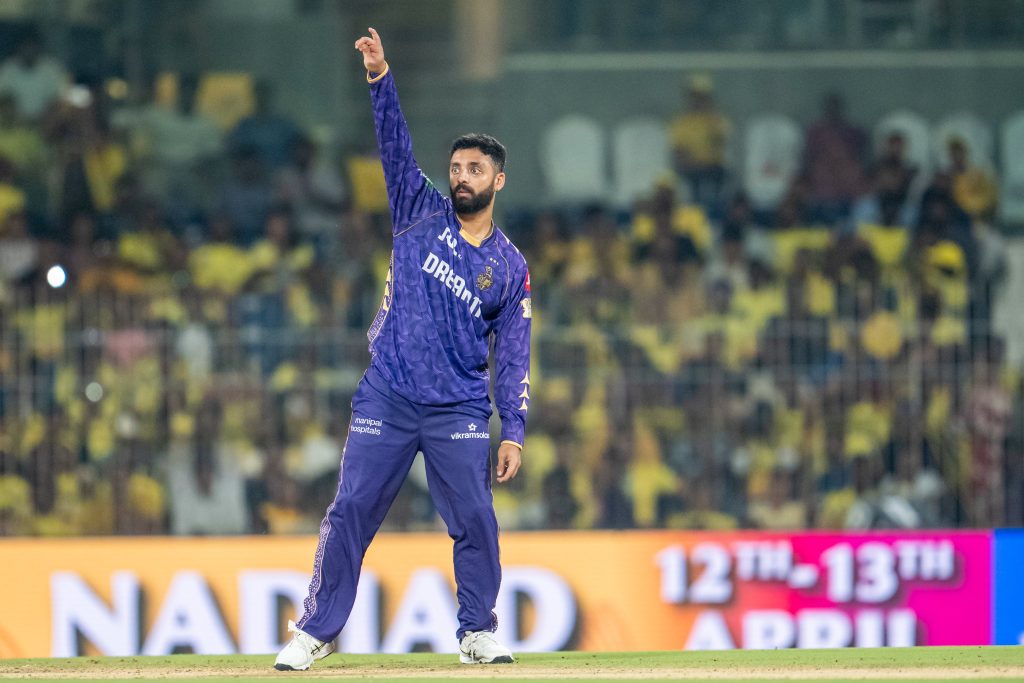
The most noticeable change has been in his pace. Varun has increased his bowling speed in an attempt to generate more impact, but this has resulted in fewer revolutions on the ball. Less spin means less deception, and batsmen have quickly capitalized on this weakness. The numbers on short-of-good-length deliveries tell the story: his strike-rate against has jumped from 177 to a whopping 242.
Perhaps most damning is what’s happening with his full deliveries. Before the South Africa game, Varun conceded boundaries on roughly one in every six full balls. Now? He’s being smashed for a boundary every second full-pitched delivery—a catastrophic shift that has destroyed his economy rate and confidence.
The SRH match exemplified these problems. With the pitch described as challenging for spinners but not impossible, Varun’s inability to adapt while his captain Sunil Narine maintained better control highlighted the technical issues plaguing his bowling.
KKR’s Perspective: Standing By Their Star
Despite the alarming statistics, Kolkata Knight Riders head coach Abhishek Nayar had remained firmly in Varun’s corner before the SRH match. Nayar, who has also served as Varun’s personal coach, offered a fascinating perspective: the spinner is being judged by the impossibly high standards he himself created.
“Is this his toughest challenge? I personally feel he has gone through a lot more in the past,” Nayar explained ahead of the home game. “Everyone always knew Varun Chakravarthy is a terrific bowler, but the expectation attached has come from the kind of performance he’s given to Team India.”
Nayar revealed some intriguing technical analysis that contradicts popular perception. According to HawkEye data, Varun has been bowling at similar speeds and lengths as during his successful period. The difference? Batsmen are simply playing him better. Opposition teams have identified that neutralizing Varun is crucial to defeating KKR, and they’ve come prepared with specific gameplans.
The SRH match proved Nayar’s point about opposition strategy. Travis Head and Abhishek Sharma came out with aggressive intent from ball one, not allowing KKR’s bowlers—including Varun—to settle into any rhythm. This fearless approach is now the blueprint teams are using against the spinner.
| Opposition Strategy | Impact on Varun |
|---|---|
| Target him in powerplay overs | Higher pressure, forced variations |
| Aggressive approach from ball one | Less room for settling into rhythm |
| Attacking full deliveries | Increased economy, fewer wickets |
| Playing him on merit | Reduced mystery factor |
The Entry Point Debate: Should KKR Protect Varun?
An interesting tactical question has emerged from Varun Chakravarthy’s struggles: should KKR modify when they bring him into the attack? One school of thought suggests easing him into his spell—perhaps after a wicket has fallen or after the powerplay when batsmen might be less aggressive.
The SRH match revealed a potential shift in KKR’s thinking. Varun bowled only 2 overs in the entire innings—his shortest spell in recent memory. This suggests the management may be considering pulling him back from high-pressure situations, at least temporarily. However, this approach comes with its own risks: reduced overs mean fewer opportunities to find rhythm and rediscover form.
Nayar had acknowledged before the match that this is something the KKR think-tank is actively considering. “Entry points are really important for a bowler,” he admitted. “And yes, at times you want to protect a bowler and bring him at a time where you feel he can be more effective.”
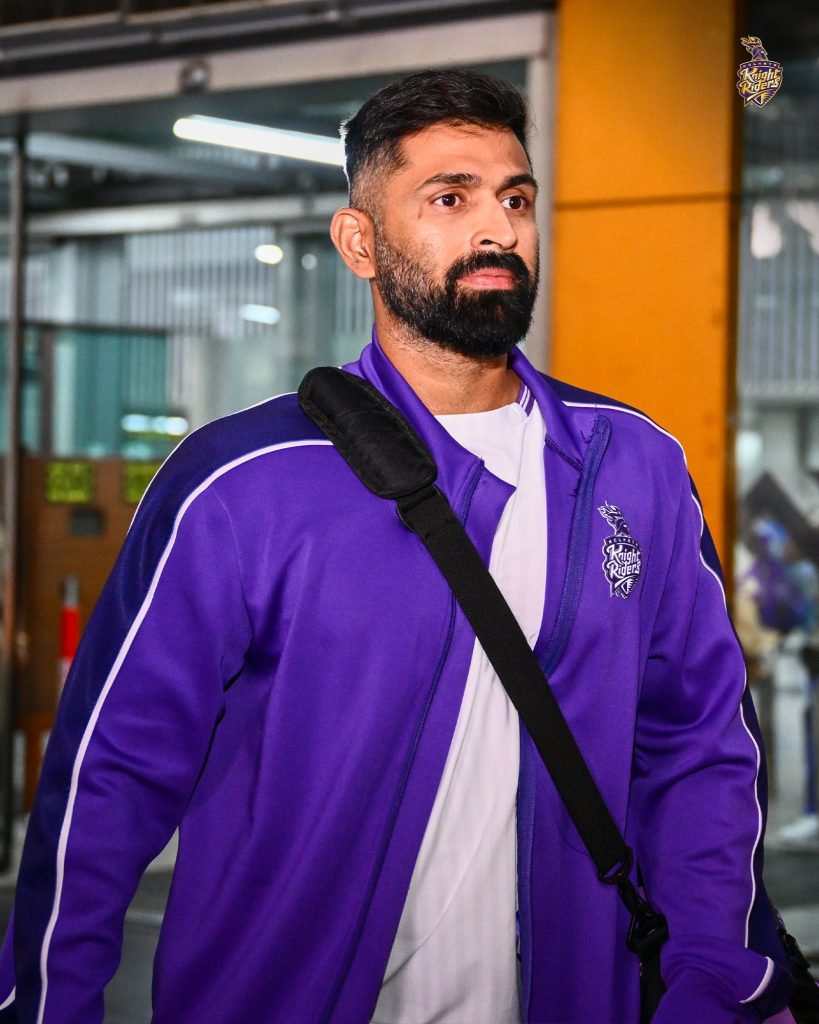
However, the head coach also emphasized the philosophy behind giving your best bowlers the toughest assignments. “If a team like ours wants to succeed, you want our best players to actually perform in those crunch moments,” Nayar explained. “Protecting someone is instrumental, but we’d rather do it by backing them.“
The limited overs in the SRH match suggest KKR may be re-evaluating this philosophy. When your premier spinner is going at 15.50 runs per over, protecting him becomes less about preserving confidence and more about damage control.
The Mental Battle: Stronger Than Ever?
While critics focus on Varun Chakravarthy’s technical struggles, Nayar insists the bowler’s mental state is actually better than it’s ever been. This might seem counterintuitive given his recent performances, but Nayar points to Varun’s history of overcoming adversity as evidence of his resilience.
“Over the years, he’s gone through a lot of adversity. I don’t think there’s any issue,” Nayar stated confidently. “But yes, teams are playing him well. Doesn’t mean he can’t come back.”
This perspective reframes Varun’s slump not as a crisis of confidence or technique, but as a natural challenge that elite athletes face when opponents adapt to their strengths. The question isn’t whether Varun has lost his abilities—it’s whether he can evolve once again to stay ahead of batsmen who have studied him extensively.
However, the reality check from Eden Gardens must have tested this mental fortitude. Watching teammates bowl full quotas while he was restricted to just 2 overs, seeing the opposition score 226 despite his team’s home advantage, and ultimately losing by 65 runs—these are the kinds of experiences that can either break a player or forge them anew.
The Crushing Defeat: KKR’s Batting Collapse
The loss to SRH wasn’t solely about Varun Chakravarthy’s struggles, but his inability to provide control or breakthroughs certainly contributed to the 65-run defeat. Chasing 227, KKR collapsed for just 161 in 16 overs, with only Angkrish Raghuvanshi (52 off 29) and Rinku Singh (35 off 25) showing significant resistance.
The comprehensive nature of the defeat—KKR losing by 65 runs at home—puts additional pressure on the entire squad, but particularly on Varun, who is supposed to be one of their match-winners. When your premier spinner goes wicketless and concedes runs at 15.50, chasing any total above 200 becomes exponentially harder.
Is This a Temporary Blip or a Permanent Shift?
The central question surrounding Varun Chakravarthy remains unanswered: is this a brief unravelling that champion bowlers occasionally experience, or has the game fundamentally moved past his methods? After the SRH debacle, the evidence is becoming harder to ignore.
HawkEye data showing consistent speeds and lengths indicates his fundamentals remain intact. His mental fortitude, tested through years of setbacks before his international breakthrough, suggests he has the psychological tools to fight back. And the fact that opposition teams specifically target him as KKR’s key wicket-taking threat actually confirms his continued importance.
What has changed is the element of surprise. When Varun first burst onto the scene, his mystery spin and unconventional variations caught batsmen off guard. Now, with extensive footage and analysis available, teams come prepared. The aggressive approach from SRH’s top order—where both Head and Sharma struck at over 200—shows that batsmen no longer wait to “play him out.” They attack from ball one.
The immediate future looks challenging. KKR has two more home games at Eden Gardens in the coming days, and Varun needs to respond quickly. The shortened spell against SRH might have been strategic protection or a sign that the management’s faith is wavering. Either way, he needs to prove in the next matches that he remains worthy of being called KKR’s strike bowler.
If Varun can rediscover his wicket-taking touch and bring his economy under control in the upcoming fixtures, this period will be remembered as a temporary rough patch. If the struggles continue—and particularly if KKR keeps restricting his overs—both the franchise and Team India selectors will face tough decisions about his role moving forward.
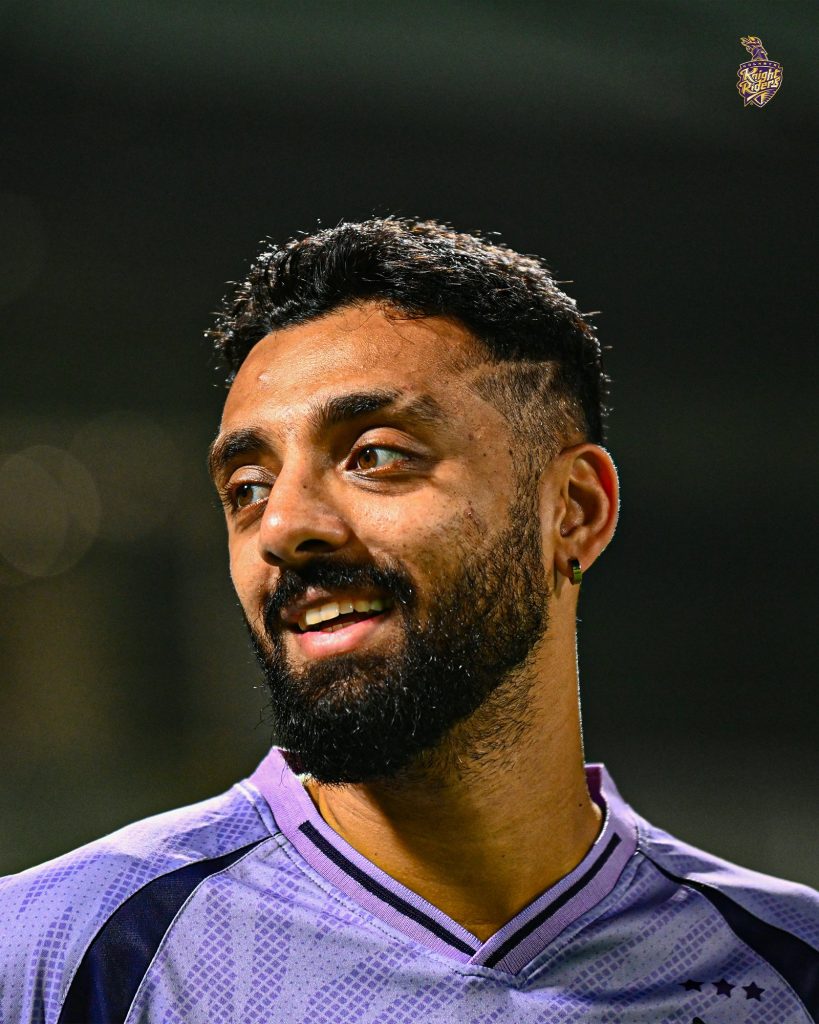
The mystery spinner is at a crossroads. His own success has set standards that now feel impossible to meet. The question is whether he can reinvent himself once more, or whether those magical 2024 performances will remain the peak of a career that couldn’t sustain such heights.
Read More: IPL 2026: Why Anukul Roy Looks Ready for His Breakthrough Season with KKR