SA329 (82.3 ov)
 AUS
AUS BAN
BAN WI
WI IND-W
IND-W ZIM-W
ZIM-W GOA
GOA SC Delhi
 Milan
Milan Bologna
 Parma
Parma Udinese
 Venezia
 Inter Milan
 Genoa
Genoa Juventus
 Monza
Monza Napoli
 ROMA4
ROMA4 CAG2
CAG2 TOR1
TOR1 COMO3
COMO3 SAS2
SAS2 LAZ6
LAZ6 AFG177
 ZIM140 (19.1/20 ov, target 178)
 AUCK
AUCK CANT
CANT CD
CD ND
ND SIKM184
 NAGA187 & 46/4 (34 ov)
 JHK131/4 (47 ov)
 DELHI515/5d
 ODSA194
 SVCS13/0 (5 ov)
 BRODA616
 J & K6/0 (4 ov)
 CHD685/5d
 HP49/0 (14 ov)
 CGR216/8 (95 ov)
 AP231
AP231 HYD193/2 (54 ov)
 PNJB431
 KNTKA297/7 (95 ov)
 TPURA194
 KER101/6 (35 ov)
 BENG350
 UAE
UAE OMA
OMA ENG
ENG SL
SL DEN
DEN QAT
QAT KENYA
KENYA KUW
KUW POA
POA SPR
SPR BRB
BRB VAG
VAG PAK110
 NAM316/7
 IRE253 (44.5/50 ov, target 317)
 NZ198/3
 IND199/4 (13.2/20 ov, target 199)
 NED371/5
 JAB113 (19.3/20 ov, target 133)
 KAY132/9
 Gamba Osaka
 Buriram
 Kashima
 Pohang Steelers
 ABH0
ABH0 ALF1
ALF1 Sevilla2
 Osasuna0
 PSG2
PSG2 Lyon0
Lyon0
The Walmart Charging Network is building its own charging network to expand faster than all the non-Tesla competition. Thousands of its U.S. and Canadian stores by 2030, partnering for deployment with Electrify America and EV Connect, and opening the Walmart EV Charging brand in partnership with Electrify America.
Here’s the thing: before this ramp-up, many drivers viewed charging as an extra trip—searching for a station, matching apps, and hoping for uptime. With Walmart’s scale, charging could become more of a routine stop, which is why foot traffic-driven infrastructure can outperform purely network-centric competitors.
Walmart’s retail presence is massive—around 4,700 U.S. stores—making it tough for smaller charging players to match that physical coverage quickly.
The Before-and-After: how the charging experience changed
Before Walmart rolled out its network, non-Tesla charging in the U.S. was run by operators relying on independent site selection, grid upgrades, and permitting timelines that often clashed with driver habits. Tesla’s Supercharger network remained the gold standard, boasting over 20,000 connectors in the U.S. by 2024, making it the largest charging network in the country.
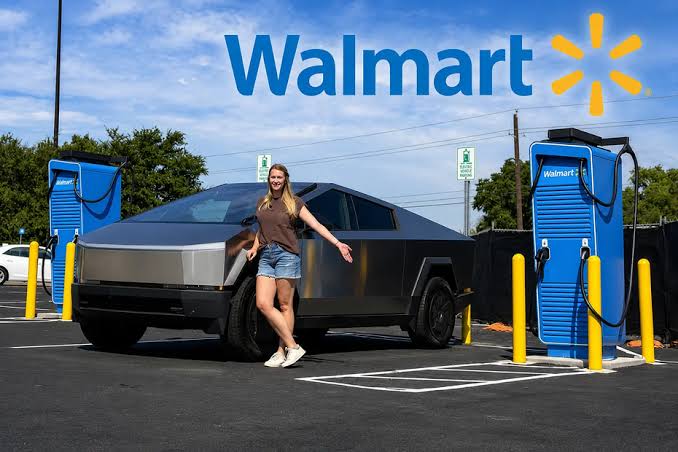
The turning point came when Walmart decided to treat charging like retail infrastructure—expanding across thousands of U.S. and Canadian stores by 2030 and partnering with major players for deployment. Walmart’s charging brand, Walmart EV Charging, operates in collaboration with Electrify America, with additional support from EV Connect.
After this shift, Walmart charging stations are where drivers already plan to spend time—during shopping trips—making Level 2 and DC fast charging part of the “errands loop”. As of my last knowledge cutoff, Walmart had charging stations at over 1,000 locations, but I don’t have the exact count for 2026.
| Factor | “Before” (typical non-Tesla experience) | “After” (Walmart EV Charging approach) |
|---|---|---|
| Where charging is installed | Mixed locations, not always aligned to routines | Walmart stores as predictable stops |
| Rollout logic | Operator-by-operator site strategy | Retail footprint-driven scaling |
| Driver friction | Multiple apps, varying availability | One brand ecosystem tied to shopping trips |
| Scale ceiling | Limited by individual site pipelines | 4,700 U.S. stores enable faster geographic coverage |
| Long-term outcome | Convenience depends on operator success | Convenience improves as store rollouts multiply |
So, here’s a practical question for buyers: when choosing between charging convenience and network size, how much does “nearest opportunity” matter compared to “best performance”? In 2026, it often matters more than specs on paper—so if you regularly shop at Walmart, consider the charging option that lines up with where you already are.
Key details: whose building it is and what “growing faster” really means
Walmart Charging’s plan isn’t a small-scale experiment; it’s a retail-scale deployment. The company aims to build EV charging stations at thousands of U.S. and Canadian stores by 2030, collaborating with partners like Electrify America and EV Connect.
Walmart’s got both Level 2 and DC fast charging available, though the specific kW figures weren’t mentioned in the info you provided.
As for evidence of scale, Walmart had charging stations at over 1,000 locations as of the last update you supplied (exact count for 2026 wasn’t available). This is significant because non-Tesla networks generally expand through a slower patchwork of highways, workplaces, and shopping centers. They can grow, but rarely match the speed of a retailer adding access points across its store map.
Tesla still holds the “single-network supremacy” title. By 2024, Tesla’s Supercharger network had over 20,000 connectors in the U.S., maintaining high standards for reliability and coverage. Walmart’s strategy, however, is different: it’s not about matching Tesla’s connector counts overnight; it’s about embedding charging into daily life, which could enhance usage even if the total number of connectors is lower.
For a broader look at how U.S. charging build-outs are being discussed and tracked, check out coverage from CNET Roadshow (charging economics, deployment trends) at https://www.cnet.com/roadshow/rss/.
Context: why Walmart’s retail network changes the non-Tesla race
Competitors aren’t just putting in chargers; they’re also building trust through availability, maintenance, and app experience. Non-Tesla networks often encounter issues with site readiness—like power capacity, transformer upgrades, and construction timelines—while operator-level priorities can complicate things.
Walmart’s approach shifts the focus from “finding enough sites” to “getting sites ready,” using partnerships to speed up execution. This is where the idea of “growing faster than all the non-Tesla competition” makes sense as a retail geography story: Walmart can roll out charging across store clusters, where utilities, permitting teams, and contractors can be mobilized efficiently.
That said, there’s another perspective to consider: faster expansion doesn’t guarantee better outcomes for drivers if stations struggle with uptime or if DC fast charging capacity doesn’t meet peak demand.
The counterpoint is simple: any retail-scale rollout that gets consistent customer use creates a feedback loop. You get more visibility on fault rates and increased operational pressure to keep the network running smoothly.
For those tracking how charging strategies affect EV adoption, it’s useful to follow reporting from major auto-tech outlets like MotorTrend (strategy and deployment angles) at https://www.motortrend.com.
What’s next: how to choose where to charge in 2026
Looking ahead, by 2030, Walmart’s store-led expansion aims to make charging feel like less of a chore and more of a routine. If you find yourself at Walmart often, Walmart EV Charging likely offers the best “coverage per minute” value—because that stop is already part of your schedule.
However, if you usually travel on highways far from big retail clusters, you might still prefer networks with denser placements and proven corridor coverage. Tesla has been strong in that area, thanks to its connector count and scale. The smart decision isn’t about ideology; it’s about route math.
If you charge at malls and big-box stores, choose the network that aligns with your shopping habits (Walmart EV Charging). If you’re road-tripping long distances, opt for the network with reliable corridor coverage along your route. And if you drive a non-Tesla EV, prioritize access and uptime where you typically travel—because even the best charger specs won’t help when they’re offline.
FAQs: Walmart Charging Network
How many Walmart charging locations are there?
As of the verified facts you provided, Walmart had stations at over 1,000 locations, but the exact 2026 figure wasn’t available.
Who did Walmart partner with for charging deployment?
Walmart teamed up with Electrify America and EV Connect for charging infrastructure, while its charging network brand is Walmart EV Charging, managed in partnership with Electrify America.
Is Walmart EV charging only Level 2?
No. The verified facts confirm that Walmart stations include both Level 2 and DC fast charging options, though the exact kW figures weren’t specified in the provided data.
Does Walmart’s plan cover Canada too?
Yes. Walmart’s announcement includes thousands of stores in the U.S. and Canada by 2030.