NZ121/3 (15.1/20 ov)
 IND
IND NAM49/2 (10.5/50 ov)
 IRE
IRE MOZ
MOZ UGA
UGA AVL
AVL MNC
MNC RAY
RAY ELC
ELC GMB
GMB ZMB
ZMB NGA
NGA LES
LES CAG
CAG BOL
BOL COMO
COMO SAS
SAS FCA
FCA FCU
FCU Ipswich1
 Nottm Forest1
 Alavés1
 Málaga1
 Torino3
 Monza2
 Brest1
 Nice2
Nice2 WA
WA NSW199/3 (31/50 ov)
 DEN
DEN KUW
KUW KENYA
KENYA QAT
QAT SWD-W
SWD-W EPR-W
EPR-W TTN-W
TTN-W WPR-W
WPR-W NZ-A135/3 (41 ov)
 IND-A113
 DHA
DHA RAJ
RAJ MYMS
MYMS CHATT
CHATT RAN
RAN BAR
BAR SYL
SYL KHU
KHU MEX-W
MEX-W ARG-W
ARG-W UAE
UAE NED
NED PAK
PAK ENG
ENG IND-W
IND-W ZIM-W
ZIM-W AFG170/3 (34.3/50 ov, target 170)
 ZIM169
 TAS137 (25.2/35 ov, target 276)
 VIC304/7 (50 ov)
 CHE0
CHE0 DYI0
DYI0 CHO1
CHO1 QIN0
QIN0 HEN1
HEN1 BEI0
BEI0 LIA1
LIA1 ZHE0
ZHE0 QWC1
QWC1 YUN0
YUN0 SHX0
SHX0 Shanghai Shenh0
 TIG0
TIG0 SHP0
SHP0 WTT1
WTT1 SHT3
SHT3 KOE
KOE S04
S04 M05
M05 SVW
SVW RBL
RBL ELV
ELV Stuttgart2
 Gladbach3
 Al Ahli4
 Al Khaleej1
Paolo Ceccarelli furrows his brow and tells me to flip off my dark blue baseball hat before lifting a large white headset over my hair. Canada’s goalkeeper coach gives my greying strands a knowing look. Using virtual reality headsets for video games is not something I am used to. Just before the headset is activated, a Canada men’s national team player laughs and mutters as he passes by.
“Good luck.”
When the headset is strapped on and the virtual reality program loads in front of my eyes, it becomes clear I need all the luck I can get. And after ten minutes inside the system, I begin to understand why this technology has become a meaningful part of Canada’s preparation for World Cup 2026.
Everything Has Been Building to This Moment
It is June 2025. Canada’s national team have gathered for a training camp, ostensibly ahead of upcoming fixtures on the calendar. But truthfully, everything Canada has done from the minute Jesse Marsch took over as head coach in 2024 has been oriented toward one specific goal: a home World Cup.
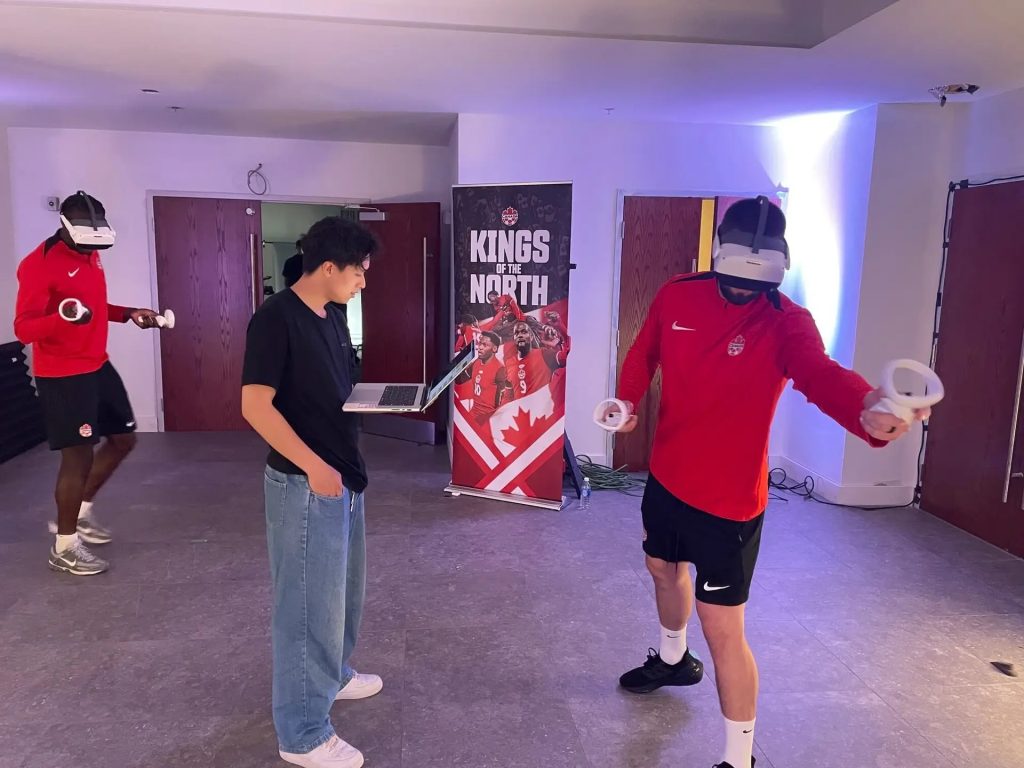
Part of that preparation, starting in 2025, involves what I am doing right now. Canada began using a virtual reality program specifically tailored to their needs, their style of play and their head coach’s demands. In their virtual world, Canada is working to improve reaction time and better execute Marsch’s brand of lightning-fast football.
Ceccarelli has taken the lead on training players with the headsets, cataloguing their scores, and on this occasion, allowing me to try the program myself.
Inside the Headset
It feels straightforward enough at first. Once the headset is strapped on, a calm living room environment appears. I briefly forgot that people were continuing to move around me in the real world.
With the headset come two controllers that feel like the handle of a gun. Different types of circles with different patterns appear in the virtual space. Players are shown which side, left or right, they must move the circles to. The movement is achieved by extending either arm and clicking a button on the handheld controllers. It quickly becomes a full-body exercise.
When the game begins, circles with different patterns appear in rapid succession. Players must match each circle to the correct side while also clicking the controller correctly. If a circle is empty, for example, players must learn to move in the opposite direction to complete the task. The program tracks the player’s eye movements and then attempts to trick them by repositioning the circles. The time available to respond correctly reduces as the game progresses.
By the end of ten minutes, I felt a degree of swagger. Until I was told my score paled in comparison to most of the players. Higher scores come not just from moving the shapes to the correct areas but from doing so quickly.
After I took off the headset, a rush of adrenaline moved through my body. I found myself jabbing at buttons in the hotel elevator with more energy than usual and could not sit still for hours afterwards. That rush is precisely what Canada hopes their players experience. The challenge is transferring it onto the pitch.
The Man Behind the Technology
When Rajan Pillay first watched Canada’s aggressive, reaction-driven style of play under Marsch, he realised he could help.
Pillay describes himself as a “proud Canadian” first, but his other title, co-founder and director of REACT Neuro, is the more relevant one in this context. He approached Canada to use the REACT Neuro program.
“We want Canada to win the World Cup,” Pillay said, seated in a hotel lobby with Canada’s players shouting and competing in headsets nearby. “Anything that we can do to support them to win, that gives them the edge over their competitor.”
Pillay explained that the program first took shape ten years ago through collaboration with Harvard professors who had dedicated themselves to finding cures and prevention strategies for neurodegenerative diseases. The technology evolved from there into a performance tool.
“It’s AI-driven technology,” he said, “to see how we can increase performance by applying the right technique, the right types of training for your brain. Because your brain can be trained.“
“People do a lot of video analysis. Now, we’re giving them data, we’re training their brain, we’re training their accuracy, we’re training their reaction time. That’s going to be an unbelievable experience for them.”
Pillay confirmed that REACT Neuro has worked with other professional sports organisations, though he declined to name them. The company lists the New England Patriots, the Boston Bruins and the Boston Celtics as partners.
How the Program Was Introduced
Canada’s work with REACT Neuro began in earnest in June 2025. During a training camp in Halifax, Nova Scotia, students from Harvard University were brought to Canada’s team hotel to introduce players and staff to the equipment and program. They set up in an open space between meeting rooms, and as players filtered out from positional and set-piece sessions, they were invited to try the technology.
Initial reactions were mixed. Players used to being sold on dietary adjustments, sleep monitoring and training innovations were understandably sceptical. Some shook their heads when handed the headsets.
“Are we doing video games with the national team?” was a natural first reaction for those who had encountered virtual reality through consumer gaming systems.
But scepticism dissolved quickly once players discovered they would be scored and their scores recorded. Competition between teammates did the rest.
“What was your score?” one player shouted to another after finishing. “Nah, I can top that. Let me go again.“
Marsch’s Philosophy and Why VR Fits It
Watch a Marsch-run Canada training session and the language is consistent and deliberate. Players are not told to move or run. They are told to sprint. One of his most-used phrases with players is “two things at once.” Marsch football is fast football.
When it does not work, Canada can look frantic and disconnected. When the approach clicks, they look capable of progressing into the World Cup knockout rounds, as evidenced by how they dominated Bosnia and Herzegovina in the second half of their opening group game, which ended 1-1.
| Canada’s World Cup 2026 Group Stage Status | Detail |
|---|---|
| Opening match result | 1-1 vs Bosnia and Herzegovina |
| Next fixture | vs Qatar |
| Target | First ever World Cup victory |
Marsch also recognises that players can tune out words during training sessions, a concern amplified by the limited time he spends with his players across a club-dominated calendar.
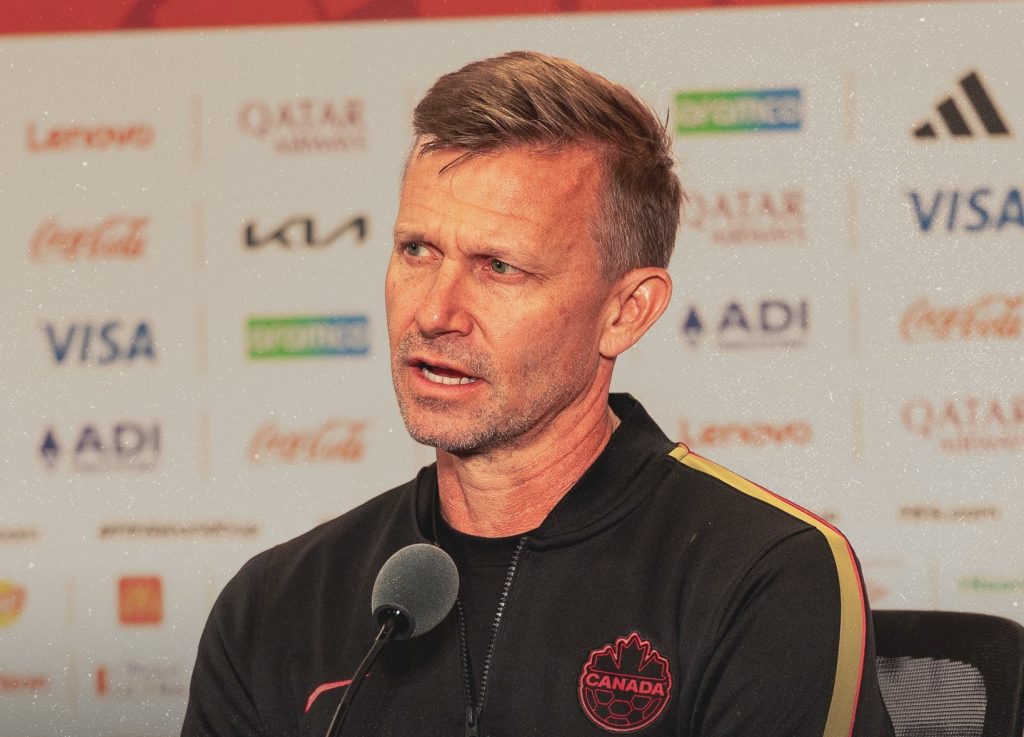
“The first thing that we’re encouraging guys to do is get up in the morning and do it,” Marsch said, slapping his hands together. “It challenges your cognitive abilities, the left and right brain combinations.”
After routinely using the program through training camps in 2025, Canada Soccer sent players their own headsets to use ahead of the 2026 tournament. They were asked to use them multiple times a week. Scores have been logged, and the coaching staff monitor individual progress carefully.
“Now they’re individualised,” Marsch said. “They’ve been able to track everything and look at the results. They can see processing time, peripheral vision, reaction time and motor-skill movement. They have an individual program for everybody.”
Real Evidence, Real Results
The technology is not merely theoretical. Canada’s March friendly against Tunisia offered a concrete example of the program’s potential impact.
Multiple Canadian defenders lost their focus briefly, and in an instant, their errors led to a swift Tunisian counter-attack. What Tunisian winger Elias Saad did not know as he sprinted toward Canada’s six-yard box was that Liam Millar was up to date with his virtual reality training.
Millar, tracking back from his own half, used his reaction time to read the direction of the pass, turned his body anticipating where the ball was headed, slid, and blocked Saad’s shot. The match ended 0-0. Marsch was visibly animated on the touchline. It was not spontaneous instinct. It was trained response.
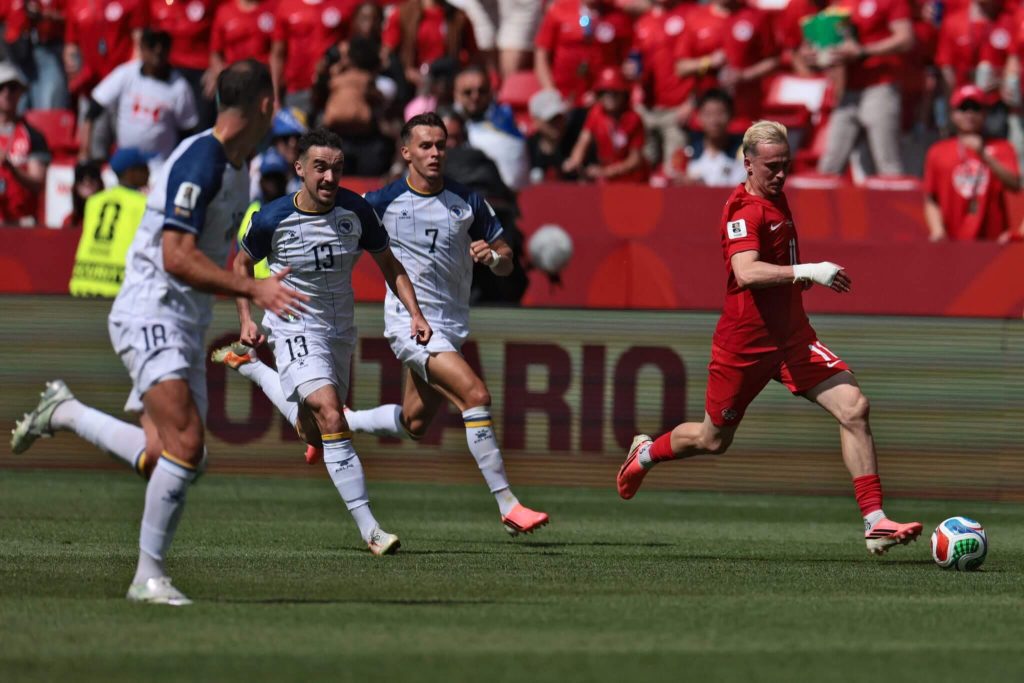
“It’s helped,” Millar said of the program, “subconsciously.”
“You’re turning, you’re looking at the peripheral vision and just practicing this work by doing all this stuff,” he added. “I think it really helps in those moments where you’re checking your shoulder and you need to be able to scan and be aware of what’s close to you in that moment.”
| Millar’s VR-Connected Moment vs Tunisia | Detail |
|---|---|
| Situation | Tunisia counter-attack after Canadian defensive error |
| What Millar did | Tracked back from own half, read the pass direction, blocked the shot |
| Outcome | Match ended 0-0 |
| Millar’s explanation | Peripheral vision and reaction time trained through VR |
Millar’s description of the program itself is vivid and energetic. “The ball comes up, it’s filled, not filled, you have to go left, you go right. But eventually the levels get much harder and it’s colour-organised and there’s multiple balls. It’s high, it’s this way, that way, all different things.”
The Individual Responses
Different players have engaged with the technology in ways that reflect their personalities.
| Player | Engagement Style |
|---|---|
| Niko Sigur | Sits staring ahead, eyes narrowed, intensely focused while awaiting his turn |
| Stephen Eustaquio | Asks operators detailed questions about improving his scores |
| Richie Laryea | Ribs teammates during their turns, then gives maximum effort with the headset on |
| Liam Millar | Enthusiastic advocate, directly connects VR to in-game decision-making |
| Nathan Saliba | Credits the program with improved sharpness and decision-making awareness |
| Derek Cornelius | Sees VR as a tool for maintaining accuracy under high-tempo conditions |
Laryea, with a seven-year-old son at home, admits he sometimes delays his VR session until later in the day, at which point it leaves him feeling fatigued. He acknowledges that completing the program in the morning switches his brain on and that his club performances with Toronto FC improve on the days he trains with the headset before leaving the house.
“Even if virtual reality training helps us get two percent better,” Laryea said, “two percent is better than zero percent.”
Cornelius framed the program’s purpose in clear and practical terms. “We want to play fast, we want to push the tempo, and that means making decisions quickly and hopefully making the right decisions quickly. Normally, when you speed things up, your accuracy and ability to make a good decision can decline. That’s why Jesse got in touch with REACT Neuro.”
“It‘s a way to challenge your mind to be under stress,” he added, “and still try to make the right decision.”
Saliba offered a similarly direct assessment: “If you use it properly and use it constantly, you feel sharper in terms of decision-making and being aware of everything going on around you. I think it does help quite a lot.”
Beyond Performance — The Injury Angle
Pillay suggests the benefits of the technology extend beyond pure performance enhancement. “Technology can be used for enhancing performances but also preventing injuries,” he said. “Your movement of eyes is how you improve your reaction time.”
The implication is that players with quicker processing speeds are better positioned to read situations early, adjust their body mechanics in time, and avoid the kind of collisions or awkward landings that lead to muscular injuries. In a tournament where fixture congestion and physical demands are at their peak, that could matter.
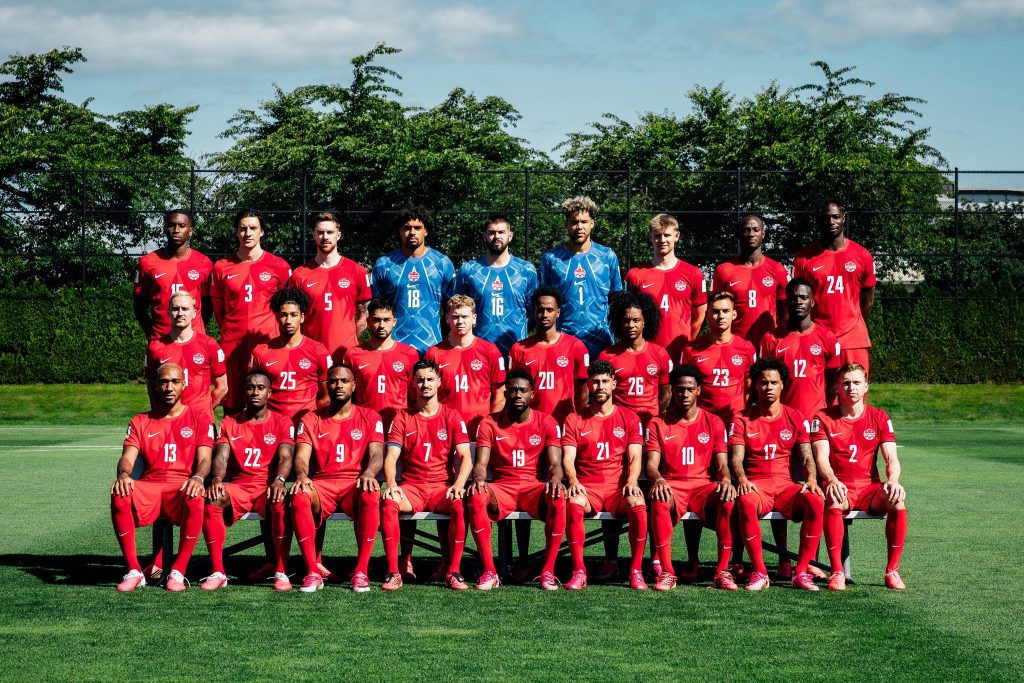
It is not an entirely unfamiliar concept in elite sport. England’s national team, for comparison, wear specially designed foam shoes that Nike believe help athletes feel calm, focused and present during high-pressure environments. Teams at the highest level are constantly searching for marginal gains, and Canada’s adoption of AI-driven neurological training sits within that broader landscape.
Read More: Who Replaces Christian Pulisic If He Misses USA’s Crucial World Cup 2026 Clash?