NZ
 IND
 NAM
 IRE
 MOZ
 UGA
 Aston Villa
 Man City
 Rayo
 Elche
 GMB
 ZMB
 NGA
 LES
 Cagliari
 Bologna
 IPS1
 NFO1
 ALA1
 MCF1
 TOR3
 MON2
 BRE1
 NICE2
 TAS129/7 (23.3/35 ov, target 276)
 VIC304/7 (50 ov)
 WA
 NSW38/1 (9/50 ov)
 NZ-A135/3 (41 ov)
 IND-A113
 DHA
 RAJ
 MYMS
 CHATT
 RAN
 BAR
 SYL
 KHU
 MEX-W
 ARG-W
 UAE
 NED
 AFG170/3 (34.3/50 ov, target 170)
 ZIM169
 IND-W200/1 (27.1/50 ov, target 198)
 ZIM-W197
 DOLPH56/0 (3.5/8 ov, target 56)
 SWD51/4 (8/8 ov)
 WSW1
 BRI1
 Como
 Sassuolo
 Augsburg
 Union Berlin
 Cologne
 Schalke
 Mainz
 Bremen
 RB Leipzig
 Elversberg
 VFB2
 BMG3
 AHL4
 KHA1
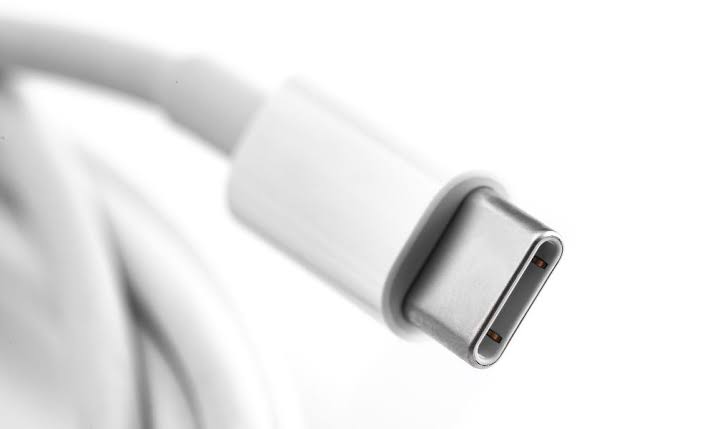
Usb-C Milestones: Two hundred forty watts. That is the maximum power delivery capacity unlocked by modern USB-C cables, a figure that completely rewrites what a single connector can handle. Following this leap in capability, Apple transitioned its iPhone lineup to USB-C starting with the iPhone 15 series announced in September 2023. This move signaled the final phase of a decade-long shift toward universal charging standards.
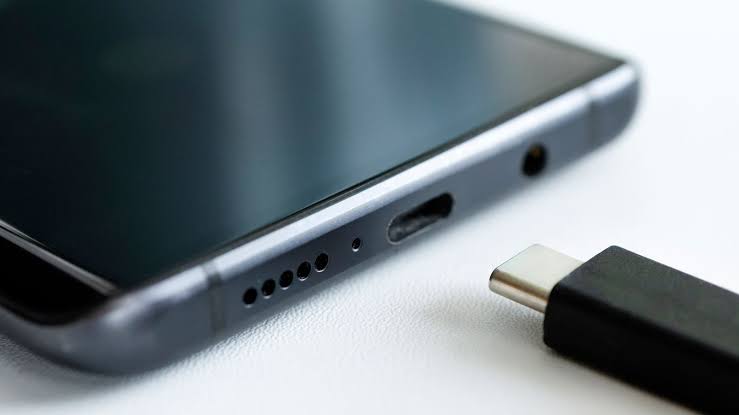
The Universal Shift Explained
The USB Type-C specification was first published by the USB Implementers Forum in August 2014. It reportedly introduced a compact, fully reversible connector designed to replace decades of fragmented legacy ports. Manufacturers initially struggled with the redesign, but intuitive usability quickly won over consumers. Today, the standard powers everything from budget smartphones to professional workstations.
Decoding the Technical Timeline
Every major hardware milestone follows a precise development cycle. The journey began with early integrations, such as the MacBook released in March 2015, which served as one of the earliest major consumer platforms for the new interface. While early cables were limited in speed, the infrastructure rapidly matured.
By May 2021, the industry adopted the USB Power Delivery 3.1 specification, enabling the aforementioned 240-watt output for rapid laptop charging. Data-driven progress did not stop at power alone. The underlying architecture saw a major upgrade when the USB4 specification was officially released in August 2019. Built upon the USB-C connector architecture, this protocol advanced data transfer capabilities while simplifying peripheral compatibility. The European Union later passed legislation in October 2022 mandating USB-C as the common charging port for mobile devices by the end of 2024.
| Milestone | Year Released | Primary Impact |
|---|---|---|
| MacBook Integration | 2015 | One of the earliest major consumer hardware integrations |
| USB4 Protocol Launch | 2019 | Advanced data transfer capabilities |
| Power Delivery 3.1 | 2021 | Enabled up to 240 watts output |
| European Union Mandate | 2022 | Mandated a common charging port for mobile devices |
Evaluating Industry Reactions
Adoption curves rarely follow straight lines, and the early years of USB-C faced significant headwinds. Critics argued that the reversible design offered minimal improvement over existing micro-USB connectors. Those concerns largely evaporated as semiconductor manufacturers improved signal integrity.
Companies that resisted the change ultimately lost market share, proving that user experience drives hardware evolution faster than marketing budgets. For enthusiasts tracking component longevity, the trajectory mirrors earlier display advancements. Much like the progression detailed in our OLED Four Milestones coverage, incremental efficiency gains eventually culminated in a complete industry overhaul. The regulatory push in Europe mandated a common charging port for covered mobile devices, supporting the use of standardized accessories.
Forecasting Future Connectivity
With physical standardization largely achieved, engineers are now turning their attention to Intelligent power negotiation and multi-purpose docks. The focus has shifted toward seamless handoffs between wired peripherals and wireless ecosystems.
We continue to monitor how protocols evolve alongside emerging audio technologies, much like the developments covered in our Bluetooth Through Four analysis. As battery densities increase, the next generation of chargers will prioritize dynamic voltage scaling rather than raw wattage.
FAQs
When did the USB Type-C specification officially launch?
The specification was officially published by the USB Implementers Forum in August 2014.
Why did Apple decide to switch its iPhones to USB-C?
Apple transitioned its iPhone lineup to USB-C starting with the iPhone 15 series announced in September 2023.
What is the maximum power output supported by current USB-C cables?
The USB Power Delivery 3.1 specification enables power delivery up to 240 watts over compatible USB-C cables.
How did the European Union influence USB-C adoption?
The European Union passed legislation in October 2022 mandating USB-C as the common charging port for mobile devices by the end of 2024.
Did USB-C change how fast data transfers work?
The USB4 specification, officially released in August 2019, was built upon the USB-C connector architecture and advanced data transmission capabilities alongside the physical connector.
Was this article helpful?
Your feedback directly improves future articles on this site.