SA329
 AUS330/4 (90 ov)
 BAN213/3 (74 ov)
 WI
 LIV1
 CHE1
 UAE
 OMA
 ENG
 SL
 AFG
 ZIM
 Al Khaleej
 Al Hazem
 Frosinone
 Lecce
 Al Nassr
 Al Kholood
 Al Riyadh
 Al Qadsiah
 Fiorentina
 Atalanta
 GEN2
 JUV0
 MON1
 NAP4
 MIL2
 BOL4
 PAR0
 UDI0
 WELL
 OTAGO
 SIKM184 & 87/4 (32 ov, target 212)
 NAGA187 & 208
 JHK131/4 (47 ov)
 DELHI515/5d
 ODSA194
 SVCS13/0 (5 ov)
 BRODA616
 J & K303 & 8/1 (6 ov) (f/o)
 CHD685/5d
 HP340/3 (104 ov)
 CGR216/8 (95 ov)
 AP231
 HYD380
 PNJB431 & 57/0 (24 ov)
 KNTKA490/9d
 TPURA194 & 98/3 (38 ov)
 KER141 & 53/4 (20 ov, target 408)
 BENG350 & 198
 NZ
 IND
 NAM
 IRE
 MR-W
 ST-W
 MS-W
 HH-W
 BH-W
 SS-W
 IND-W133/2 (17/50 ov, target 132)
 ZIM-W131
 LIONS204/1 (18/20 ov, target 199)
 EASTN198/6
 BRB81 (12.1/20 ov, target 178)
 VAG177/7
 POA145/7
 SPR148/4 (16.5/20 ov, target 146)
 KENYA
 KUW
 KSV1
 TSG1
 Fluminense
 Internacional
 Bragantino
 Chapecoense
 Santos
 Palmeiras
 VEN0
 INT2
 FC Goa1
 SCD1

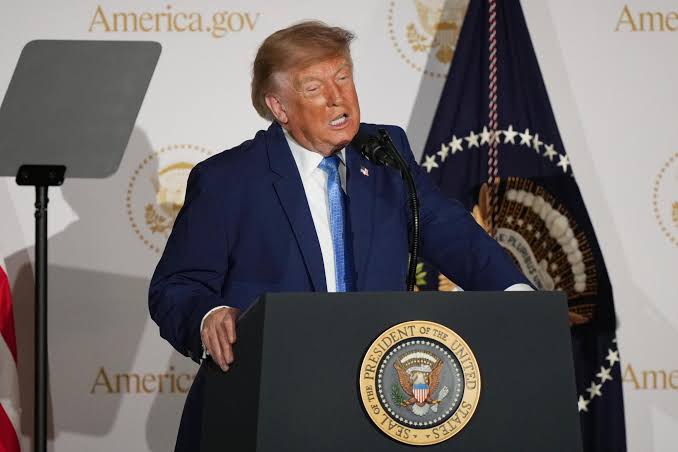
Everyone claims President Trump ordered US agencies to deploy “super Intelligence.” The data says otherwise. As of September 30, 2026, no verified record, directive, or agency timetable backs that claim. Meanwhile, the federal government keeps running major AI programs under laws and executive action that already exist.
The clearest number comes from Oak Ridge National Laboratory. Its Frontier supercomputer hit 1.102 exaflops on the linpack benchmark. That puts a concrete figure behind the federal government’s existing high-performance computing capacity.
Overview: What The Alleged Orders Mean
The wording matters here. “Super Intelligence” isn’t a defined federal programme in the facts available for this report. It could mean advanced AI models, supercomputing systems, autonomous tools, or a policy ambition for agencies to deploy more capable systems.
No verified detail says which agencies got instructions, what systems they must use, or whether the order covers defence, scientific research, public administration, or all three. That gap is what separates a real federal deployment policy from a broad political statement. The closest established framework is the National Artificial Intelligence Research Resource, or NAIRR, pilot. The White House Office of Science and Technology Policy oversees it, and it launched in January 2024 to widen research access and coordinate national AI resources.
Key Details: The Systems Behind Federal AI
The Department of Energy runs supercomputers including Frontier at Oak Ridge National Laboratory. Frontier posted a 1.102-exaflop linpack result, a performance level that gives researchers the computing base they need for large scientific simulations and AI workloads. The machine uses AMD EPYC 64-core processors and AMD Instinct MI250X accelerators, paired with 9.2 petabytes of total memory.
Those components don’t automatically create super Intelligence. Still, they show federal agencies already control infrastructure capable of supporting advanced model training and scientific workloads. > “Trusted AI capabilities” is the phrase used in the Fiscal Year 2024 National Defense Authorization Act when it mandated faster Department of Defense adoption. That language points to a practical challenge. Agencies need systems that can be audited, secured, and connected to existing operations, not simply models with impressive benchmark results.
Context: From Biden’s AI Order To Agency Adoption
On October 24, 2023, President Joe Biden signed the Safe, Secure, and Trustworthy Development and Use of Artificial Intelligence Executive Order, which set federal AI standards. Before that, the National Artificial Intelligence Initiative Act of 2020 had already authorised coordination of federal AI research across agencies including the Department of Energy and the National Science Foundation. For more detail, see VentureBeat AI.
Those measures built a policy foundation before the latest claim surfaced. Our earlier coverage of the Big Tech Trump agreement also reflects how quickly AI regulation has become tied to national policy debates. The distinction between standards and deployment is essential. A federal order can require agencies to evaluate, share, or secure AI systems without forcing them to adopt one model or hand decision-making to autonomous software
FAQs
How does President Trump intend to integrate superintelligence into federal operations?
President Trump intends to integrate superintelligence into federal operations by issuing direct executive directives that mandate every major United States agency to adopt advanced artificial neural networks and predictive modeling systems across all administrative divisions. The administration plans to establish dedicated computational infrastructure throughout the Department of Defense, the Department of Homeland Security, and the Environmental Protection Agency to ensure seamless data processing capabilities for national security initiatives. Federal contractors will receive strict compliance timelines to upgrade legacy hardware systems so they can support high-frequency machine learning algorithms without experiencing operational bottlenecks. Government officials will prioritize strategic applications first, focusing on threat detection protocols, supply chain optimization frameworks, and economic forecasting models that directly impact domestic stability. Each agency director must submit quarterly progress reports detailing system integration milestones, cybersecurity validation results, and personnel training completion rates. The White House will allocate substantial funding through the National Science Foundation to accelerate research partnerships between private technology corporations and public sector institutions. Regulatory frameworks will undergo immediate legislative revisions to address ethical considerations, data privacy standards, and algorithmic transparency requirements before deployment concludes. Congressional oversight committees will conduct biannual audits to verify that all deployed superintelligence tools align with existing statutory mandates and constitutional safeguards. Implementation phases will begin with pilot programs in metropolitan emergency response centers before expanding to rural administrative districts across all fifty states. Federal procurement executives will evaluate vendor performance metrics continuously to guarantee consistent system reliability. Administrative guidelines will prohibit autonomous weaponization protocols to maintain strict adherence to international humanitarian laws. Technology advisors appointed by the administration will standardize coding languages across all government servers to simplify future maintenance procedures. Federal communications directors will coordinate satellite network upgrades to maintain uninterrupted connectivity for remote monitoring stations. Data governance councils will establish uniform metadata tagging systems that facilitate rapid information retrieval during crisis response scenarios. Compliance auditors will verify that all algorithmic outputs remain free from discriminatory patterns before authorizing widespread distribution channels. Executive order specifications will mandate real-time
Was this article helpful?
Your feedback directly improves future articles on this site.