Deep beneath Ladakh’s cold desert, something extraordinary is quietly waiting. Indian scientists have discovered a vast hidden magma reservoir sitting up to 8 kilometres below the Earth’s surface — and it could be the key to unlocking a cleaner, greener energy future for the country.
Table of Contents
What Did Scientists Find — and How?
Researchers at the Council for Scientific and Industrial Research (CSIR) — specifically from the National Geophysical Research Institute and the Academy of Scientific and Innovative Research — used a cutting-edge technique called magnetotellurics to map deep underground structures without drilling a single hole.
The method works by measuring the Earth’s natural electromagnetic fields at the surface. Since magma and mineral-rich fluids conduct electricity while solid cold rock resists it, scientists could essentially see what lies beneath. Data was collected from 62 sensing sites and processed into a full 3D map of the Earth’s crust.
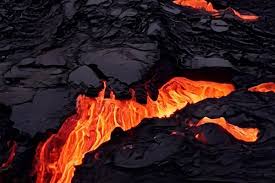
What they found was remarkable: two famous hot spring sites in Ladakh — Puga and Chumathang, about 15 km apart — are not separate systems at all. They share the same deep heat source, connected 4–8 km underground by the immense geological forces of the colliding Indian and Eurasian tectonic plates.
The Big Picture: India’s Geothermal Potential
| Key Facts | Details |
|---|---|
| Discovery Sites | Puga & Chumathang, Ladakh |
| Depth of Magma Reservoir | 4–8 km below the surface |
| Research Body | CSIR – NGRI & AcSIR |
| Technique Used | Magnetotellurics |
| Sensing Sites | 62 locations |
| India’s Geothermal Potential | ~10,600 MW (Govt. estimate) |
| GSI Identified Sites | 381 across India |
| Published In | Springer’s Earth, Planets and Space |
India’s geothermal potential is enormous — the Geological Survey of India has already flagged 381 sites across states including Himachal Pradesh, Rajasthan, Gujarat, Maharashtra, and the Northeast. But Ladakh, sitting on one of the most geologically active zones on Earth, now stands at the very top of that list.
Why This Matters Beyond the Science Lab
Geothermal energy is one of the most reliable forms of renewable power — it runs 24/7, unlike solar and wind which depend on weather. In ecologically fragile, high-altitude regions like Ladakh, it offers a clean alternative to diesel generators and fossil fuels that currently dominate local energy supply.
This discovery isn’t just scientifically groundbreaking — it directly supports India’s net-zero carbon emissions mission and its push for energy independence in sensitive border regions.
For more science, technology, and energy news from India, stay updated at TechnoSports.
FAQs
Q: What is the significance of the magma reservoir discovered beneath Ladakh?
Scientists found that the two major hot spring sites — Puga and Chumathang — share a single deep magma reservoir 4–8 km underground, confirming Ladakh as a high-potential geothermal energy zone that could generate large-scale clean electricity.
Q: What technique did CSIR scientists use to discover the Ladakh magma reservoir?
They used magnetotellurics — a non-invasive method that maps underground structures by measuring how different materials like magma and rock conduct or resist the Earth’s natural electromagnetic fields.